Sushila Bishwakarma listens to the land through her lens
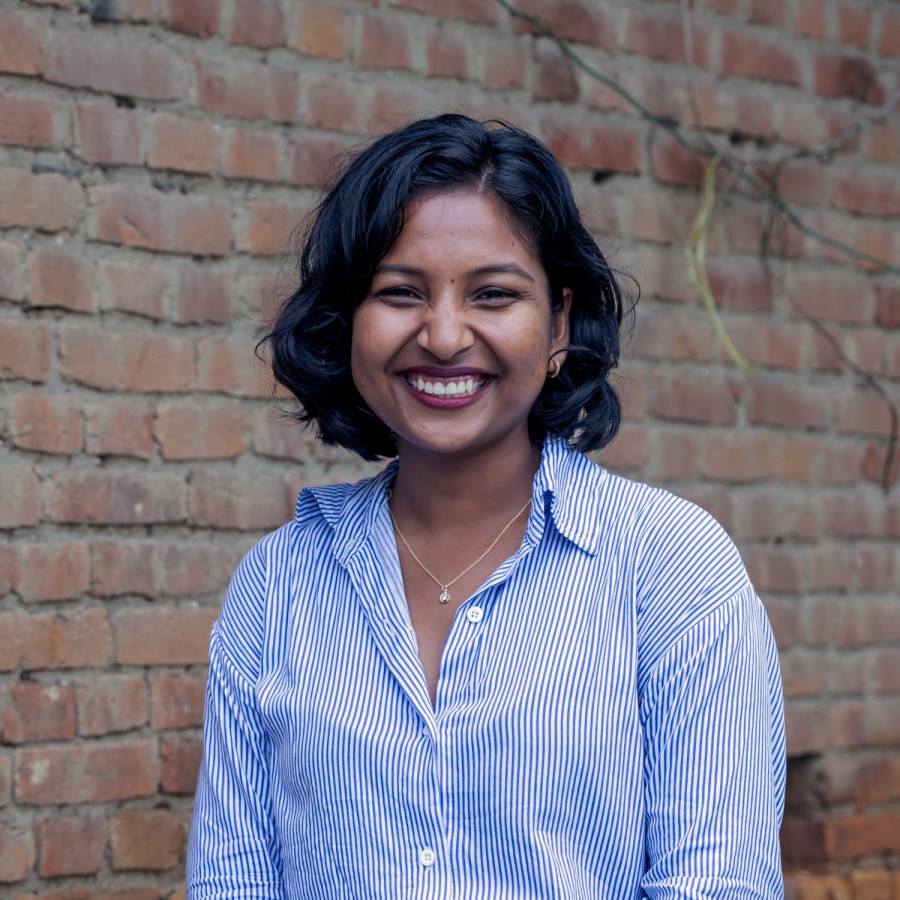
From an ecofeminist perspective, she draws parallels between the exploitation of land and the marginalisation of women. Photo: Courtesy of Robic Upadhyay
The stones of Sushila Bishwakarma’s village are disappearing.
Not metaphorically but literally. The stones she once played with as a child in Kerabari, Morang, are being pulled apart from the hills that birthed them. Boulders break loose and roll down. Streams grow thinner while rivers swell wider—roads cut through soil that once held stories and childhood games.
For Bishwakarma, this slow erasure is not just personal but also political.
“I grew up watching my village change by the day,” she says. “The forests are thinning, and the stones are vanishing in the name of development. I keep asking myself what kind of change this is.”
Her photographs are where she asks that question most honestly.
A visual artist and storyteller from Morang, Bishwakarma uses photography to understand herself and the land she comes from. When words fail her, images step in. Her work traces the fragile intersections of environment, gender, memory, and belonging.
Kerabari is not a place that fits neatly into Nepal’s geography textbooks. It is neither flat Terai nor proper hills. It lies in the Chure Bhawar region, between the Mahabharata range and the plains. Growing up, Bishwakarma struggled to locate her home on the mental map she was taught in school.
“I always wondered what my place was,” she says. “It didn’t fit anywhere.”
The land was full of black stones, rivers, and trees. There was little grain. Farming demanded exhausting labour with modest returns. She grew up hearing frustration from elders. This land does not give back easily, they said. To survive, you must leave.
Like many young people from rural Nepal, Bishwakarma internalised the idea that her future lay elsewhere. Abroad, perhaps away from the stones.
But distance only sharpened her longing.
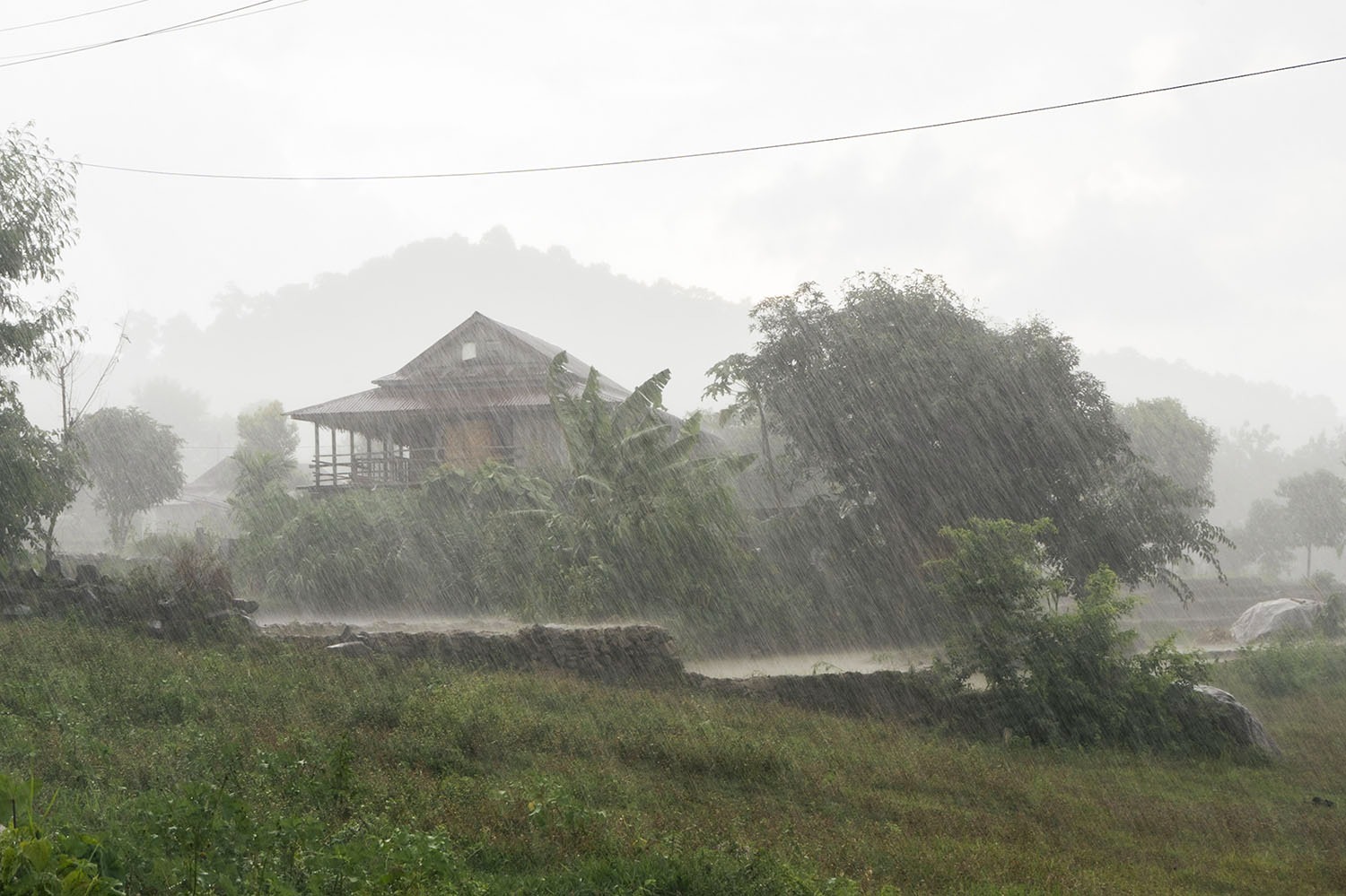
In one photograph, monsoon rain softens Kerabari into mist. Her old house stands quietly in the middle, tin roof shining under falling water. It feels less like documentation and more like memory. PhotoS: Courtesy of Sushila Bishwakarma
“I suffer from homesickness,” she says. “When I’m away, I want to reach home fast. When I’m home, I feel like leaving again.” This tension animates much of her work. The urge to escape and the ache to return.
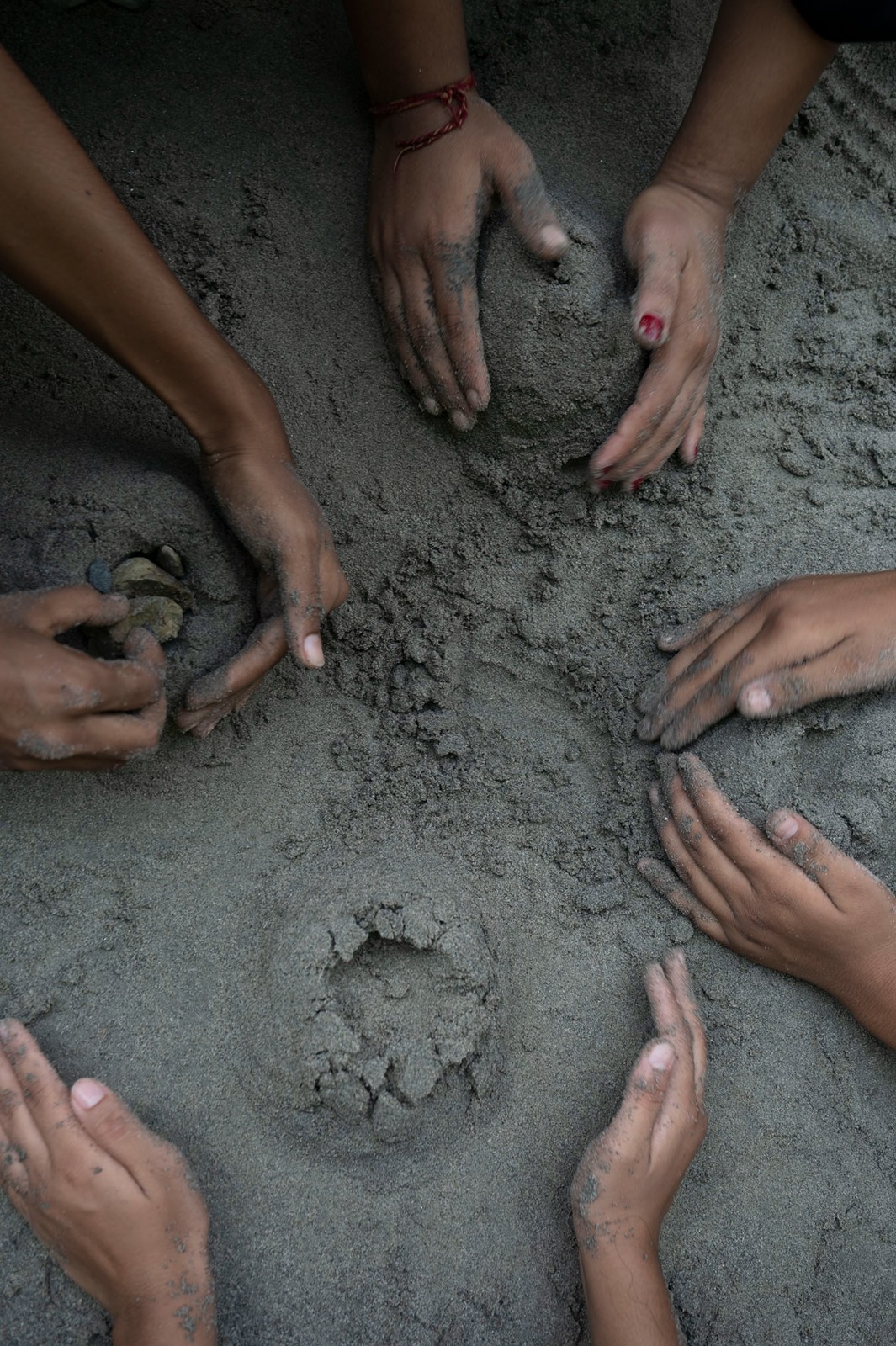
As a child, she spent her days outdoors, playing by rivers and lifting stones. Today, she notices children glued to phone screens. During the Covid lockdown, something shifted. With schools closed and routines broken, children returned to rivers and fields. Bishwakarma followed them with her camera.
That was the moment photography stopped being incidental but a language.
She had always struggled with writing. When she spoke about climate change or environmental loss, people dismissed her words as inconsequential. Over time, she withdrew. Photography gave her a way back into conversation without speaking.
Bishwakarma did not grow up imagining herself as a photographer. Cameras were expensive. Photography was considered a hobby, not a career. As a woman, the dream felt even more distant. Her relatives offered her three acceptable paths: go abroad, get married, or prepare for the civil service exams.
When she asked for a camera for the first time, it was met with resistance. Eventually, it was also supported by her mother, sister, and brother. Today, those who once questioned her choice are often the first to ask her to take their portraits.
She studied education at Sukuna Multiple Campus, not out of passion but because there were no options to study fine arts. Theory bored her. During the lockdown, she began working with a local organisation Rangcha Namuna Parmakalchar Sikai Thalo, Yangshila, in her village, doing conservation-related documentation. She helped record indigenous knowledge through photos and videos. Slowly, photography crept closer.
In 2020, Photo.Circle’s introductory photo storytelling workshop opened a door she did not know existed. She learned that a single image could hold a narrative and emotion could be structured visually. She kept going.
Her work soon began reflecting how she sees her hometown. From an ecofeminist lens, she draws parallels between the exploitation of land and the marginalisation of women. “We worship goddesses,” she says. “But we don’t respect women. We worship nature, but we don’t care for it.”
This idea runs through her series ‘Tender’, which was on display at PhotoKtm 6 at the Nepal Art Council recently.
‘I used to want to capture beautiful things,’ she says. ‘Now I’m drawn to broken things. Sad things. Things that make me uneasy.’
In one photograph, monsoon rain softens Kerabari into mist. Her old house stands quietly in the middle, tin roof shining under falling water. It feels less like documentation and more like memory. A place held together by rain.
In another image from the same series, shallow water ripples over pale stones. A few stones are coated in glossy red. The scene appears calm at first. Look longer, and the colour unsettles. The red is deliberate. It speaks of violence. Of loss. Of blood.
Beauty alone no longer felt honest, so Bishwakarma began using red to convey injustice. The murder of Dilip Mahato, who was killed for resisting environmental destruction, and the inhuman crimes happening worldwide, touched her.
“I used to want to capture beautiful things,” she says. “Now I’m drawn to broken things. Sad things. Things that make me uneasy.”
Her work ‘Kaali’ turns inward. It addresses colourism and her own struggle with self-acceptance. Growing up with brown skin, she endured constant comments from relatives. Even when she spoke publicly, attention drifted to her appearance rather than her words. The project uses metaphorical imagery to critique the obsession with fairness, including references to harmful skin-lightening products.
In Cambodia, something shifted again. “For the first time, I felt confident taking out my camera in public,” she says. “In Nepal, I’m still hesitant in crowds. I worry about judgment.”
Bishwakarma’s photographs often linger on overlooked details. Layers of soil shaped by flowing water. Stones instead of rivers. The ground rather than the horizon.
“Photography taught me to look down,” she says. “I was always running, looking far away. But the destination was never there.”
In 2024, her photo story ‘Longing’ was exhibited at the Nepal Art Council and later in Brussels, Belgium. The same year, she received the European Union Nepal’s 50th Year Friendship Anniversary Photography grant. Her work has appeared in photobooks and magazines such as ‘It’s In Our Nature’ and ‘femLENS’.
Despite growing recognition, questions of sustainability persist. As a woman, she feels pressure to settle quickly. Financial stability remains uncertain. Her parents are supportive now, but concern lingers.
For the future, her desire is simple. To continue learning. To keep returning to the Chure range. To photograph her land before it slips further away. She worries about trends flattening photography into sameness. “If everyone follows the same visual language, images lose their voice,” she says.
Bishwakarma’s work resists that flattening. Her works are grounded, attentive and unique.
Sanskriti Pokharel, a former reporter and sub-editor at the Post, is a final-year student of Journalism, Mass Communication, and English Literature at St. Xavier's College, with experience in media, research, and communication.




 28.31°C Kathmandu