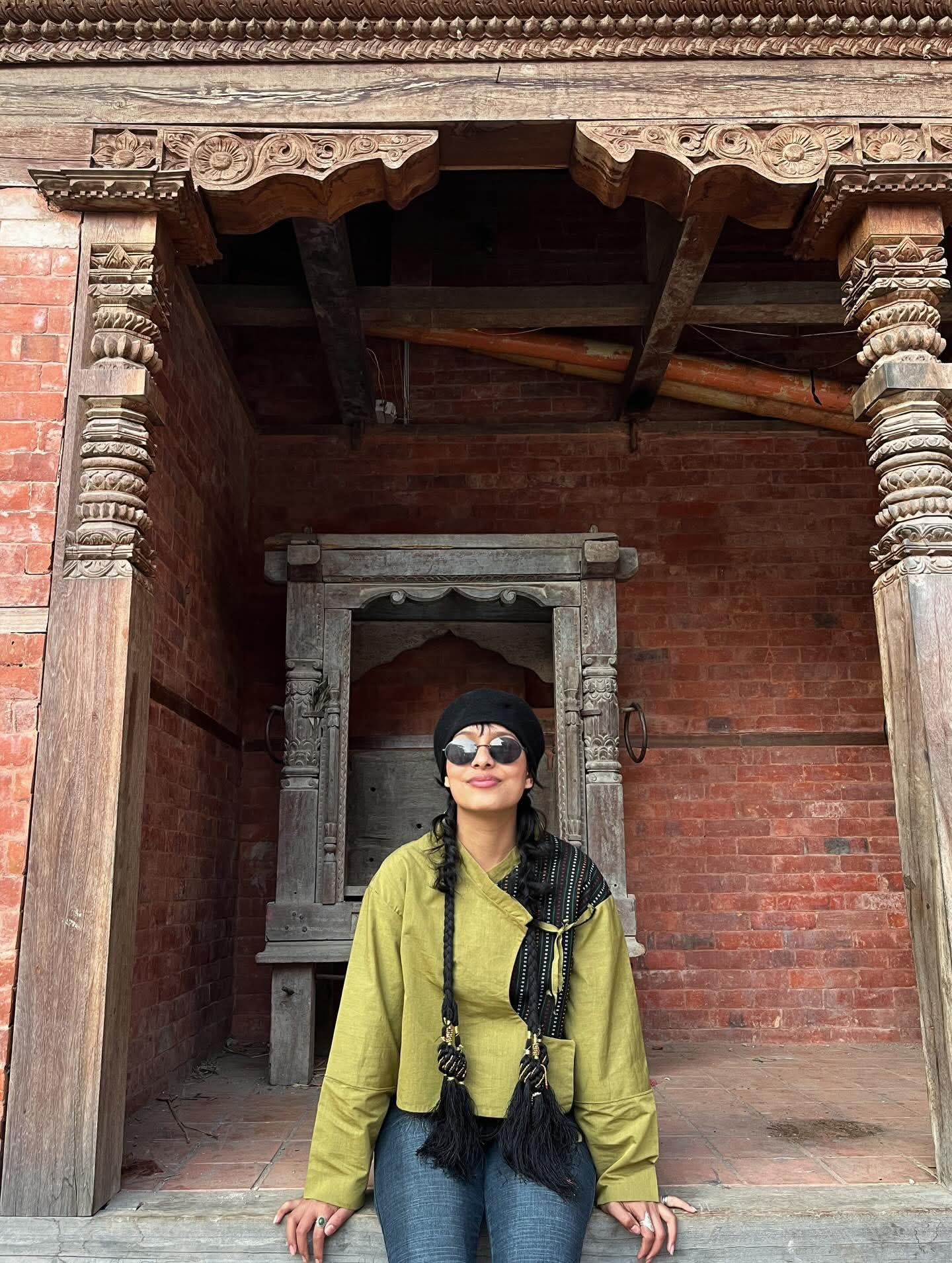
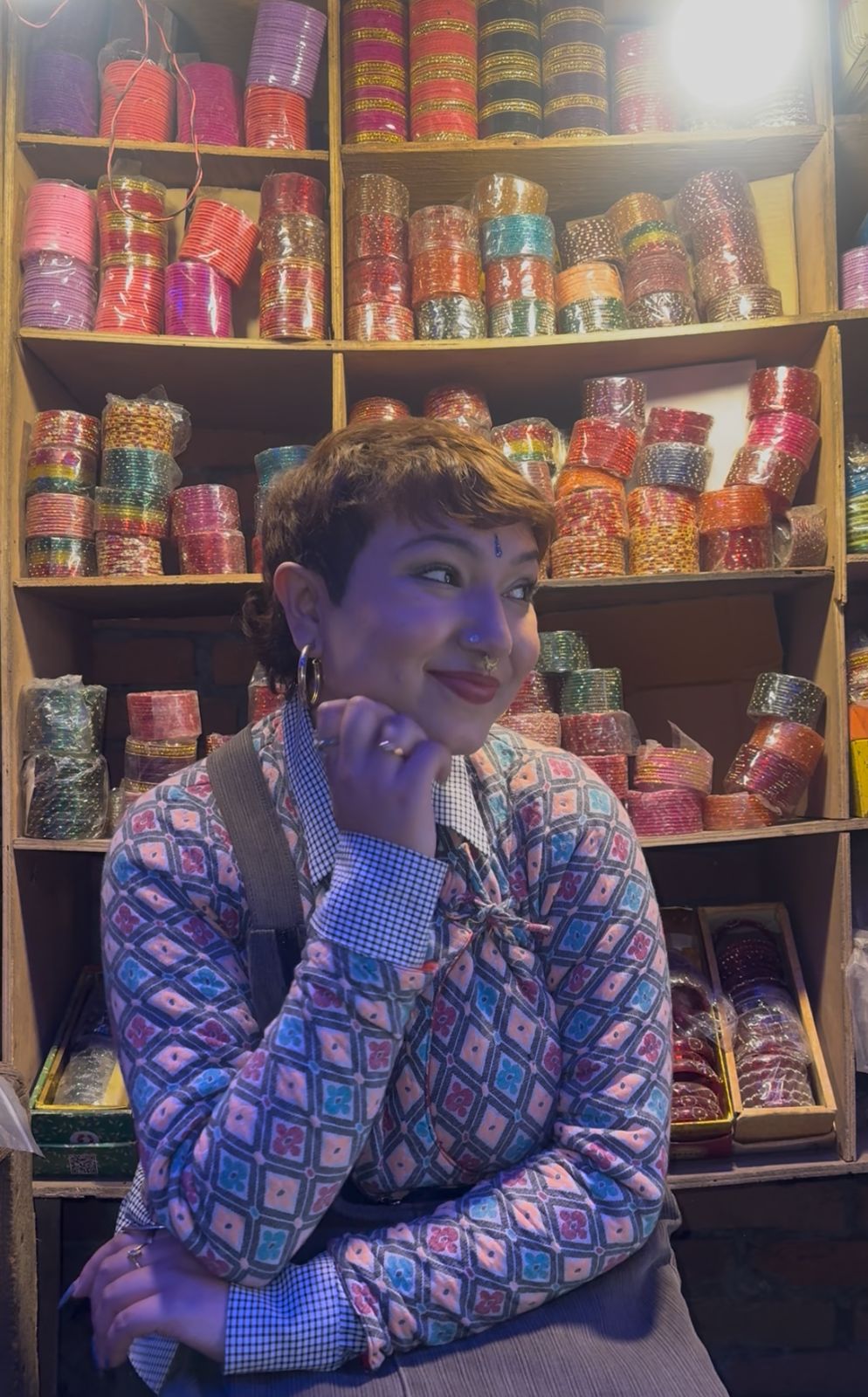
Once reserved for festivals, these Nepali styles are now part of everyday wardrobes, redefining femininity and cultural expression for youths. Photos: Provided to the Post
She was, in other words, an icon who introduced laccha, not just through its conventional significance but as a fashion statement that amplified the richness of its cultural value and identity.
“It makes me feel unstoppable, unbreakable, like a very strong, powerful woman,” she shared with Vogue.
Laccha dori and chaubandi cholo, in recent years, have significantly resurfaced and been reinterpreted as everyday fashion amongst the youths of Nepal, reclaiming their cultural identity with a stroke of modernity. Pairing them not just with sari or traditional attire but also with casual wear and everyday fashion, youths have resuscitated their identity through ethno-modern fashion, fusing tradition with modernity.
This wave addresses not just a momentary lapse of fashion, but also a powerful penetration from the conventionally idealised femininity. Writer Sakshi Kiran Bhattarai, who sprucely styles chaubandi cholo with formal shirts, shares, “I think this goes beyond a trend; it is about women inspiring other women to explore style and fusion in ways that feel unconventional and personal.”
Additionally, fashion becomes a language to inhabit. Bhattarai adds, “For me, personally, it feels like I have built this identity for myself, discovering my own language of expression along the way.”
Fashion designer Shreya Chochchhe in laccha and her self-designed choli.
Traditionally, worn during cultural events and festivals such as Teej, weddings, Dashain, Tihar and various cultural ceremonies, laccha dori and cholo carry deep significance of belonging and community. This shift, from occasional attire to casual wear, marks a pivotal cultural transition. It signals not only a change in fashion sensibility but also a broader imagination of femininity. “To have liberated ourselves from patriarchy to some extent, many women are embracing their roots once again, reclaiming their femininity with pride,” says Bhattarai.
Online fluidity plays a significant role in fashion. The wave of trends captures the audience’s conscious attention in a captivating way. This fusion fashion has invited pride in local aesthetics amongst youth. They blend tradition into their lifestyle, not as a compulsion to uphold generational culture, but as a conscious choice to embrace traditional silhouettes, trace identities, and appreciate slow fashion.
Additionally, personal interactions, praise and encouragement amplify self-assurance and confidence to try new styles. “I first started wearing the choli after getting married, experimenting with modern fusion styles, and the response was overwhelmingly positive,” says Bhattarai. “People often appreciate my style, which inspires me to dress up every day.”
Reclaiming social identity, this adjoin of tradition invites the comfort of belonging from anywhere in the world. “I grab any possible chance I get to add laccha in my everyday fits. Even when I’m far away, when I wear laccha, I feel connected to my roots, my home, my country. As though I am growing to be a woman just like my mother,” describes Vahsa Aryal, an international student in the US.
Though it appears contemporary and fleeting, this tendency is deeply embedded in heritage passed down through generations. With Gen-Z embracing and adapting it, the tradition is finding renewed relevance in everyday fashion and self-expression.
Writer Sakshi Kiran Bhattarai styling a chaubandi choli as a modern-day fashion.
“Gen Z is leading the charge because they’re redefining what ‘modern’ looks like,” says fashion designer Shreya Chochchhe. “For them, it’s not about choosing between heritage and Western trends—it’s about blending them. It is a way to feel unique and ‘cool’ while staying deeply connected to their roots.”
The revival of laccha and choli styles has led to several design innovations in Nepal’s fashion industry. Designers and entrepreneurs are experimenting with cultural textiles in new forms. “With young designers turning fabrics like Dhaka or Haku Patasi into comfortable, gender-neutral, and sustainable pieces, it’s finally practical. It’s basically heritage, but with way more creative freedom and comfort,” says Chochchhe.
As an emerging fashion designer, working primarily with ethno modern concepts and creations, Chochchhe believes her customers connect more to her work through storytelling and accessibility. “I want to move our traditional identity away from ‘once-a-year’ costumes and turn it into something with functional, rewear power,” she says. “I do this by blending deep-rooted Nepali elements with a modern edge. It is about making heritage feel ‘lived-in’ so people can reclaim their roots without sacrificing their modern lifestyle.”
“That balance between tradition and utility is what makes a piece feel personal and powerful,” she adds.
Beginning with the festival adornment and generational inheritance, the laccha and choli have evolved into a conscious cultural revival. It incorporates not just the aesthetics, but ownership. This generation, rather than choosing between modernity and heritage, weaves both into a style that feels personal and powerful. Fashion, in this sense, becomes a fabric of memory, resistance, identity and belonging.




 26.19°C Kathmandu