In Janakpur, young women are reimagining Mithila art
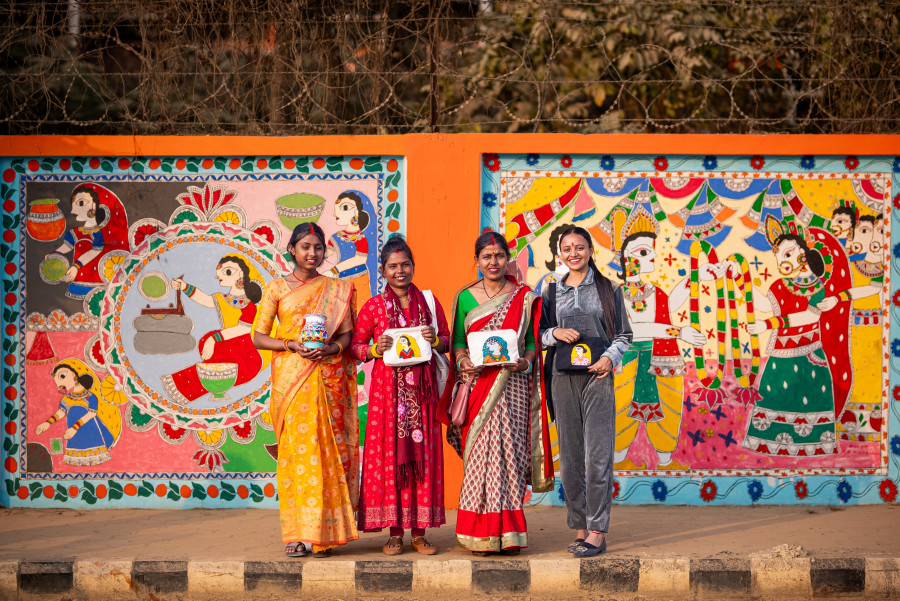
From wall paintings to lifestyle products, Mithila By Danfe blends centuries-old art with modern design while providing income and independence to young women. Photos: Courtesy of SAATH
In an age of AI-generated personalised images, like Studio Ghibli-style portraits, people once relied on hand-crafted art to tell their stories. One such traditional art form that has existed for centuries is Mithila art.
While its origin is not known, it is said that King Janak of Mithila ordered the locals of his kingdom to paint the walls to celebrate Ram and Sita’s union. Mithila art was traditionally created with fingers and twigs on the walls of homes, depicting devotional activities, festivals, and household chores. Now, it is no longer limited to walls but has expanded to modern products.
Mithila By Danfe, launched in January 2025, is an initiative of SAATH, an NGO that supports the socio-economic development of women, and Danfe Works, a social enterprise. Its co-founders, Kritishma Karki and Bijeysh Ranjit, studied social work and started SAATH events alongside their friends. It was later registered as an NGO focused on advocacy and awareness related to HIV/AIDS among women and children, still working for women empowerment by creating platforms for socio-economic development. Alongside this, Danfe Works operates as a marketplace.
‘I wanted to learn something meaningful and earn from my skill,’ says Kanchan Kumari Sada Musahar, a 22-year-old production artisan at Mithila By Danfe.
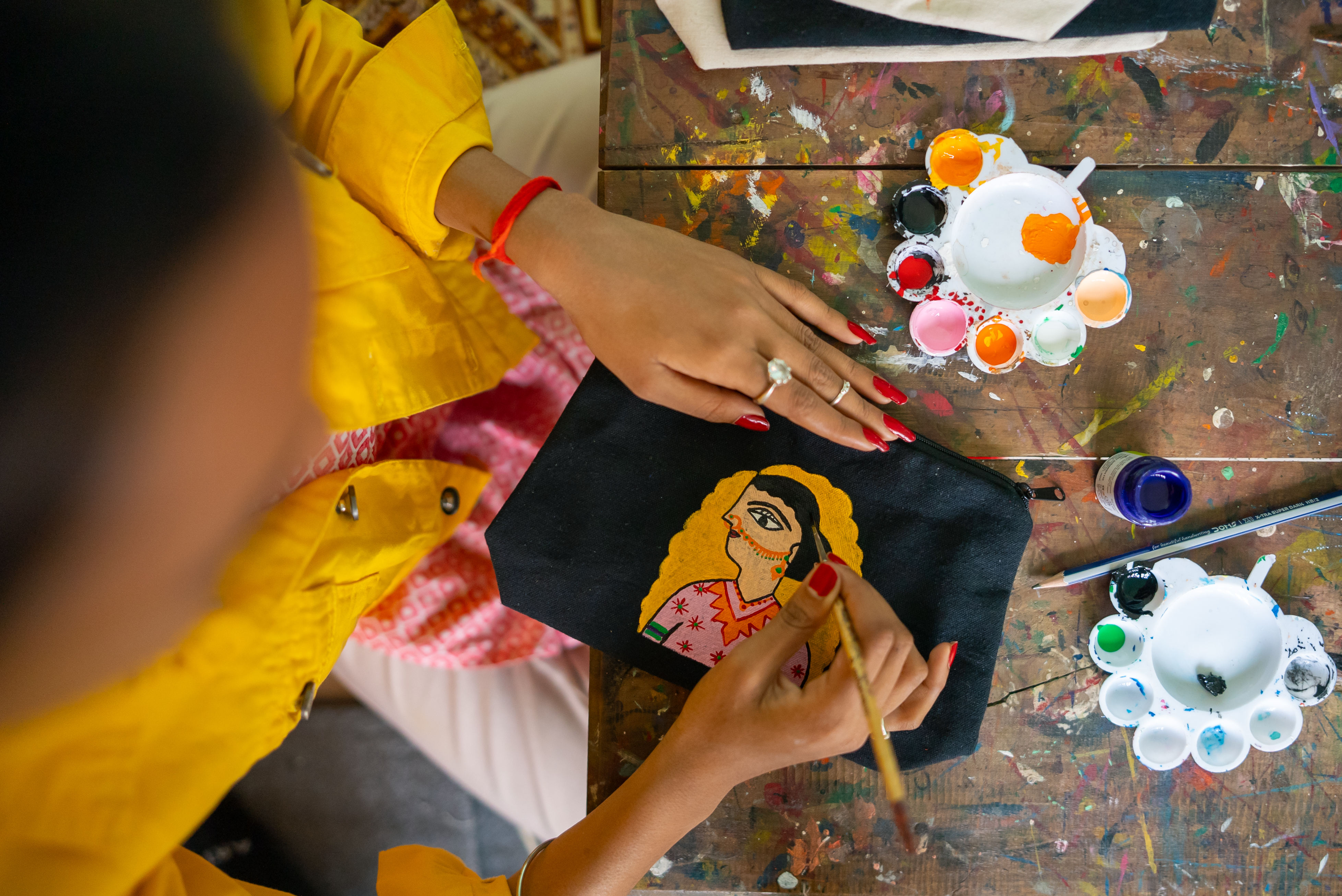
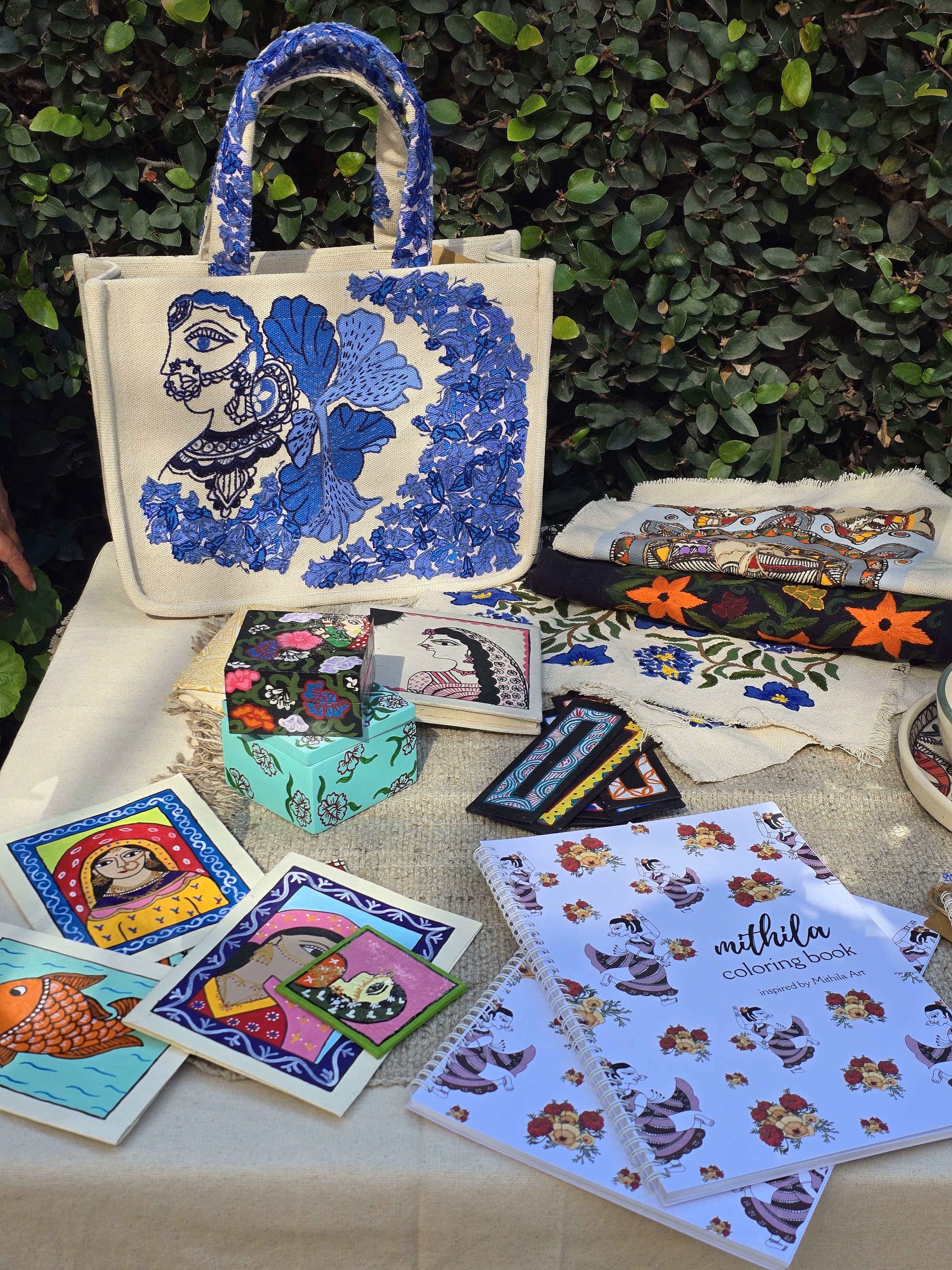
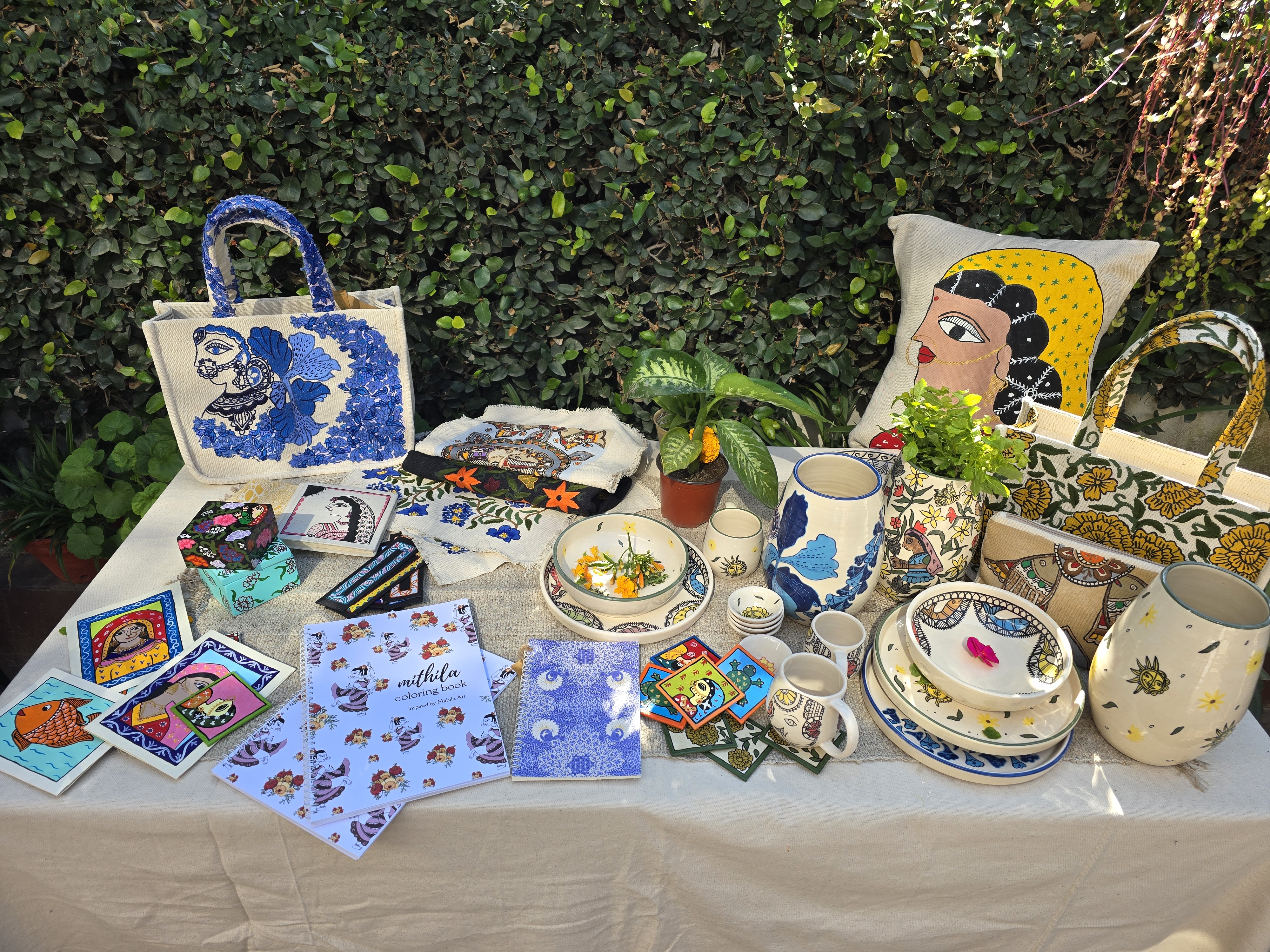
The products of Mithila By Danfe include tote bags, ceramics, coasters, greeting cards, jewellery boxes, colouring books, cushion covers and more. All of these products are hand-made by women in Janakapur. Some have embroidered art, while others have hand-painted Mithila art. One of the products, the tote bag, with its vibrant blue hue, captures a traditional image of a woman surrounded by flowers.
The design is intricately detailed and colourful, almost giving it a fashion-statement look. Another culturally symbolic product is their hand-painted diyos made for Tihar. Each of these products has distinct patterns of fish, flowers, the sun, and birds, which are frequently featured elements in Mithila art.
Samikchya Sharma, programme manager at SAATH, says, “Before training women in Janakpur, we realised Mithila art needed a stronger market. The local market lacks variety in the kinds of products that carry the art.”
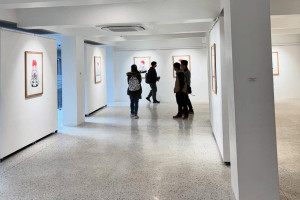
Courtesy of Siddhartha Art Gallery
Sharma adds that one reason for Mithila art’s popularity is the stories of the women behind it. Bringing these ideas together, Mithila By Danfe was created to promote indigenous art while also empowering the women who make it.
Earlier, SAATH trained women in Dhanushadham in 2019. Sharma recalls, “The sad reality was that you could hardly see Mithila art there. When we told people we were teaching Mithila art, many did not even know about it. Now, that may have changed.” At the time, there was little excitement around the art form.
The irony was striking. Dhanushadham, considered a sacred site in the Mithila region, where the art originated, had very little visible presence of the very tradition it gave birth to. This reflects how traditional art fades in its own homeland while gaining traction elsewhere.
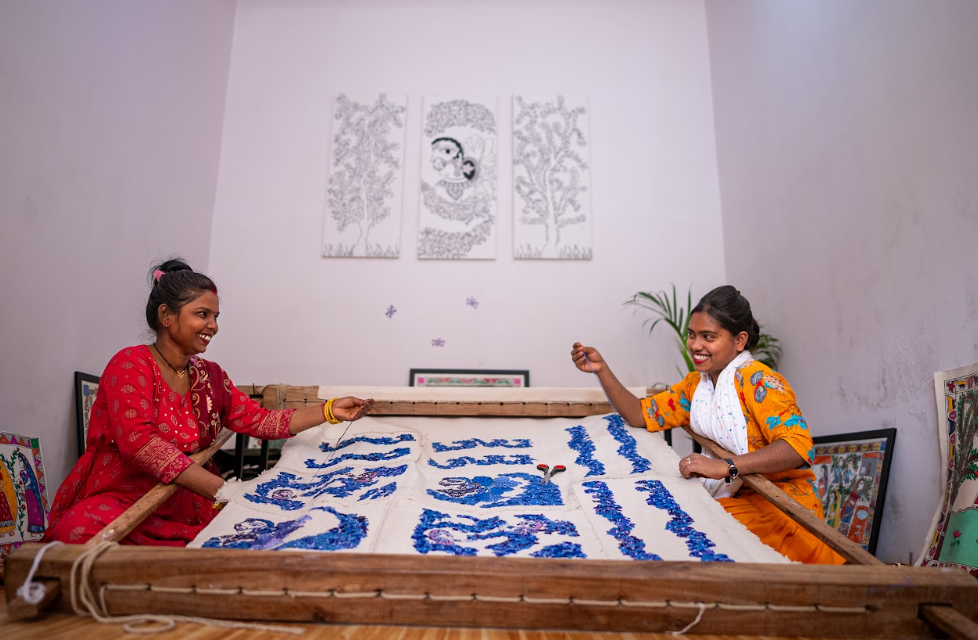
Originally, fifteen women were trained in Janakpur; eight of them now work to produce the art used in the organisation’s product design. The women artisans fall under the age group of 18 to 35. They all belong to different ethnic groups, encouraging diversity in training programmes and employee pools. Some of them have completed their schooling, while others are dropouts. Amidst all the differences among these women, one thing that unites them is their interest in Mithila art.
A devotee undergoes tongue piercing as part of Mye Pwa Khanegu Jatra (Tongue Piercing festival), an annual tradition at Bode, as part of the Jatra.
“I used to see Mithila paintings and wonder how they were made. My sister was learning it, and she inspired me to join. I wanted to learn something meaningful and earn from my skill,” says Kanchan Kumari Sada Musahar, a 22-year-old production artisan at Mithila By Danfe. She then joined the six-month training programme with the hope of becoming a Mithila artist and gaining financial freedom.
In the first few days of training, she struggled to make consistent lines. Slowly, with the support of like-minded trainee friends, she improved her skills. “Now I feel that I can create good art. I believe in myself,” she says.
Like Musahar, many women have been able to earn their own income. What was once seen as just ‘art’, without much significance in their daily lives, has now become a source of income. In addition to their regular salary, the artisans receive bonuses for any extra work they complete.
Mithila By Danfe’s production process also focuses on sustainability. Among their wide range of products, only natural fabrics such as bamboo, cotton, and merino wool are used. Similarly, cornstarch plastic is used in their products, making these items environmentally friendly.
As Mithila By Danfe blends traditional art with modern lifestyle products, a major challenge remains: finding a bigger market. Nepal’s market is too small to generate strong demand for products that thoughtfully integrate art into everyday items. Another factor is that Mithila art is often more appreciated by foreigners than by Nepalis. The story behind the art, its symbolism, and the hours required to create a single piece are valued more abroad.
Still, through curated events and pop-up markets, Mithila By Danfe’s products are slowly gaining attention. Younger audiences are discovering Mithila art beyond traditional walls, experiencing it in contemporary spaces as well.
The preservation of Mithila art is taking small but steady steps through Mithila By Danfe. The process begins with training women on line work, pattern differences, colour combinations, and the art’s history. Their crafts are then showcased to a wider audience, helping the art form grow and empowering women like Musahar.




 16.76°C Kathmandu