Until recently unimaginable but what now promises to be an exciting contest is in the offing for the leadership of the CPN-UML, the second biggest party in the recently dissolved lower house.
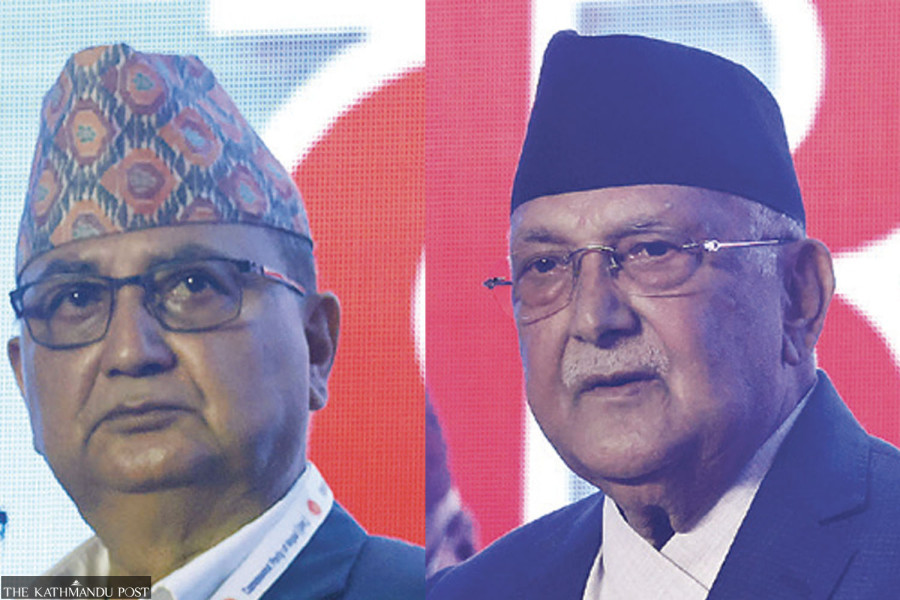
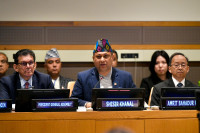
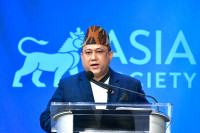
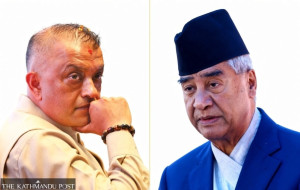
The party is heading for a rare clash for leadership during its 11th general convention scheduled in Kathmandu from December 13 to 15. The all-powerful party chair KP Sharma Oli—who before the Gen Z revolt seemed to have all but locked in another term as party chair—will now go head-to-head with Senior Vice-chair Ishwar Pokhrel for the top leadership post.
In the previous 9th and 10th general conventions, Pokhrel had been on Oli’s side. His decision to contest against Oli this time, however, has led some party office bearers to shift to his camp. Despite the Pokhrel’s side having fewer political heavyweights, the Oli faction could nonetheless find itself struggling on multiple fronts.
A major concern for the Oli camp is the selection of its candidate for general secretary. Current General Secretary Shankar Pokharel, along with the two deputy general Secretaries, Prithvi Subba Gurung and Pradeep Gyawali, are all considered potential contenders for the post.
During the party’s first Statute Convention in 2021, Oli had allowed Shankar Pokhrel to present the party report, signalling his intent to elevate him to the position of general secretary. But during the second Statute Convention that concluded in September Gyawali was given this opportunity and many party cadres reckon Gyawali might be promoted this time.
Deputy General Secretary Gurung, however, disagrees. He argues that Oli assigned a leader to read out the two-hour-long report in light of his iffy health, and this does not indicate who will become the next general secretary.
“I am also a claimant for the post of general secretary,” Gurung told the Post on Tuesday.
Some leaders suggest that Oli may face difficulties if he promotes one deputy general secretary while sidelining the others. In such a situation, they claim, Oli might retain Shankar Pokhrel as general secretary and elevate the deputy general secretaries to vice-chairpersons.
But Gurung rejects this claim.
“The party should promote leaders based on capability,” Gurung said. “We should not sideline someone just because it may be difficult to accommodate others.”
Meanwhile, party secretary Padma Aryal claims there has been no discussion in the party regarding candidates for specific positions.
“We first need internal discussions. It is not right for someone to declare themselves as candidates for a particular post,” she said.
Informed sources suggest that if the party ultimately heads into a contest between two panels (Oli vs Pokhrel), Aryal is likely to contest for vice-chair from the Oli camp. With current vice-chair Astalaxmi Shakya opting out due to age, the post reserved for a woman will be vacant, raising the possibility that Aryal will be Oli’s preferred candidate.
Similarly Gyawali, another deputy general secretary, has not clarified which position he will contest, but indicated that he will not run for deputy general secretary this time.
“You will know in a few days which position I aspire to,” he told the Post.
The general convention follows September’s Gen Z movement, which was largely against incumbency and corruption, creating pressure on the UML and other major parties to give more space to younger leaders.
UML sources claim that Oli may promote senior leaders to vice-chair positions and elevate new faces to secretary posts if there is a two-camp contest at the general convention.
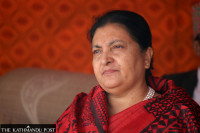
Delegate selections across the country indicate that the convention is likely to see two panels—Oli leading the establishment camp and Pokhrel heading the dissidents with the backing of President Bidya Devi Bhandari. Earlier, Oli had prevented the ex-President from rejoining the party.
Some leaders believe that Bhandari still wields a degree of influence in the party. They argue that she was active in the UML for many years before becoming President in 2015 and, as the widow of the late charismatic party leader Madan Bhandari, continues to command a certain level of trust within the organisation.
Despite such claims, only a few members of the central committee were willing to openly support Bhandari during the party meeting last July. Nearly 90 percent of them opposed the proposal to grant her party membership, citing her former role as President.
As Bhandari is herself unable to take part in party affairs, she is believed to have thrown her support behind Pokhrel. Their view is reinforced by the fact that her office in Thapagaun has recently become a meeting place for leaders aligned with Pokhrel.
However, some UML leaders say that nothing is impossible in politics and no one should be surprised if the two rival panels still reach an understanding before the general convention.
A few provincial-level leaders told the Post that they are working vigorously for rapprochement.
Deputy General Secretary Gurung does not dismiss such a possibility and says, “In politics, you never know!”
Meanwhile, another UML leader, Bishal Bhattarai, says that if the party heads towards a panel-based contest, Shankar Pokhrel, Gyawali, and Gurung will be the strongest contenders for general secretary from the Oli camp. He added that it is still too early to predict with certainty who will claim other positions.
Regardless of the contenders, Bhattarai says the Secretariat will be structured to ensure proper representation of all party components including geography, mass organisations, and other affiliated bodies.




 28.33°C Kathmandu