Nepal’s health system has long remained under strain as overcrowded public hospitals put immense pressure on patients and medical staff. Experts say the incoming government must act quickly to strengthen healthcare.
Alongside overburdened hospitals, rising suicide rates suggest a pressing need for immediate action. As many as 24 people die by suicide per 100,000 each year in Nepal. Police data show 19 to 20 people take their own lives daily.
People do not attempt suicide for any single reason. Experts say it is usually the result of a complex mix of factors, including rising living costs and struggles to meet basic needs such as food, housing, healthcare, and job security.
“Even individuals who appear healthy on the outside could also be struggling with serious mental health problems,” said Dr Basudev Karki, consultant psychiatrist. “Suicide is the manifestation of underlying social, psychological, and economic and other problems. Its ripple effects impact not only the individual but also families, friends, colleagues, communities, and society.”
As a new Rastriya Swatantra Party (RSP) government with a landslide mandate is set to take office, public health experts expect the implementation of campaign-trail promises. Health indicators, they say, will be the clearest measure of whether the promises turn into results.
“Healthy citizens are the true wealth of a nation, and investing in health is essential for development,” said Dr Baburam Marasini, a public health expert. “The new government must give first priority to health care and increase budgets, fix existing problems, and improve overall health outcomes.”
Experts are cautiously optimistic because healthcare professionals have been elected to new parliament from the RSP. They have called on the new government to formulate policies based on research, make healthcare affordable and accessible to all, expand and improve existing services, stop brain drain of expert human resources, and address the frustration of public and expert human resources.
“A lot of doctors and experts are frustrated and feel nothing better will happen in Nepal,” said Dr Sher Bahadur Pun, chief of Clinical Research Unit of Sukraraj Tropical and Infectious Disease Hospital. “It is the responsibility of the new government to restore hope and make people believe that our future lies here.”
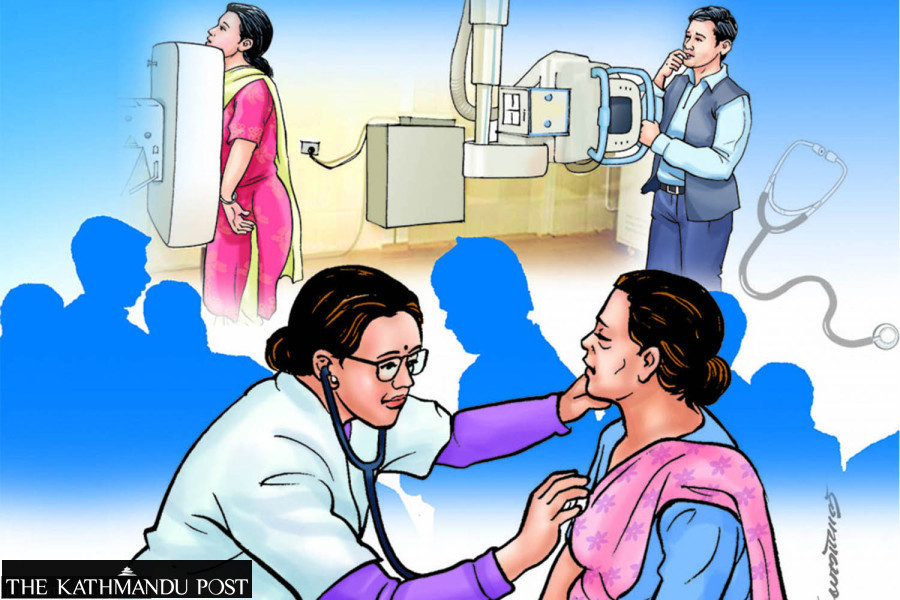
State-run health facilities face severe challenges. Hospitals are overcrowded and patients have to wait in long queues for the services. Even urgent cases, such as toothaches or other painful conditions, can take weeks to receive treatment. Accessing ultrasounds or surgeries can take months, and defunct medical equipment remain unrepaired for months.
Patients have to travel days and are compelled to travel to the capital city for treatment. Many patients must travel to Kathmandu for treatment, as most health facilities lack doctors, and many medical professionals refuse to work in remote villages.
“These problems can be addressed immediately, if the new government will and provide better incentives to doctors,” said Pun. “Prevalance of non-communicable disease have been growing of late and our more focus is on curative services. Liability will be high, if we fail to focus on preventive service.”
Of late, climate change has created new challenges, including the spread of vector borne diseases like dengue, Japanese encephalitis, malaria, Kala-azar,and scrub typhus in areas previously considered safe.
Experts stress that healthcare must be made affordable to all. To achieve this, services of state-run health facilities must be made effective and accessible, price of medicines controlled, and quality of medicines ensured, they say.
“Everything depends on the overall performance of the new government,” said Marasaini. “If national economy improves, we can expect more budget allocations in healthcare, resolution of health insurance issues, decline in mental health problems and suicide rate, fewer maternal and child deaths, and improvement in nutrition. If the new government acts like previous governments, nothing will change.”
Arjun Poudel is a health reporter for The Kathmandu Post. Before joining the Post, he worked for Sagarmatha Television, Naya Patrika, Republica and The Himalayan Times.




 14.69°C Kathmandu