Extraction of construction materials deforms rivers
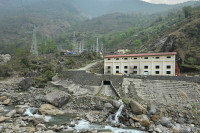
Holes as deep as 50 feet have been dug on the banks of Sunkoshi and Indrawati rivers in the eastern part of the Kathmandu Valley to illegally extract construction materials, such as sand and stones.
Holes as deep as 50 feet have been dug on the banks of Sunkoshi and Indrawati rivers in the eastern part of the Kathmandu Valley to illegally extract construction materials, such as sand and stones.
These holes could be seen in areas stretching from Simle to Sukute and from Dolalghat to Melamchi along the Araniko Highway. This practice of illegally extracting riverbed materials, which could induce ecological disaster, has gone unchecked for years, yet concerned authorities, such as the District Coordination Committee (DCC) and the District Administration Office, have not taken any action.
Sand mining and crusher firms operating on the banks of Koshi River have long been flouting rules and breaching industry standards while extracting riverbed materials like sand, stones, pebbles and gravel. These firms are currently operating over 100 excavators to extract sand and stones illegally round the clock.
Banks of Sunkoshi River, for example, are now dotted with excavators and trippers to extract and transport riverbed materials, while over 50 excavators are currently operating on the banks of Indrawati river.
The holes dug by excavators are so deep, they have the potential to change the course of rivers, according to experts.
Sand mining and crusher firms, as per the law, can extract stones, pebbles, sand and gravel only after conducting environmental impact assessment. Riverbed materials cannot be extracted by digging pits deeper than 2 metres (6.56 feet), according to Chief District Officer (CDO) of Sindhupalchok, Asman Tamang. “If anyone violates this rule, they will be punished as per the provisions in the Environment Protection Act (1997),” said Tamang.
But crusher firms operating in Sukute have dug holes as deep as 15 feet (4.57 metres) to extract riverbed materials. Crusher firms operating on the banks of Sunkoshi river in Simle, on the other hand, have dug holes as deep as 10 feet. There are places where holes are as deep as 50 feet, experts said.
Yet no action has been taken against these crusher firms that are deforming rivers and increasing threats of an environmental disaster.
DCC Chairman Gopal Tamang said, “Any activity that violates governmental norms would be stopped by conducting supervision immediately.”
Sand and stone are being extracted in a haphazard manner in the district because of weak oversight of and controversial permits issued by local bodies. Melamchi Municipality, for example, has allowed crusher firms to use excavators from “sunrise to sunset”. “This kind of support extended by the municipality has encouraged crusher firms to flout the rules,” a local said, adding, “Crusher firms are operating with the support of the police and local administrative offices.”
Over 18 crusher firms are formally registered in the district. Lately, demand for construction materials like sand, stones, pebbles and gravel has gone up throughout the country as post-earthquake reconstruction and other infrastructure development work have gathered pace.




 14.68°C Kathmandu