Interpol denial in Deuba case raises questions about investigation lapses
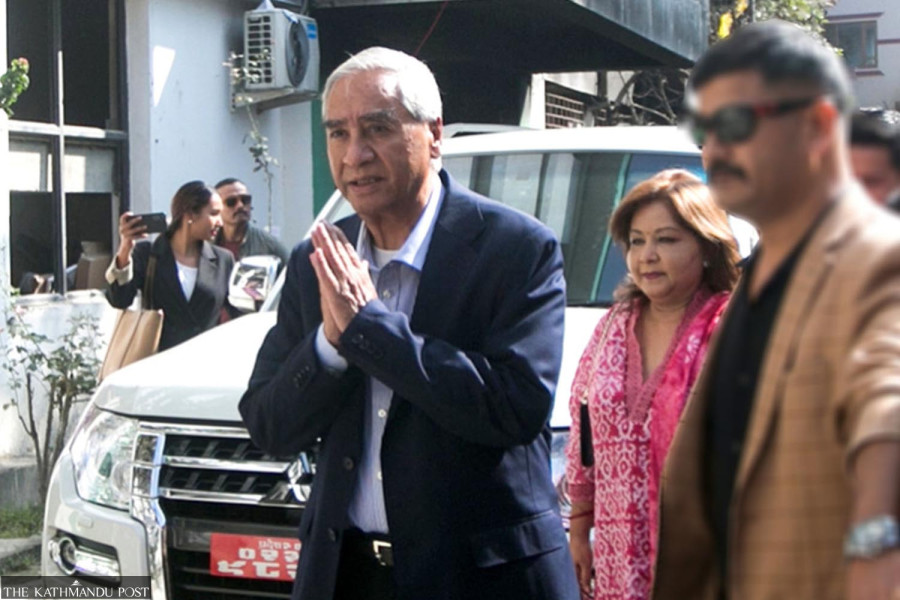
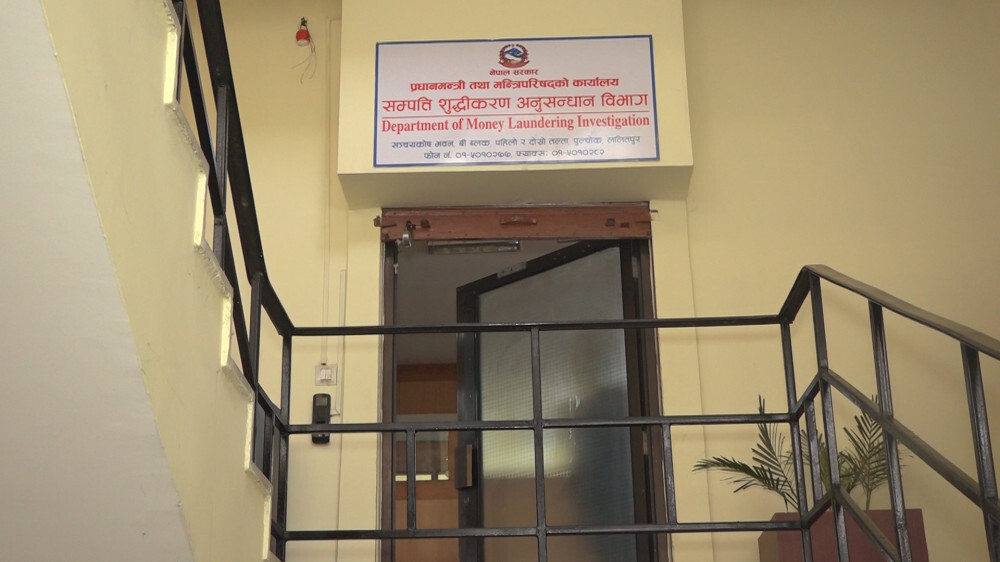
Legal experts have questioned the investigation process of the Department of Money Laundering Investigation after Interpol refused to issue a Red Notice against the Deuba couple.Post file photo
Days after a new government led by Balendra Shah took office, Nepal Police, on April 7, issued arrest warrants against Prime Minister Sher Bahadur Deuba and his wife, former Foreign Minister Arju Rana Deuba.
Since the Deuba couple was not in the country — they had left Nepal just before the March 5 elections for Singapore and had not returned — police, at the request of the Department of Money Laundering Investigation (DMLI), also sent correspondence to Interpol seeking a Red Notice against them. The request aimed to bring them to Nepal for investigation under allegations of money laundering.
Based on reports and social media posts, the couple was said to be in Hong Kong at the time of the correspondence. Kantipur could not independently verify their current whereabouts.
However, in the first week of May, police said that Interpol had denied issuing a Red Notice against the Deubas, citing “insufficient” grounds.
A police official familiar with the matter told Kantipur, on condition of anonymity, that the Interpol Secretariat returned the request, stating that the grounds were “insufficient” to issue a Red Notice against the Deubas.
According to DMLI and Nepal Police officials, two main reasons were presented to justify issuing the notice: ongoing investigations into the couple’s alleged acquisition and laundering of illegal assets, and the existence of arrest warrants issued by the District Court of Kathmandu for both individuals.
Officials say Interpol raised questions about past cases and the legal basis under which the current money laundering investigation is being conducted. In response, the National Central Bureau, Nepal Police’s official point of contact with Interpol, submitted a second request providing updates on the investigation’s progress.
The police official confirmed that Interpol has not yet responded to the second request, but refused to divulge why the international agency needed the details it sought.
“This case is being investigated by the Department, and Nepal Police is just a forwarding agency,” said Abi Narayank Kafle, a DIG at Nepal Police. “So the police department is unaware of the matter.”
The refusal by Interpol not only serves as a rebuke to the investigating agencies but also highlights deeper procedural and interpretive questions within Nepal’s money laundering investigation framework.
Because Interpol did not issue the notice, the government’s immediate effort to arrest and repatriate the couple from abroad has been delayed. The outcome of the second attempt will depend on whether Interpol ultimately agrees that sufficient grounds exist to issue a notice.
Experts say the episode raises questions about whether the investigations were prematurely advanced. They also question whether Nepali investigative agencies and Interpol interpret the conditions necessary for money laundering investigations differently.
Deputy Attorney General Sanjeev Raj Regmi says Interpol’s denial should be viewed in light of procedural errors.
According to Regmi, such procedural lapses can weaken the case against the accused, and even if the money was laundered from illicit sources, such errors increase the risk that offenders might escape accountability.
“The investigative agencies must answer why this happened,” he added.
The Money Laundering Prevention Act defines money laundering as the act of making illegally acquired assets appear legitimate by concealing their origin, changing their nature, or manipulating transactions. Two conditions are mandatory. First, the asset must be acquired through a crime, including corruption, tax evasion, human trafficking, and others, known in law as the “predicate offence,” or in Nepali, “sambaddh kasur.” Second, the asset must then be introduced into the legal economy in a way that makes it appear legitimate.
A full bench decision by the Supreme Court on October 24, 2024, explicitly recognised this second step as the act of laundering.
In neighbouring India, the Supreme Court, in a July 2022 ruling, held that to constitute money laundering, “the assets must originate from a crime, establishing that laundering itself is not a predicate offence but a secondary offence deriving from the main crime.” The United Nations Convention on Transnational Organised Crime similarly defines laundering as acts of transferring, moving, or converting proceeds of crime with the intent to conceal their illegal origin.
Prior to January 2008, Nepal had no law to prosecute such crimes. After the Act was passed that year, DMLI was given responsibility for investigating and prosecuting money laundering cases.
The Department has always been under the direct control of the government. Initially under the Ministry of Finance, it was moved under the Prime Minister’s Office in February 2018 during KP Sharma Oli’s tenure. An interim government led by Sushila Karki, formed after the September 8–9 Gen Z protests, brought it back under the Finance Ministry. Following the March 5 elections, a new majority government of the Rastriya Swatantra Party, led by Shah, is now in place.
The Shah government, formed on the promise of delivery and accountability, has made swift moves, including arrests and investigations, as part of its crackdown on corruption. The arrest warrant against the Deuba couple is part of what it calls accountability governance.
But with Interpol raising questions about insufficient grounds, experts say that in the name of accountability, the law must be applied fairly, and money laundering cases handled with prudence, not on a whim.
In Nepal, corruption or illegal asset acquisition by public officials and employees is usually investigated by the Commission for the Investigation of Abuse of Authority (CIAA). For individuals not holding public office whose asset sources are unclear, the Department of Money Laundering Investigation conducts the investigation.
After the amendment to the Act on April 12, 2024, other investigative agencies, including the CIAA, were also allowed to investigate money laundering, ending the Department’s sole jurisdiction.
Because a predicate offence can include any illegal activity, the law specifies that the investigating agency depends on the nature of the underlying crime. Forest or wildlife-related crimes are dealt with by the Forest/Wildlife Office, tax evasion by the Department of Revenue Investigation, and corruption by the CIAA. If money laundering is detected in connection with these crimes, the same agency conducts the investigation. The Act identifies 32 types of crimes as “sambaddha kasur,” including human trafficking, drug trafficking, arms trafficking, corruption/bribery, fraud, and counterfeit currency. If money laundering is found in connection with them, it is investigated separately by the same agency.
Legal experts say arrests are generally unnecessary for collecting evidence in money laundering investigations.
Regmi, the deputy attorney general, says arrests should only occur if the suspect is likely to flee or evidence may be destroyed. Since money laundering is not a crime that occurs overnight, rushing to arrest is unnecessary and constitutes misuse of the legal framework.
Section 19(g) of the Money Laundering Prevention Act mentions special investigative methods, including deploying informants, conducting covert operations, accessing telecommunication or electronic data, and inspecting computer systems — all without immediate arrest.
Lawyer Subash Acharya notes that historically, money laundering investigations were often used as a tool to target individuals, weakening their effectiveness. Regarding the recent Red Notice request against Deuba, he says, “It is wrong to proceed as if arresting first is the only way to investigate a case. Evidence collection must come first.”
According to him, arrests are generally unnecessary for collecting evidence in money laundering investigations.
He points to what he describes as an even more dangerous trend: money laundering investigations in the past were used to discipline people and settle scores, preventing them from becoming effective.
Though he considers the Red Notice request to bring back the Deubas is justified, he says investigations should not begin with arrests alone.
“Burned banknotes were found at [Deubas’] home. When no other agency took initiative for investigation, the DMLI should have moved ahead. It did,” he said. “It cannot be taken otherwise.”
He, however, cautions against the weaponisation of the DMLI to accumulate power.
“The Directors General also used the DMLI in the past as a tool to maintain proximity to power,” he said. “The current government must end such trends.”
After the amendment to the Money Laundering Prevention Act on April 12, 2024, the Department can no longer unilaterally investigate complaints. It may conduct preliminary inquiries and forward cases to the relevant agency for full investigation. For example, when former Minister Deepak Khadka was arrested last month for money laundering, the Department conducted the initial investigation and then handed the case over to the Department of Revenue Investigation.
For the Deuba couple, however, the Department actively pursued every procedural step — from requesting arrests to placing them on the fugitive list. Experts say this not only highlights procedural errors but also demonstrates disregard for the jurisdiction of the relevant investigative agency, which may explain why Interpol rejected the Red Notice request.
Just as concerns were being raised about procedural lapses and DMLI’s effectiveness, the Shah government, through an ordinance, amended the Act, granting the Department authority to treat financial crimes as predicate offences and investigate them directly.
The second request to Interpol was sent following the amendment of the law.
Officials say the Department’s return to direct control was intended to improve effectiveness and ensure the country’s assets are properly scrutinised. However, questions remain about decisions made before the ordinance and about ongoing investigations.
Constitutional law expert Bipin Adhikari notes that because executive power heavily influences money laundering investigations, the matter warrants broad parliamentary discussion.
“Except in rare cases, investigative officers have a tendency to arrest first and collect evidence later, based on personal discretion. This is particularly dangerous in specialised and complex crimes like money laundering,” he said.
He compares the current investigation of the Deuba couple and former Minister Khadka with past cases of cooperative fraud, including that of Rastriya Swatantra Party chairman Rabi Lamichame, noting a high risk of executive overreach.
“Despite the CIAA being constitutionally mandated to investigate corruption, the government has used the Department to shape cases from the outset, then arrest and gather evidence later. This is extremely hazardous,” Adhikari said.
Since its establishment, the Department has filed 121 money laundering cases in court. After predicate offence investigations were assigned to relevant agencies, the CIAA filed six cases and the Police 21 cases over two years. Some cases from the Revenue Investigation Department and Forest Offices also reached court. Yet, no money laundering case has been finalised in line with official claims or expectations.
Asked about the Interpol denial and the next steps, DMLI Director General Uttam Kumar Ghimire said he could not comment on the matter at this time.
Legal experts warn that because the Department remains under the Ministry of Finance rather than an independent constitutional body like the CIAA, the government could wield this power at any time to target individuals.
The moot question remains the same: whether arrests are necessary for investigations, as seen in several recent incidents where arrests were made first, and evidence collection came later.
“The law does not require detaining a suspected person before gathering evidence,” says Regmi. “In money laundering cases, the law directs investigators to first collect evidence and then proceed with prosecution.”




 14.4°C Kathmandu