The rights Nepal promised its transgender citizens are quietly slipping away
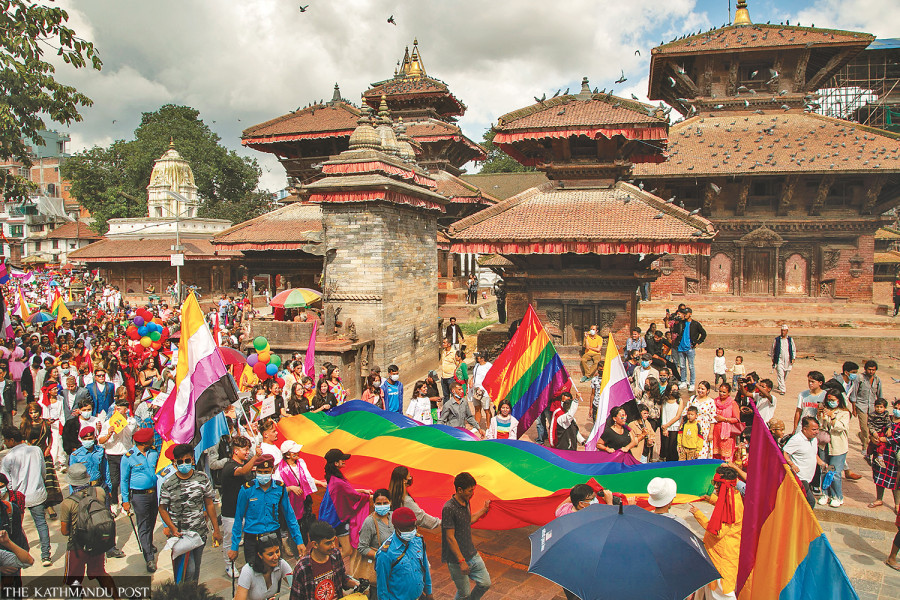
Nearly two decades after a landmark Supreme Court ruling made Nepal a global symbol of transgender rights, the home ministry has effectively suspended gender recognition for those seeking binary status. Post file photo
There is a particular cruelty in being promised something, watching it be written into law, and then being told, not through any official announcement, but through silence, unreturned calls, and stalled paperwork, that it no longer applies to you. That is the experience of many transgender people in Nepal today.
A report published on April 29, by the Human Rights Watch, based on interviews with eleven transgender individuals in December 2025, documents how the Ministry of Home Affairs has halted processing of legal gender recognition applications. People who spent years navigating district offices and collecting documents say they are being told their cases are on pause. No letter. No explanation. No timeline.
The halt exposes a structural flaw that has shadowed Nepal’s otherwise celebrated record on transgender rights: despite a landmark 2007 Supreme Court ruling directing the government to issue identity documents based on self-identified gender, no written policy was ever created to make that happen. What followed was nearly two decades of ad hoc decisions, arbitrary requirements, and individuals left entirely dependent on whichever official sat across the desk.
“Nepal has a proud history of principled legal developments that protected the rights of lesbian, gay, bisexual, and transgender people, and has played an important role on the global stage,’’ said Alex Müller, LGBT rights director at the Human Rights Watch. “The authorities should not allow disingenuous attacks to derail their work to uphold Nepal’s obligations under international human rights law.”
In 2007, Nepal’s Supreme Court ruled in Sunil Babu Pant and Others v Nepal Government and others that all individuals are entitled to dignity and equal protection regardless of gender identity, and directed the government to issue identity documents reflecting self-identified gender. The judgment drew immediate praise from the United Nations and has since been cited by courts in India, the United States, and by the European Court of Human Rights, a rare distinction for a South Asian ruling.
In 2011, Nepal became the first country to include a third gender option in its national census. By 2015, protections for sexual and gender minorities were written into the constitution itself. Nepal was not just keeping pace with the world. It was leading it.
The current pause is more legally specific than a blanket shutdown, according to Sunil Babu Pant, the activist and former Constituent Assembly member who filed the original 2007 case. He told the Post that the ministry filed a review petition in the Supreme Court around 2025, challenging a ruling that recognised transgender activist Rukshana Kapali as legally female without requiring surgery.
‘‘Questions have been raised from many sides, if everyone is given this right, what happens to women's reservations?’’ Pant said. ‘‘Even the army asked how they should recruit if people are given female status based on self-identification without surgery.’’
While that petition remains pending, the ministry has paused all binary recognition — male or female — for those without surgical documentation. Applications for the “Other” category, Pant said, are still moving.
Ananda Kafle, spokesperson for the Ministry of Home Affairs, said the ministry implements what existing law prescribes and that two surgical cases were recently approved by the Cabinet. Asked whether self-identification cases forwarded from district offices are being processed, he did not give a clear answer. The ministry had also not responded to a Human Rights Watch letter sent on April 8.
Pant is not unsympathetic to the complexity. He pointed to a recent UK court ruling that drew a legal distinction between biological women and trans women as evidence that these questions remain unsettled even in more developed legal systems. But he was clear about what Nepal must do.
“For 15 years, the Cabinet was doing it off the track, case by case,” Pant said. “Our law does not yet allow transgender people to move across the binary. We shouldn’t have this ambiguity. It is better to make a law through broad discussion involving transgender people, women policymakers, and human rights activists. Not case by case. Not a Cabinet decision.”
Aarya Chand is a reporter at The Kathmandu Post covering social issues. Before moving to the social beat, Chand was an intern covering culture and lifestyle for the Post.




 22.06°C Kathmandu