Encroachment crackdowns loom in Rautahat, Butwal and Pokhara
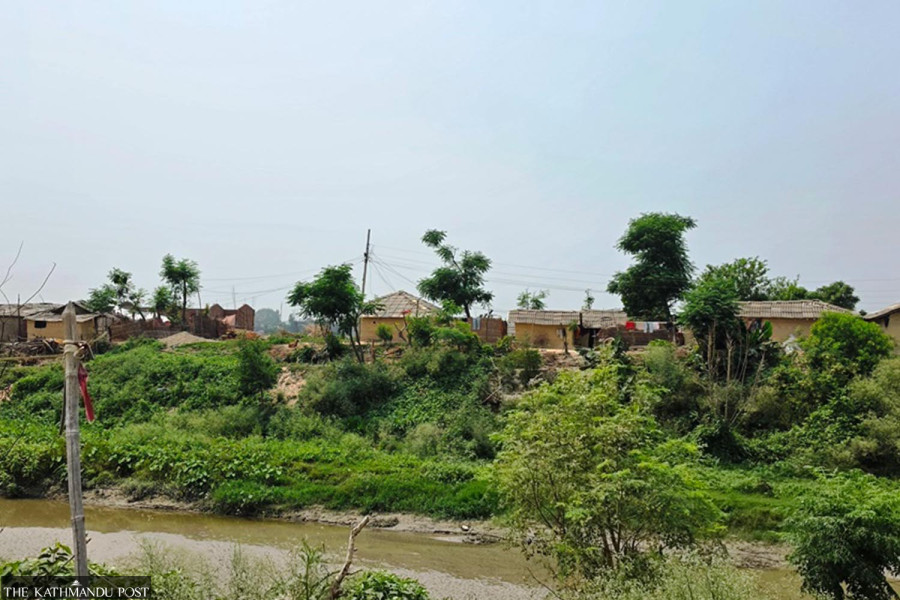
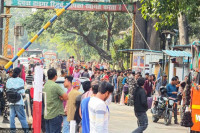
Authorities move to reclaim public land, issuing notices and preparing demolition drives. Structures built through encroachment along both sides of the canal of the Bagmati Irrigation Project in ward 5 of Chandrapur Municipality, Rautahat. Shiva Puri/TKP
Authorities in Rautahat, Butwal and Pokhara are preparing to clear encroachments from public spaces, a move expected to displace hundreds of households and businesses.
In Chandrapur, Rautahat, the Bagmati Irrigation Project is preparing to demolish structures built along both sides of the canal in ward 5 of Chandrapur Municipality. According to project officials, nearly 400 houses and temporary shelters have been constructed along a roughly two-kilometre stretch of the canal.
Encroachment along the canal dates back to 1997, when people—many identifying themselves as landless squatters—began building huts. Over time, these makeshift settlements have transformed into permanent residential structures, including concrete houses, shops and other facilities.
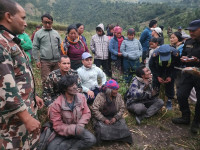
At a site near a banyan tree on the canal embankment, 41-year-old Indu Patel said she was uncertain about her future. She built a two-storey concrete house on the western side of the canal in 2021, investing around Rs1.3 million. “I did not fully realise that my house fell within the canal area. Now I don’t know what to do,” she said.
The decision to clear the encroachments has left hundreds of families uncertain about their future. Those with land elsewhere said they can relocate, but families without any alternative property fear being displaced, with nowhere to go.
Ramdaresh Yadav, originally from Brindaban Municipality, said he moved to Chandranigahapur in search of better income opportunities. He owns land in his home village and operates a pickup vehicle. “ I will return to my village if the house here is demolished. We cannot insist on staying on public land,” he said.
Over the past two decades, the canal banks have seen a steady rise in permanent construction. Residents have built houses directly on the embankment, set up shops, installed water taps and even used parts of the canal area for livestock.
Project officials said the encroachments have severely disrupted maintenance, cleaning and water supply operations. The canal is considered a critical irrigation lifeline for southern Rautahat, and obstruction in its functioning could have broader agricultural and environmental consequences.
“Settlements built over the canal are creating serious problems for water flow and maintenance,” said Santosh Chaudhary, chief of the Bagmati Irrigation Project. “We have repeatedly issued notices asking people to vacate the area, but they have not obeyed. We will now proceed according to the law after coordination with the local administration.”
The project has been issuing annual notices asking encroachers to vacate the land, particularly ahead of canal cleaning operations. However, only a few have obeyed.
Ward chair Nilhari Koirala said that while clearing the encroachments is necessary, authorities must adopt a humane approach. “There is a need to distinguish between genuine landless people and those who have occupied land despite having other property,” he said. “Resettlement arrangements should be made for the landless before any eviction is carried out.”
The irrigation project recently issued a formal notice instructing residents to remove all structures. The notice, published on April 9, gave residents seven days to vacate the land.
Officials said the canal will also be used to channel water from the Sunkoshi-Marin Diversion Project, making it essential to ensure the system is fully operational and unobstructed.
Chief District Officer Dinesh Sagar Bhusal said discussions are ongoing regarding the eviction process. “We are currently holding consultations and will make a decision on Monday,” he said.
Encroachment has also affected infrastructure built alongside the canal, including inspection roads. In several locations, parts of the canal itself have been damaged due to unauthorised construction.
According to project data, 65 metres of land on the eastern side and 60 metres on the western side fall within the canal zone, much of which has been encroached upon. What began as temporary huts has now evolved into large concrete buildings, with some residents even cultivating land within the canal area.
Meanwhile, in Butwal, the sub-metropolitan city is preparing to deploy bulldozers to clear encroachments from land owned by the Butwal bench of the Tulsipur High Court. The move follows a formal request from the court, which has struggled for years to reclaim its property.
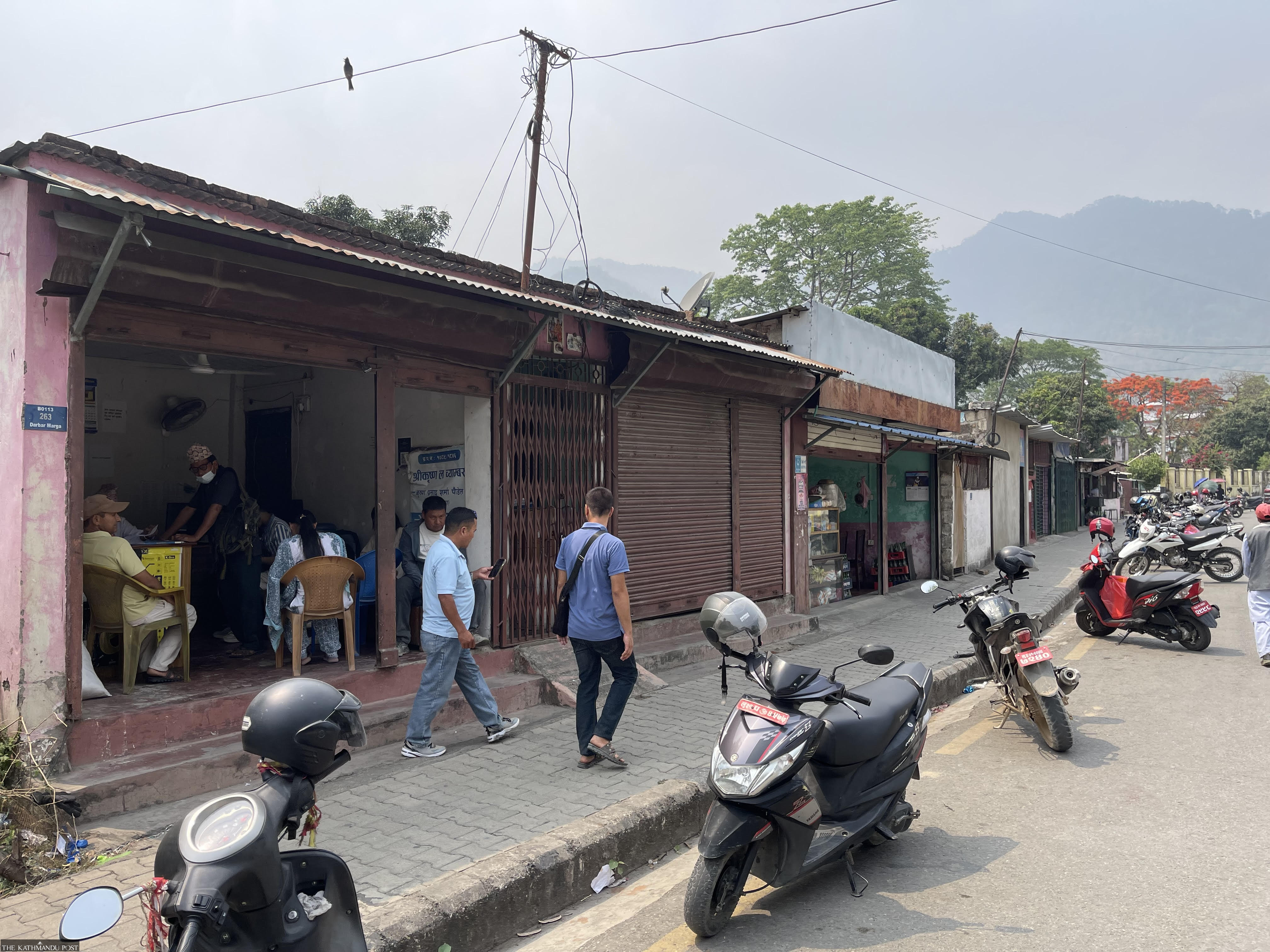
The encroached land lies along a road north of Jaycees Chowk in ward 4 of Butwal Sub-metropolitan City. The area, covering approximately 2 bigha, 5 kattha and 14 dhur (1.54 hectares) under plot number 396, has been occupied for over a decade by unauthorised structures.
The land of the Butwal bench of Tulsipur High Court has been encroached for a decade. Ghanashyam Gautam/TKP
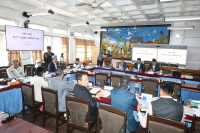
A meeting of the court’s physical infrastructure management committee, held on April 22 and also attended by the Chief District Officer, decided to request the municipality to take action. The court has since sent an official letter to the municipal authorities.
Although the municipality has received the request, it has not issued a public eviction notice as of Friday. Officials said internal discussions are ongoing regarding the next steps.
The encroached land includes buildings belonging to various organisations, including trade associations and journalist bodies, as well as some government offices. The area stretches from Jaycees Chowk northwards, bordered by the water supply office to the south and extending west from the road in front of the court.
Historical records show that the land was originally registered under the name of the zonal commissioner during the Panchyat area. After the administrative system was restructured in 1990, a government decision on December 19, 1991, transferred ownership to the then appellate court, now the Butwal bench of Tulsipur High Court.
Despite multiple attempts, the court has been unable to reclaim the land. It first issued a public notice on October 10, 2013, followed by another effort on May 6 2014, through a study committee tasked with identifying encroachments.
However, a lack of sustained interest from court leadership and local authorities stalled progress. The current Chief Judge Basudev Acharya has renewed efforts to recover and protect the land.
According to Information Officer Thirendra Kumar Subedi, construction of a court building is already underway on a separate, unencroached plot. “Efforts are now focused on identifying and protecting the remaining land,” he said.
More than 15 individuals are currently operating businesses or residing on the disputed plot. Some have rented out their properties. The Nepal Bar Association building is also located within the encroached area.
Some occupants claim that the land was distributed based on political decisions during a period without elected local representatives. In 1995, the Squatter Problem Resolution Commission issued land ownership certificates to eight individuals for plots within the court’s land.
Following complaints, the Ministry of Land Reform annulled those ownership certificates in 2012 through a secretary-level decision, and the district land revenue office invalidated the land ownership.
In Pokhara, authorities have taken a different approach, issuing a 35-day ultimatum for encroachers to vacate public, government and committee-owned land.
The Pokhara Metropolitan City and the Pokhara Valley Town Development Committee have issued separate public notices targeting unauthorised structures built on public land, unregistered plots and land owned by the development committee.
The decisions were made by the metropolitan executive on April 16 and by the development committee on April 20. The notices were published on April 17 and April 21, respectively, instructing encroachers to remove structures within 35 days.
Authorities said complaints had been growing about individuals and organisations occupying public land to run offices, construct rental buildings and enclose areas for private use.
The town development committee, which operates under the Ministry of Urban Development, said its notice applies to those who have built structures without formal agreements or approval.
Both bodies warned that failure to comply within the deadline would result in forced removal of structures in coordination with relevant agencies. The metropolitan office also said that costs incurred during demolition would be recovered from the encroachers.
Assistant Chief District Officer of Kaski Chitrangat Baral said no directive has been issued by the federal government specifically regarding the removal of squatter settlements.




 24.51°C Kathmandu

.jpg)