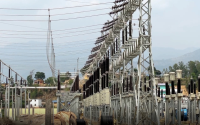
The government has unveiled a 21-point plan to revive Nepal’s capital market after the Bhotekoshi floods caused major damage to listed hydropower projects and other infrastructure, adding to pressure on the economy.
The plan, issued by the finance ministry on Monday, includes incentives for initial public offerings, new market infrastructure, a restructuring of the Nepal Stock Exchange, tax changes and measures to broaden the range of financial instruments available to investors.
The Securities Board of Nepal will immediately issue guidelines setting basic eligibility requirements for companies seeking to go public, according to the plan. It will also introduce sector-specific rules for market-based public offerings covering hydropower, manufacturing and processing, hotels and tourism, agriculture and pharmaceuticals. The new framework will include requirements for eligibility, price discovery and securities allocation, with the necessary legal and policy changes to be implemented by mid-January 2027.
The government also plans to develop the bond and money markets by making mutual funds more professional, diversified, transparent, risk-aware and technology-driven. The securities regulator will publish a policy immediately and put in place the necessary rules and infrastructure by mid-December 2026.
The board will also issue a policy for institutional reform of securities brokers, with the aim of turning them into modern, professional and technology-driven financial service providers offering a broader range of services in line with international standards.
The government will separately draft bills to update the Securities Act, 2007 and strengthen regulatory and market infrastructure. The changes will provide a legal framework for margin lending, intraday trading, securities lending and borrowing, and short selling.
The government will also move ahead with a restructuring of the Nepal Stock Exchange based on recommendations submitted by a government-appointed task force in January.
The plan calls for Nepse’s existing index to remain an all-equity index while introducing a new benchmark index by mid-December 2026. The new index will take into account factors including tradable shares, market capitalisation, companies’ financial health, trading liquidity, corporate governance and the quality of information disclosure.
The government also plans to open the secondary securities market to non-resident Nepalis. Amendments required to the Foreign Investment and Technology Transfer Act and the Foreign Exchange (Regulation) Act are to be submitted to the Cabinet by mid-October.
To shift Nepal’s financial system away from its heavy reliance on bank lending, the government plans to expand the institutional bond market. The securities board is expected to amend and implement its bond regulations by mid-October 2026.
The plan also calls for policies to encourage specialised bonds, including green, disaster, social, project-specific and environmental bonds. The framework will cover how the proceeds are invested and how issuers disclose that information.
The securities board will review trading fees and prepare the policy and market infrastructure needed to build a more active secondary market for Treasury bills and development bonds by mid-October.
The plan also seeks to make several existing corporate actions more workable, including share consolidation and subdivision and share buybacks from retained earnings. The regulator is expected to put the necessary rules and infrastructure in place by mid-February 2027.
The finance ministry is to approve rules covering bonds, margin lending, and intraday trading, and implement them by mid-October 2026.
The government will also modernise the share-buying system and launch margin trading through licensed securities brokers by mid-January 2027. The plan further proposes amending the Securities Act so that the Securities Board of Nepal can investigate and probe securities-related offences and private companies can issue bonds.
The government plans to create the legal and market infrastructure needed to bring more institutional investors into both the primary and secondary markets by mid-October.
The Securities Board will also align rules and procedures with its institutional investment policy by mid-December. The aim is to establish a framework for institutional investment, trading structures and supporting infrastructure.
The plan specifically seeks to reduce institutional investors’ heavy concentration in bank deposits by facilitating greater investment in securities by the Employees Provident Fund, Citizens Investment Trust, Social Security Fund, insurance companies and mutual funds. The necessary legal, policy and structural changes are to be made by mid-December.
The government will also study the institutional capacity and structure of CDS and Clearing Ltd, which operates Nepal’s central depository system, with the review to be completed by mid-March 2027.
The Securities Board and Nepal Rastra Bank will jointly review the rules governing banks’ and financial institutions’ investment in the capital market by mid-November. The review will cover investment limits, risk weights and collateral requirements, while considering capital mobilisation, direct and indirect risks, interconnectedness, contagion effects, financial interests, systemic risk, liquidity, returns and depositor protection.
The government also plans to revise the tax regime to encourage long-term investment in the capital market.
Under the proposed changes, capital gains on securities held by resident individuals for more than 365 days would be taxed at 3.75 percent, while gains on holdings of 365 days or less would be taxed at 5 percent.
The plan also proposes changing how capital gains are calculated by allowing profits and losses to be netted through the trading and settlement system, with the applicable capital gains tax imposed only on net gains.
Nepal Rastra Bank will also be required to set an investment policy under which the minimum investment holding period is 45 days.




 23.94°C Kathmandu