



 19.14°C Kathmandu

Thu, Oct 22, 2026
Money
IMF mission chief Sarwat Jahan: Nepal’s economy became more stable in last four years
IMF mission chief says Nepal has strengthened its economic buffers and institutions after years of shocks, but must now focus on private investment, job creation and inclusive growth.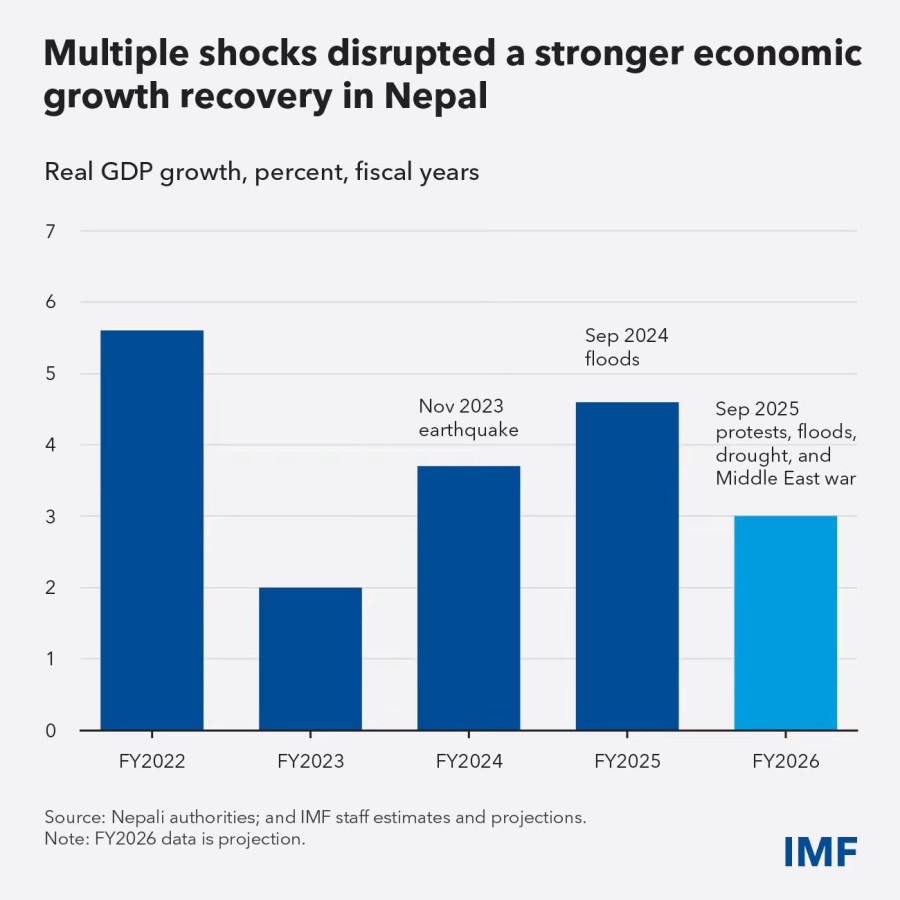
bookmark![]()
Post file photo
Sangam Prasain
Published at : August 20, 2026
Updated at : August 20, 2026 19:55
Kathmandu
Nepal’s economy is significantly more stable than it was when its latest reform effort began in 2022, but the country must now turn that stability into stronger private investment, jobs creation and more inclusive growth, according to Sarwat Jahan, Nepal Mission Chief at the International Monetary Fund.
Speaking to Country Focus, an online news and analysis platform run by the IMF, Jahan said Nepal had completed its first IMF-supported programme in nearly two decades and made significant progress despite navigating repeated economic, political and natural shocks.
“Inflation has fallen sharply, international reserves have increased, and the primary fiscal deficit is lower,” Jahan said. “Equally important, the country has improved some of the institutions that support economic policymaking.”
She said the progress was particularly notable because Nepal went through several government transitions, natural disasters and global shocks during the programme.
Since the general elections in November 2022, Nepal has experienced frequent coalition shifts and changes in leadership.
The country has also faced severe natural disasters, including the November 2022 Doti earthquake, the destructive October 2023 Bajhang earthquake, and massive monsoon flash floods and landslides in 2024 and 2026 that displaced thousands and caused widespread casualties.
In September 2025, large-scale anti-corruption protests and demonstrations took place across Nepal, predominantly organised by Gen Z.
“Despite that difficult environment, the reform effort stayed on track,” she said, attributing the outcome to a consistent policy anchor, a programme adapted to Nepal’s evolving political situation and strong capacity-development support.
The improvement in macroeconomic indicators has been broad-based. Average inflation fell from 7.7 percent in the fiscal year 2022-23 to 1.7 percent in the first half of fiscal year 2025-26, according to Jahan.
International reserves have also increased substantially, rising from around nine months of import cover to more than 12 months. At the same time, public finances improved as the budget deficit narrowed sharply, while public debt remained at a low risk of distress.
“These are not just abstract figures,” Jahan said. “Lower inflation protects people’s purchasing power, larger reserves guard against currency and trade pressures, and healthier public finances give the government a buffer to respond when the next crisis hits.”
However, Nepal’s economic recovery has repeatedly been disrupted by shocks.
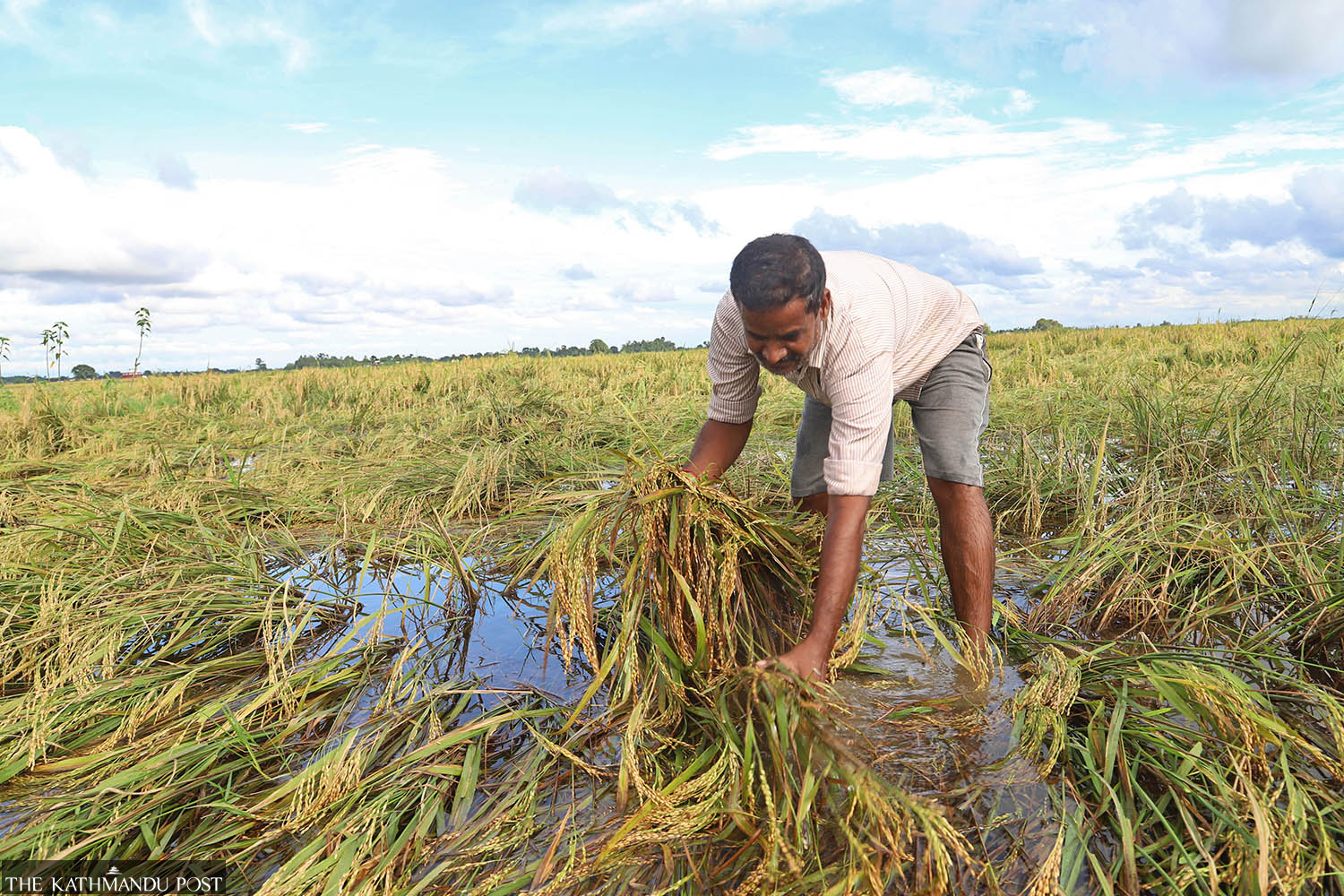
Jahan pointed to the major earthquake in 2023, severe floods in 2024 and social unrest last year as events that increased uncertainty and disrupted economic activity.
More recently, higher energy prices linked to the war in West Asia have added further pressure.
The conflict has disrupted Nepal’s economy, pushing up fuel prices, stranding migrant workers and affecting tourism. As a landlocked country dependent on imports and remittances, Nepal faced immediate financial strain, higher transport costs and shortages of chemical fertiliser, which contributed to price increases.
“Each shock interrupted the recovery, and together they weighed heavily on job creation,” Jahan said.
The experience, according to Jahan, demonstrates the importance of strengthening economic resilience before a crisis occurs.
“Countries that strengthen institutions and rebuild buffers before a crisis are far better placed to absorb the next one,” she said.
Jahan said some of the most important reforms undertaken during the IMF programme were not necessarily the most visible to the public.
Nepal modernised the way its central bank conducts monetary policy and strengthened financial-sector oversight, including through stronger bank supervision and reviews of loan quality.
The government also improved fiscal transparency by publishing financial statements of state-owned enterprises, developed a strategy to mobilise revenue, and strengthened the planning and management of public investment.
Governance-related reforms included upgrading the country’s anti-money-laundering law and efforts to strengthen the legal framework and accountability of Nepal Rastra Bank.
“These reforms improve the quality of economic policymaking and ensure that macroeconomic policies are more effective over time,” Jahan said.
Despite the progress, she cautioned that Nepal still faces major challenges.
The country needs to foster higher private investment and create more jobs if the benefits of economic stability are to reach ordinary people, she said.
“Stability, in other words, is the foundation for growth, not the finish line,” Jahan said.
She also identified vulnerabilities within parts of the financial system, particularly savings and credit cooperatives that serve a large number of people.
Deeper institutional reforms are also needed, with continued momentum essential to address governance weaknesses and rebuild public trust.
The authorities have begun an IMF Governance and Corruption Diagnostic to identify governance gaps and strengthen institutional frameworks, she said.
Jahan said completing the IMF-supported programme should be viewed as an important milestone rather than the end of Nepal’s reform process.
“Reforms will continue,” she said, identifying strengthening the financial sector, improving social protection and creating conditions for stronger and more inclusive growth as key priorities.
Nepal has demonstrated its commitment to implementing critical reforms despite a difficult environment, Jahan said. Continued reforms could put the country in a stronger position to raise living standards, generate employment and withstand future shocks.
“The IMF will remain a steadfast partner as Nepal pursues those goals,” she said.
Sangam Prasain
Sangam Prasain is Business Editor at The Kathmandu Post, covering tourism, agriculture, mountaineering, aviation, infrastructure and other economic affairs. He joined The Kathmandu Post in October 2009.

Most Read from Money
Nepal travel agents threaten to stop selling Thailand trips over visa rules

Why does an hour long flight to Dhangadhi cost more than a flight to New Delhi?
Malaysia rejects Nepal’s demand to open recruitment to all manpower agencies
No school, but a graduation cap for women dairy farmers
Nepal arrests four medical service providers as Malaysia recruitment row deepens
Editor's Picks




E-PAPER | October 22, 2026

×