How should Nepal navigate a world in reorder? Rajib Upadhya on geopolitics and foreign policy
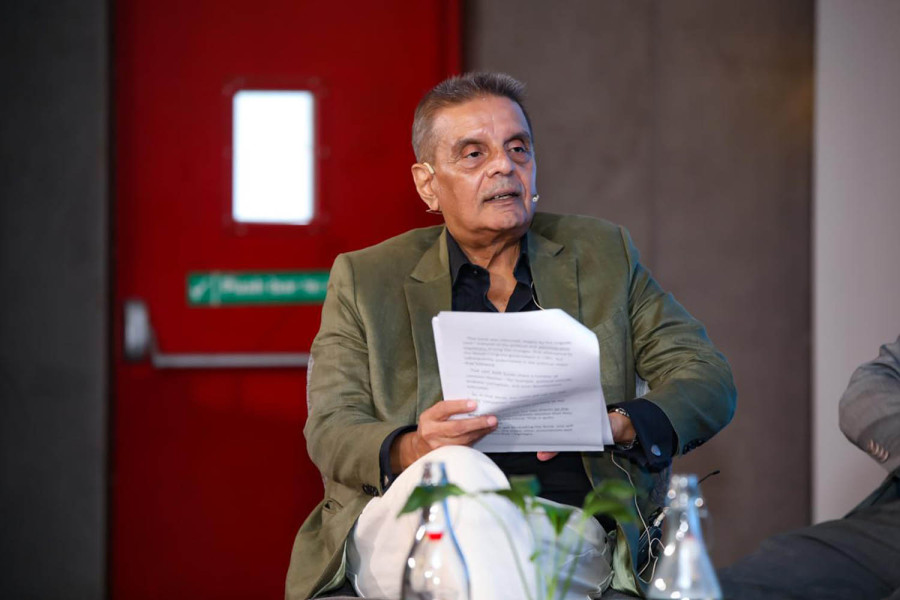
In his new book, ‘Giants at the Gates’, Upadhya examines the rise of multipolarity, Nepal’s place between India and China, and the need to rethink its foreign policy.Rajib Upadhya Courtesy of Vogue Events
Rajib Upadhya, a former development professional and journalist, has spent decades observing Nepal from both inside and outside the newsroom.
He worked with the World Bank in Nepal and South Asia from 1995 to 2018, after beginning his career in journalism and broadcasting.
His latest book, ‘Giants at the Gates: Nepal in a World of Reorder’, examines the shifting global balance of power and what it could mean for a small country caught between two major powers, India and China.
This is his second book, following ‘Cabals and Cartels’, published in 2020.
In this conversation with the Post’s Anish Ghimire, Upadhya discusses the changing international order, the rise of multipolarity and the opportunities and risks it presents for Nepal.
He also reflects on Nepal’s foreign policy since 1990, the country’s institutional weaknesses, the role of the Global South, and what he sees as both the promise and challenges facing a new generation of Nepalis.
In the book, you describe the 2020s as a decisive decade and a world in ‘reorder’. What, specifically, has changed in the international system that makes this moment different for Nepal?
Someone wise once said: “There are decades where nothing happens, and weeks where decades happen.”
In the book, I say that the 2020s have all the makings of a pivotal decade; a turning point of immense consequences for living generations everywhere.
That said, changes were already underway in the global hierarchy long before 2020—especially with the rise of China and the ‘middle-powers’. People all over the world were already calling out the coming collapse of the prevailing order, owing to the steady erosion of key institutions underpinning the post-WW2 architecture such as the UN, the International Court of Justice, the Geneva Conventions, the Bretton Woods organisations, and the World Trade Organisation.
But a series of shocks, in rapid succession beginning in 2020, accelerated the pace of change and expanded the scope.
What makes this moment different for Nepal?
The Covid-19 pandemic has forced a far wider definition of national security. It is no longer sufficient to define security strictly in terms of law and order or the military apparatus. It must address issues such as public health, natural disasters, supply chains, runaway inflation, and food, shelter, and energy security.
The war in Europe and the genocide in Gaza tell us that international law has all but broken down. The return of tariff wars and economic warfare tells us that multilateralism is dying.
And the retreat of international aid is a warning that we must find alternative sources of financing our development.
Taken together with several other very serious problems like the climate crisis, debt distress, and renewed threats of nuclear war, the world today has suddenly become a very dangerous place, including for Nepal.
You argue that multipolarity could offer Nepal opportunities. What are those opportunities in practical terms, not just theoretically? For example, in trade, investment, diplomacy, and development?
In the book, I say multipolarity could offer Nepal opportunities if and when we get there. But the approach to multipolarity is evolving in stages. We still have some ways to go before we actually get there.
We can say with some evidence that China and Russia joined the US in the league of ‘superpowers’ sometime around 2018. That was the first stage of multipolarity.
The discussion now is about the middle powers and the so-called ‘swing-states’ such as India, Türkiye, Brazil, South Africa and the like.
At some point in the future, countries including Nepal will also find themselves pulled into the gravitational well of multipolarity.
But let’s not forget that for any order to function, it requires globally accepted laws and institutions. It will also require globally acceptable leadership. Today, it is hard to see how something even remotely acceptable, like the UN Charter, might be recreated.
Even with the broad-based consensus that it enjoyed at the time, and even with the horrors of catastrophic war still fresh in people’s minds, the UN system still took four long years to build between 1941 and 1945. The Bretton Woods institutions—the World Bank and the IMF—took three years, from 1941 to 1944. And the World Trade Organisation, believe it or not, took 47 years, from 1948 to 1993.
Starting from scratch would be mission impossible today. The sensible alternative would therefore be to salvage the functioning remnants of the existing system and overhaul the broken parts. This approach—which is also the preference of the Global South—could help bring international institutions back up to snuff to urgently, competently and inclusively address the big questions of our times.
Nepal must go all-in with the Global South.
At the same time, doesn’t a more multipolar world also mean more competing pressures on a small country? How does Nepal avoid becoming a space where larger powers compete with one another?
The good news for Nepal is that India and China, our two big neighbours, already speak the language of the Global South. Both are strong champions of multipolarity. They also believe in restoring the primacy of international law.
But Nepal will still need to hedge her bets. That is the sensible thing that any country would do.
In the past we found ‘safe harbours’ in our bilateral ties with Western capitals and in our membership of multilateral institutions like the UN. Unfortunately, both are in decline today.
This, therefore, calls for us to expand our touchpoints with the wider circle of today’s powers. In the end, our interests will be best served by straddling multiple, overlapping circles of friends.
You write critically about Nepal’s foreign policy since 1990. Why do you think Nepal has been so cautious and at times passive in its foreign policy?
Foreign policy, like most other things, is a product of the times.
Before 1990, when Nepal was an absolute monarchy, our foreign policy had three straightforward goals: non-alignment to consolidate national sovereignty and security; navigating Cold War competition to maximise foreign aid; and maintaining international legitimacy for the king’s direct rule.
King Mahendra was especially adept at taking advantage of the spirit of the times, which, back then, gave even smaller countries like Nepal a voice and agency on the world stage.
Nepal’s return to multiparty democracy in 1990 coincided with the dissolution of the Soviet Union and the onset of American primacy.
Europe was preoccupied with reintegrating its eastern flank. Beijing was struggling to reclaim legitimacy in the wake of the Tiananmen Square crackdown.
And New Delhi was embracing IMF-prescribed reforms to save itself from economic ruin. Nepal had little room for manoeuvre other than to embrace the so-called Washington Consensus.
But that was then, and this is now. The world has moved on.
Much of it, especially the Global South, now rejects crusading ideologies and borrowed beliefs like neoliberalism. They are returning to their own civilisational ethos. Identity, national interest, and self-determination are now non-negotiable.
In contrast, we in Nepal are stuck with institutions that have been failing us forever.
Adding to that, how much of Nepal’s problem is actually geopolitical, and how much is domestic? Can a country with weak institutions, political instability, and poor governance take advantage of a changing international order?
Geopolitics is obviously a major consideration. But geopolitics brings with it both risk and opportunity. I have two full chapters in the book on institutions and governance and how, in Nepal’s case, these still hold us back.
The long and short of it is that the idea of Nepali nationalism today remains an artificial construct. Somehow, we still retain something fashioned to serve the political needs of the ruling class of bygone eras.
Until we reimagine Nepali nationalism beyond short-term partisan interests and start expressing our regional sensibilities, the underlying contradictions will remain problematic. It will prevent us from negotiating shared equities with the rest of the world, and especially with our neighbours.
After writing this book and considering Nepal’s place in this changing world, what gives you hope, and what worries you most about the Nepal we are becoming?
It has become almost a cliché to say that young Nepalis give me hope. But there’s a lot of truth here. Young Nepalis carry less political baggage. They are impatient for results. Their global sensibilities are much sharper. And they don’t take ‘No’ for an answer very easily.
What worries me is our propensity to throw the proverbial baby out with the bathwater whenever we change course politically.
Previous generations of Nepali thinkers, planners, and doers, as early as the 1960s and 1970s, had already figured out local solutions to uniquely Nepali problems.
Once interrupted, even catching up with the rest of the world will now require twice the effort and double the time.
_______________________
Giants at the Gates: Nepal in a World of Reorder
Author: Rajib Upadhya
Publisher: FinePrint Year: 2026
Pages: 313
________________________
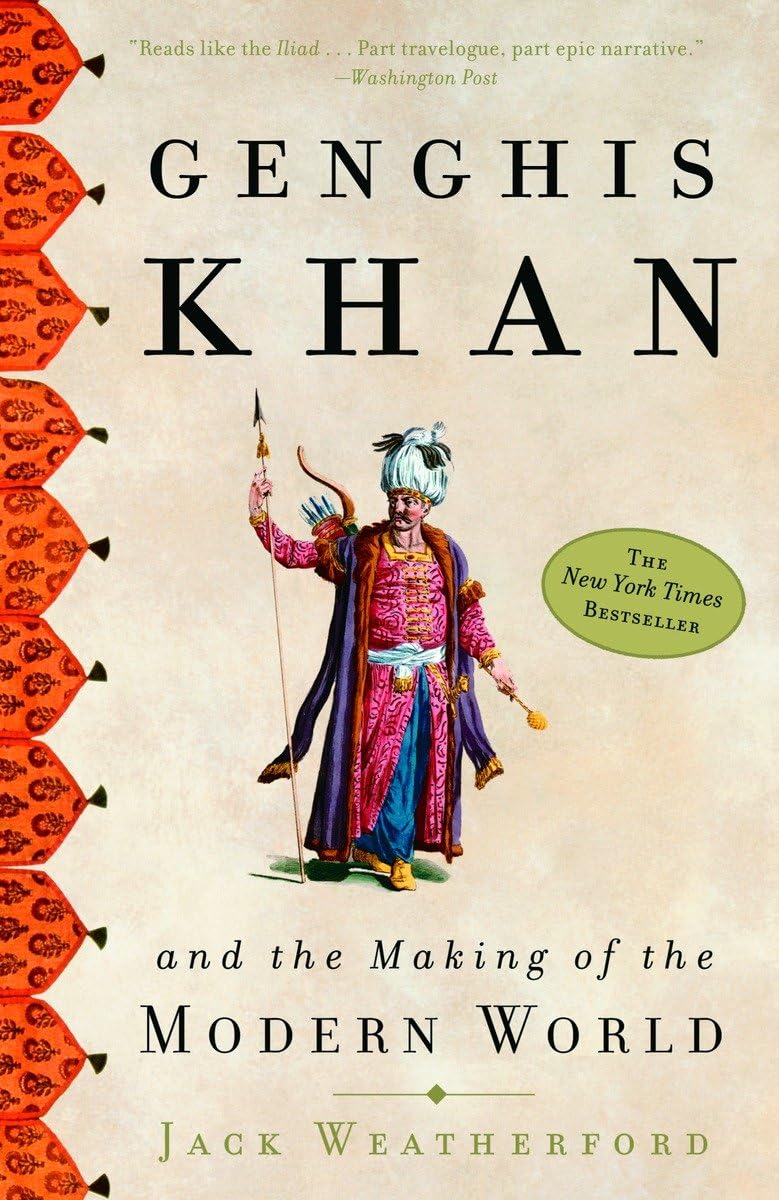
Rajib Upadhya’s book recommendations
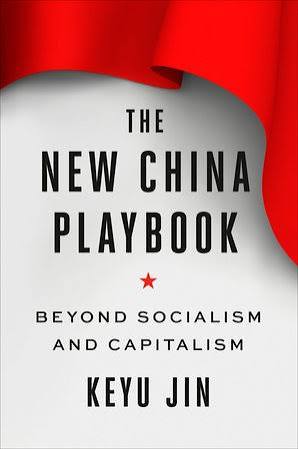
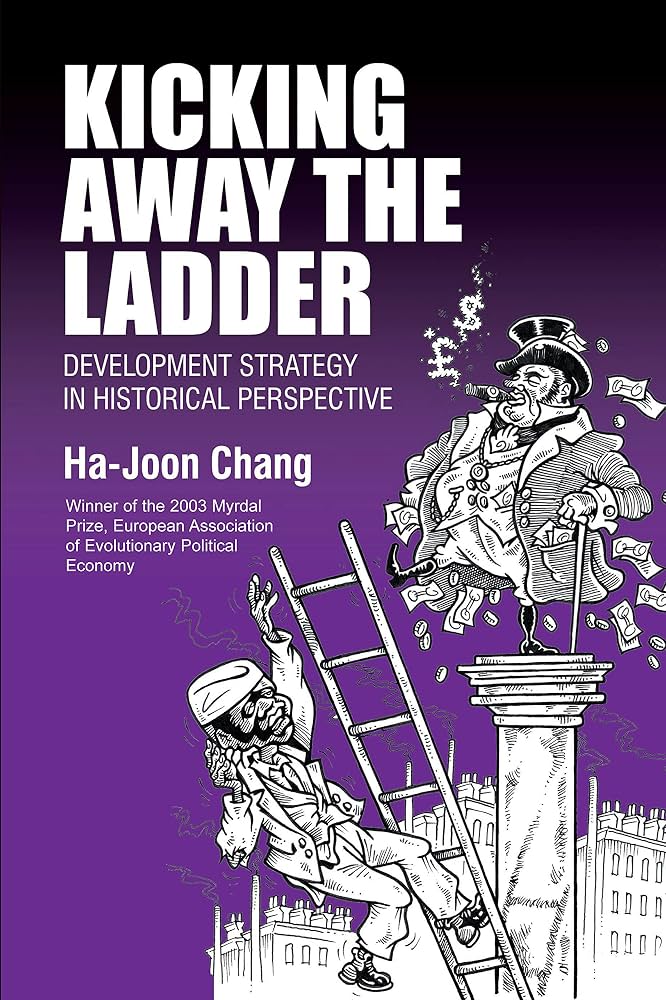
The New China Playbook
Author: Keyu Jin
Publisher: Viking Year: 2023
Jin helped me understand how China became the most successful economic story of our time.
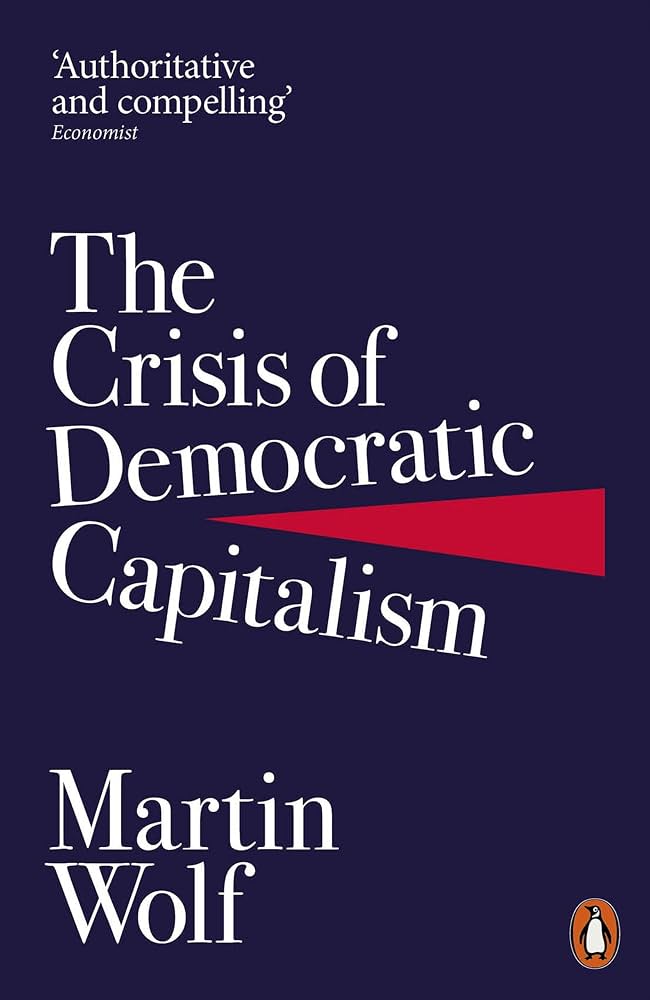
The Crisis of Democratic Capitalism
Author: Martin Wolf
Publisher: Penguin Press Year: 2023
Wolf describes how the ties that bind open markets to free and fair elections are threatened.




 15.68°C Kathmandu