Parliamentarians throng ministry to clamour for petty projects ahead of annual budget
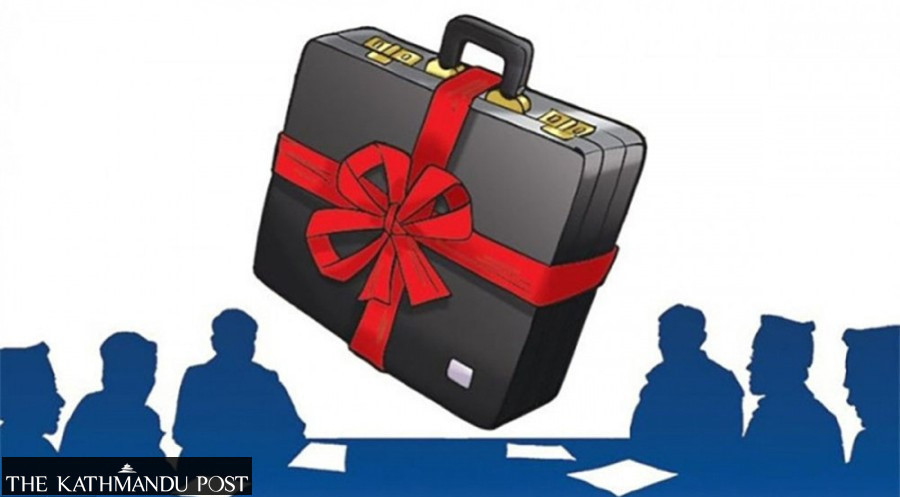
Despite policy push to prioritise large infrastructure, lawmakers submit hundreds of low-budget plans, raising concerns over duplication and federal overreach. Post file illustration
Parliamentarians have been thronging the Ministry of Physical Infrastructure and Transport with requests to include a wide range of development projects in the upcoming national budget, many of them small-scale schemes that experts say should fall under provincial or local governments.
Officials say the rush has intensified as the government prepares the budget for the next fiscal year, with lawmakers submitting written proposals demanding funds for roads, bridges and other works in their election constituencies. Several of these proposals involve projects costing only a few million rupees, despite existing guidelines discouraging the federal government from funding such small projects.
According to the ministry, a total of 686 project proposals have already been submitted. Among them, at least 14 are classified as low-budget projects costing below Rs10 millions. Some lawmakers have listed project names without specifying budgets, while others have submitted detailed cost estimates for multiple projects within a single district.
“We are receiving between 100 and 150 project requests every day,” said Ramhari Pokharel, joint secretary and spokesperson at the ministry. “Even though such proposals are registered here, they are forwarded to the Department of Roads, which evaluates them before sending them to the National Planning Commission.”
Pokharel recalled that in previous years, the number of requests could reach as high as 10,000 before the budget was finalised. “There is always pressure from elected representatives to include projects in the budget,” he said, adding that only those endorsed through proper evaluation eventually make it into the national plan.
A closer look at the submitted proposals shows a concentration of small-scale projects in districts such as Rautahat and Kailali. In Rautahat’s Durga Bhagwati Rural Municipality alone, multiple requests have been filed for road upgrades, culverts and drainage works, with budgets ranging from Rs2 million to Rs8 million.
Among them are proposals to construct an RCC culvert bridge from Chandeswar Das’s house to Gangapipara with a budget of Rs5 million, to upgrade a road from Swarup Pandit’s house to a pond for Rs3.5 million, and to improve a road stretch from Baudhimai Temple to Brahmasthan for Rs2 million. Additional proposals include road upgrades between private residences and local landmarks, with costs ranging from Rs4 million to Rs8 million.
Similar trends are seen in Kailali, where a proposal seeks Rs2 million to blacktop a road segment under the Bainiya Bhajani road section. The request was submitted by Komal Gyawali, a Rastriya Swantantra Party (RSP) lawmaker elected from Kailali-1. Two additional projects worth Rs5 million each have also been proposed in the same area.
Lawmakers from multiple political parties—including the RSP, the Nepali Congress, CPN-UML, Nepali Communist Party and others—have submitted such proposals. Notably, 17 projects involving roads and suspension bridges in Rukum East have been proposed through former prime minister Pushpa Kamal Dahal, the coordinator of Nepali Communist Party who was elected from Rukum East.
While parliamentarians defend their actions as necessary to address local needs, planners warn that such demands undermine the principles of fiscal federalism. The National Planning Commission has repeatedly stated that small, fragmented projects should be handled by provincial and local governments, not the federal one.
“The focus at the federal level should be on large, strategic infrastructure,” said Arjun Jung Thapa, a member of the commission. “There are ongoing discussions to ensure that only projects above Rs50 million are included in the federal budget.” According to him, the government is considering a tiered approach, under which projects costing below Rs50 million would be delegated to provincial and local governments. Projects costing between Rs50 million and Rs300-400 million may be handled by the Department of Local Infrastructure Development, while larger schemes exceeding Rs600-700 million would fall under the Department of Roads.
“There is also a proposal to include only one major project per constituency under the Department of Roads,” Thapa said. “Smaller road projects connecting wards or settlements should be managed locally.”
The push to streamline project selection comes amid the implementation of the National Project Bank Guideline-2024, which aims to ensure better planning and avoid duplication across the three tiers of government. The standards specify minimum budget thresholds for projects to be included in the federal, provincial and local project banks.
Despite these provisions, small projects continue to be proposed at the federal level. Officials say this reflects political pressure as lawmakers seek to deliver visible development outcomes in their constituencies.
The Ministry of Finance has set a budget ceiling of Rs123 billion for the Ministry of Physical Infrastructure and Transport for the upcoming fiscal year. Of this, Rs31 billion has been earmarked for the Kathmandu-Tarai Expressway, a national pride project being implemented by the Nepali Army. The Department of Roads is expected to receive Rs82 billion, with the Rs80 billion allocated for capital expenditure.
Meanwhile, data from the National Planning Commission show that only a fraction of proposed projects make it into the official project bank. According to Diwakar Luitel, information officer at the commission, out of 7,009 projects submitted from across the country, just 1,642 have been entered into the system so far. These include 77 ongoing projects, 262 new ones and 1,303 currently under study.
Province-wise, the highest number of proposals has come from Koshi Province with 1,369 projects, followed by Bagmati with 1,309 and Madhesh with 1,131. Other provinces have also submitted hundreds of proposals, reflecting widespread demand for infrastructure development.
Officials say the challenge lies in balancing political demands with technical and financial feasibility. “Not every project can or should be funded by the federal government,” said Pokharel. “We have to prioritise based on national importance and long-term impact.”
Experts warn that continuing to fund small, scattered projects from the federal budget could strain resources and delay larger infrastructure works. Various reports show how fragmented spending has often led to delays, cost overruns and underutilised assets.




 20.58°C Kathmandu