



 14.81°C Kathmandu
Sat, Oct 24, 2026
Money
Nepal’s paddy output set to fall for first time in four years
Drought, unseasonal rains and shrinking farmland are projected to cut production by 4.2 percent this fiscal. This could push up imports and food prices.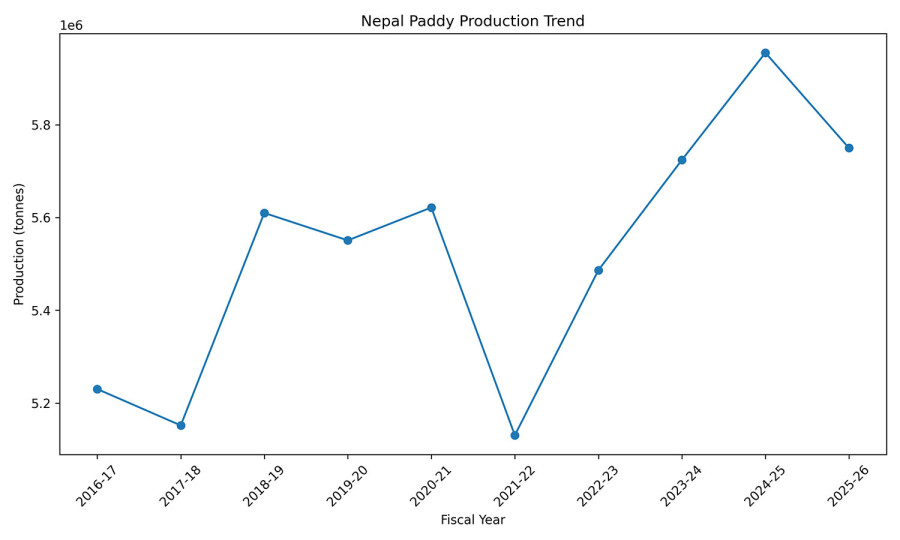
bookmark![]()
Post file photo
Sangam Prasain
Published at : January 20, 2026
Updated at : January 20, 2026 06:56
Kathmandu
Nepal’s paddy output is projected to decline in the current fiscal year for the first time in four years, according to a government assessment that cites prolonged drought in Madhesh province, unseasonal rainfall in October and a rising rural-to-urban migration trend.
A fall in paddy production is likely to add pressure on an already struggling economy, as lower farm incomes limit spending by households dependent on agriculture, which employs about 60 percent of the population.
Preliminary production figures released by the Ministry of Agriculture and Livestock Development show paddy output may drop by 4.2 percent to 5.75 million tonnes in the fiscal year ending mid-July. The decline is largely attributed to a prolonged drought in Madhesh province, one of the country’s largest food baskets, during the peak paddy transplantation period from June to July.
The projected output means Nepal will produce 205,350 tonnes less paddy than last fiscal year, a shortfall that could push up imports.
The decline is expected to have ripple effects across the economy, which has been reeling from natural disasters and the disruption caused by the Gen Z protests in September.
Agriculture ministry data show that average paddy productivity has fallen to 4.14 tonnes per hectare in the current fiscal year, down from 4.19 tonnes per hectare a year earlier. Paddy is transplanted across most parts of the country in June and harvested in October and November.
“The main reason for the drop in paddy output is the drought in Madhesh province, along with natural disasters such as floods in some Tarai areas and a reduction in cultivated land,” said Hari Bahadur KC, joint secretary at the agriculture ministry.
In July 2025, the Cabinet declared Madhesh province a disaster crisis zone, citing acute water shortages caused by prolonged drought.
Officials had initially estimated that national paddy output could fall by more than 10 percent due to the Madhesh drought. However, heavy rainfall in the first week of August revived hopes of a partial recovery in harvests in Madhesh and Koshi, Nepal’s top food-producing regions.
The ministry’s assessment says other factors behind the decline include fragmentation of landholdings due to inheritance practices in the hills, the growing attraction of foreign employment among youth, and the reduction of agricultural land in the Tarai as urban areas expand.
Unplanned settlements, industrialisation and infrastructure projects have also eaten into cultivable land.
The decline in the area under paddy cultivation has also been driven by farmers leaving agriculture because of the untimely availability of chemical fertilisers and quality seeds, as well as inadequate irrigation.
“In the current fiscal year, even though modern seeds and chemical fertilisers were available, paddy productivity has not increased in line with expectations. As a result, both the area under paddy cultivation and overall productivity have declined,” the ministry said in a statement.
Last fiscal year, Nepal recorded a historic high paddy production of 5.95 million tonnes, supported by above-average monsoon rains and timely availability of fertilisers.
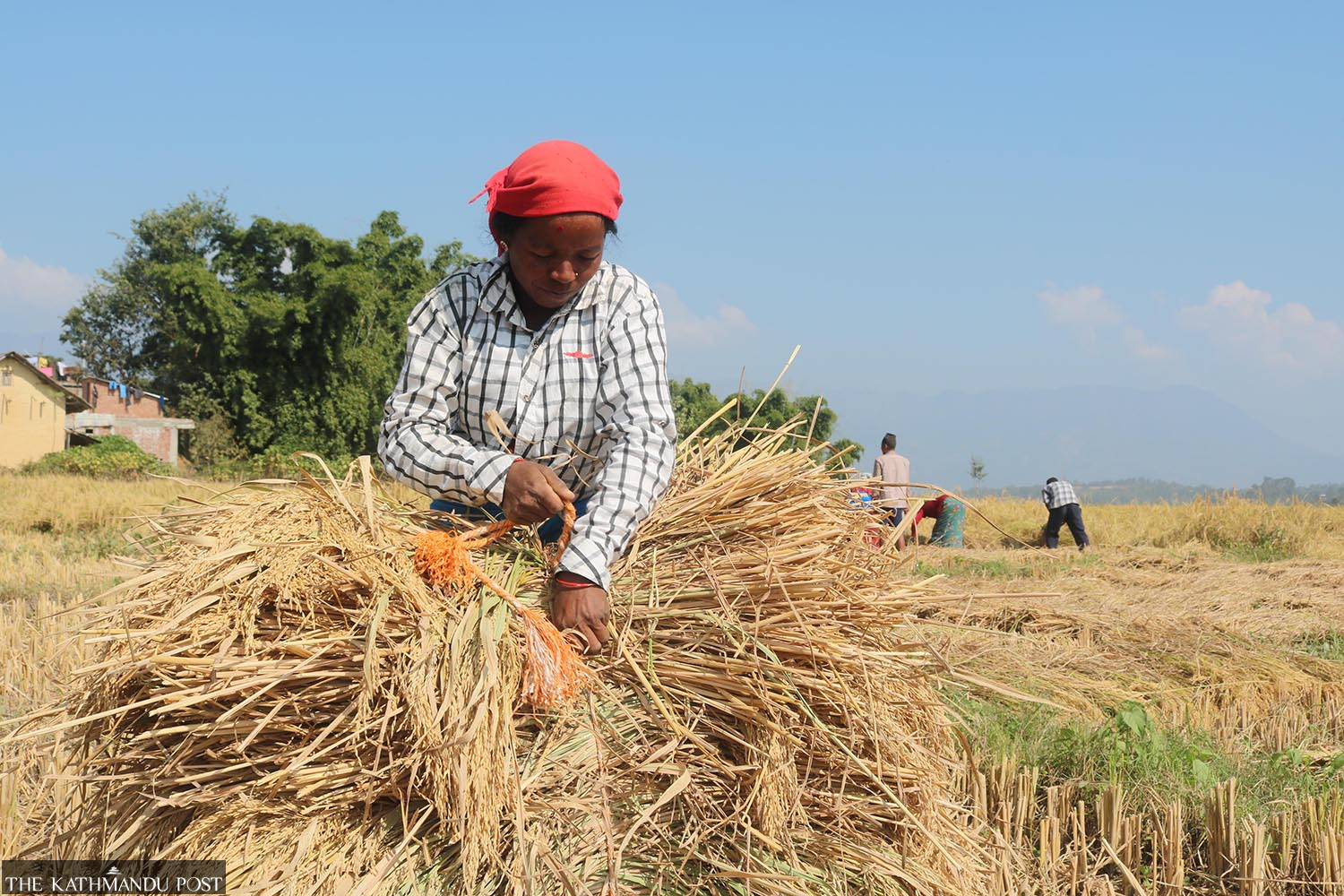
The ministry said unseasonal rainfall in October also damaged paddy crops.
Standing and ripened crops across around 20,000 hectares—equivalent to about 75,600 tonnes of paddy—were affected, with losses valued at Rs2.66 billion. Jhapa district was the hardest hit, with 4,364 hectares affected.
Based on the government’s minimum support price of Rs36.28 per kg, the total value of paddy production this fiscal year, excluding by-products such as straw and husk, is estimated at Rs209 billion.
Paddy is Nepal’s highest-earning farm commodity, and tens of thousands of farmers depend on it as a primary source of income. Economists say strong paddy output can help cool inflation and support economic growth.
The World Bank has projected Nepal’s economic growth to slow sharply to 2.1 percent in 2025-26, citing the Gen Z uprising and subsequent political instability as key factors behind the downturn. The forecast marks a steep decline from an earlier estimate of 4.6 percent.
The multilateral lender said agricultural growth is expected to soften in the current fiscal year due to delayed paddy planting, particularly in Madhesh province, but could recover in 2026-27 if monsoon conditions are favourable.
Lower domestic paddy output in the current fiscal year could keep food price inflation elevated, partially offsetting easing price pressures elsewhere in the economy, the World Bank said.
“This could potentially increase the cost of living for low-income households, thereby exacerbating poverty,” it warned.
About 90 percent of the world’s rice is grown and consumed in Asia. As a staple food for more than half of the global population, rice remains one of the most critical crops for ensuring food security.
Sangam Prasain
Sangam Prasain is Business Editor at The Kathmandu Post, covering tourism, agriculture, mountaineering, aviation, infrastructure and other economic affairs. He joined The Kathmandu Post in October 2009.



Most Read from Money

Why does an hour long flight to Dhangadhi cost more than a flight to New Delhi?
Nepal travel agents threaten to stop selling Thailand trips over visa rules
Malaysia rejects Nepal’s demand to open recruitment to all manpower agencies

No school, but a graduation cap for women dairy farmers
Nepal arrests four medical service providers as Malaysia recruitment row deepens
Editor's Picks




E-PAPER | October 24, 2026

×