By 2050, Nepal must create 6.5m jobs to reap demographic dividend
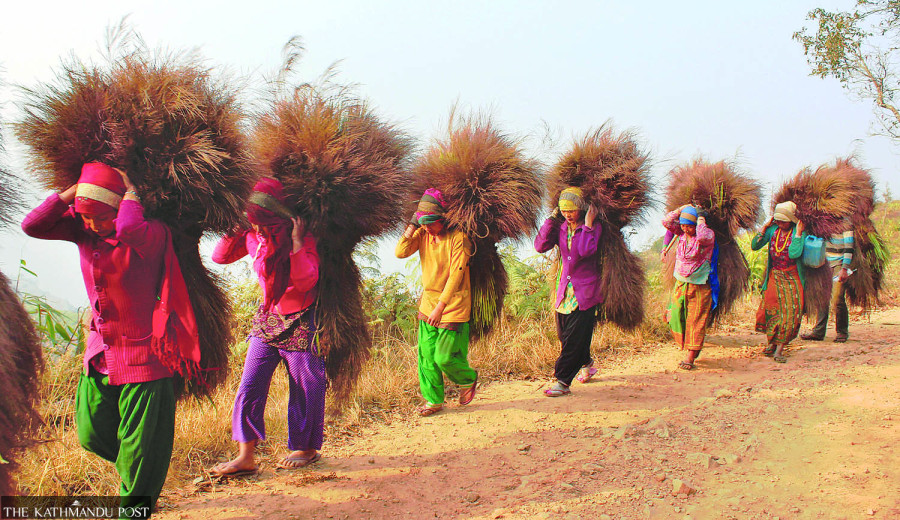
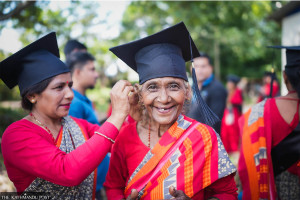
World Bank: Country’s prospects hinge on creating good jobs and harnessing skills of women, returning migrants. Two-thirds of Nepali women are engaged in unpaid household work. Post file photo
Nepal’s working-age population is projected to grow significantly by 2050, presenting a rare opportunity to accelerate economic growth through a demographic dividend. But the challenge is enormous: the country must create 6.5 million jobs over the next three decades to absorb the influx of young workers, according to a recent World Bank report.
Titled Nurturing Nepali Talent to Foster Economic Growth, the report warns that achieving this will be difficult if job creation continues at the same slow pace seen over the past decade. It points to lessons from East Asian nations that successfully transformed demographic growth into a labour dividend.
Nepal’s share of human capital in national wealth remains below the average for countries with similar income levels. Although the World Bank upgraded Nepal from a low-income to a lower-middle-income country in 2019, and the government’s 15th Five-Year Plan aims for upper-middle-income status by 2030, the country still lags behind its peers.
What is particularly concerning is the decline in human capital over the past decades.
In the early 1990s, Nepal was comparable to other lower-middle-income countries, but by 2018, the gap had widened significantly. While other countries increased human capital steadily, Nepal’s share has decreased, making sustained economic growth more challenging.
The report highlights Nepal’s heavy reliance on informal employment, which has profound economic consequences.
Informal workers in South Asia earn 61 to 65 percent less than their formal-sector counterparts, limiting individual income, perpetuating poverty, and slowing overall growth. Informal work also reduces productivity, tax revenue, and exacerbates income inequality, posing long-term challenges for Nepal’s development.
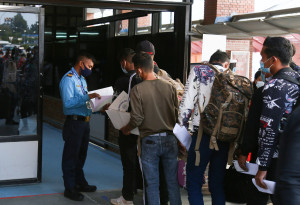
Limited domestic job opportunities drive many young Nepalis to work abroad.
Migration has surged from around 750,000 in 1990 to 2.6 million by 2020, roughly 8 percent of the population and one of the highest rates in South Asia after Afghanistan.
Remittances from these workers are equivalent to nearly a quarter of Nepal’s GDP and have been the single biggest driver of poverty reduction over the past decade, funding education, healthcare, and housing.
Yet this comes at a cost.
A significant portion of Nepal’s labour—skilled and unskilled—is contributing to other countries’ economies rather than its own.
Many migrant workers face uncertainties abroad, from cultural differences to challenging work environments, and reintegration into Nepal’s labour market remains difficult.
Without proper support programmes, returning workers struggle to find jobs that match their experience, limiting Nepal’s ability to benefit from their acquired skills.
Domestic job creation is further constrained by limited access to capital, which restricts business expansion and the ability to generate employment.
Most existing jobs are low-paying and concentrated in the informal sector. Between 2010 and 2018, only 4 in 10 new working-age individuals found employment, and today, 82 percent of Nepal’s workforce remains informal, far above regional and global averages.
Women face even greater disadvantages.
Two-thirds of Nepali women are engaged in unpaid household work, and limited childcare services and inadequate maternity policies force many to stay home.
Consequently, fewer than one in three working-age women hold paid jobs. This rate is well below the average for lower-middle-income countries. Women with limited education rarely access formal jobs, and on average, Nepali girls utilise only 12 percent of their human capital potential compared to 26 percent for boys.
Nepal’s low Utilisation-Adjusted Human Capital Index (UHCI) reflects these challenges, with labour force participation averaging 39 percent and even lower for youth (28 percent) and women (26 percent).
Over 12 million working-age people are inactive, restricting national productivity.
Among them, 57 percent perform unpaid subsistence work, 19 percent attend school, and 24 percent are fully inactive. Of those employed, 6 million are informal workers and nearly 1 million are unemployed, the report said.
Youth face particular hurdles.
In 2021, over one-third of 15-24-year-olds were not in education, employment, or training (NEET), especially those with fewer years of schooling, with young children at home, or living in Madhesh or Karnali provinces. This limits their ability to capitalise on human capital and achieve productivity potential.
Regional disparities in human capital utilisation are stark.
Children born in less developed provinces like Karnali and Sudurpaschim may only utilise only 12 percent of their potential, compared to 27 percent in Bagmati, which hosts the Kathmandu valley.
The report concludes that if Nepal invested effectively in its people and created quality jobs, GDP per capita could be 5.5 times higher.
The World Bank underscores that harnessing the demographic dividend requires urgent reforms: expanding quality employment opportunities, promoting gender equity in the labour force, supporting returning migrants, and bridging the gap between potential and realised human capital.
Without these measures, Nepal risks squandering a once-in-a-generation opportunity for sustainable economic growth, according to the report.
Sangam Prasain is Business Editor at The Kathmandu Post, covering tourism, agriculture, mountaineering, aviation, infrastructure and other economic affairs. He joined The Kathmandu Post in October 2009.




 12.65°C Kathmandu