Leaders aren’t gods, and progress is possible only through collective leadership
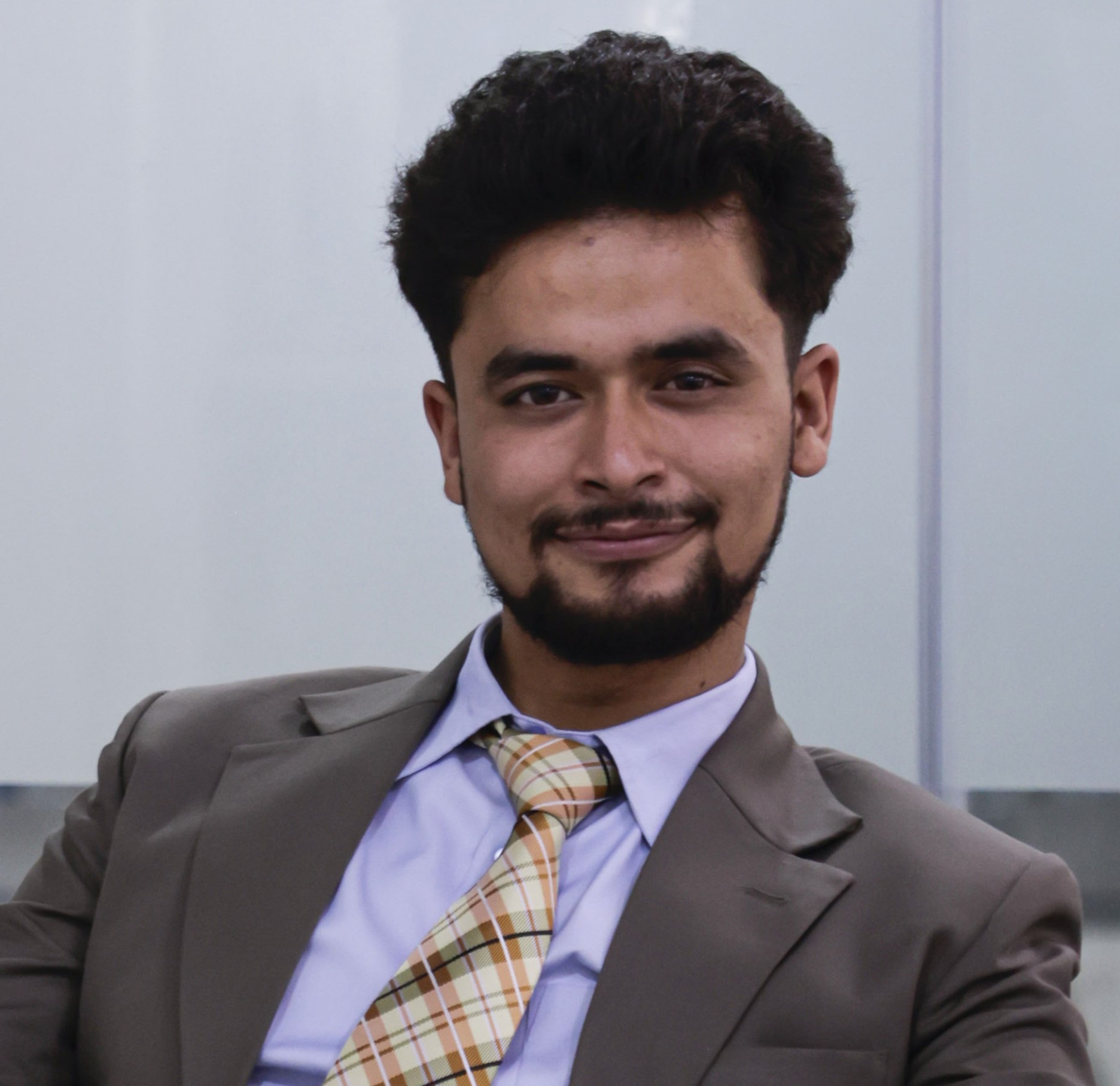
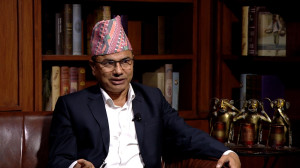
A fusion of Balen Shah and the Rastriya Swatantra Party makes this election’s result representative of the Gen Z mandate. Manish Khanal, elected from Nawalparasi East-2 Post Photo: Deepak KC
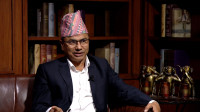
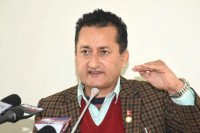
Aged 26, Manish Khanal is a Gen Z-er through and through. He was on the streets on September 8 when a peaceful protest broke out in the capital, and on September 9 when the protest spread like wildfire across the country. As a Gen Z representative, he contributed to the formulation of the 10-point agreement between the government and a number of Gen Z groups and individuals affected by the protests. Now, Khanal makes the transition from the street to the House, having secured a landslide victory in the March 5 elections as a candidate of the Rastriya Swatantra Party (RSP) for Nawalparasi East-2. He sat down for a conversation with The Post’s Biken K Dawadi.
You have entered a space that has long been dominated by leaders aged 60 and above—a demographic often perceived as having the sole institutional backing and maturity required for governance and law-making. What was the specific trigger that made you decide to step into the field this time and challenge that status quo?
Indeed, the current situation is such that the dominance of leaders over 60 was the norm, and it was often said that youth lacked maturity or institutional support. However, the primary trigger for my decision was the Gen Z rebellion of September 8-9; this election is essentially built on the foundation of that uprising.
As I looked at my own constituency, searching for the best alternative among various parties and even within the RSP, I realised that I could be that alternative myself. We often spoke about this in our ‘Bibeksheel schooling’—the idea of whether to keep searching for an alternative or to be the alternative yourself. I felt that I had the necessary grounds to take this step.
I was a direct participant in the protests of September 8-9. Furthermore, as a law student and advocate, I served as a drafter of the Gen Z agreement reached with the government. We had formed a group called the Nepal Gen Z Front, representing our shared views in discussions with other groups to determine the contents of the 10-Point Agreement. I felt I understood the mandate of that agreement.
You mentioned your roots in Nawalparasi East-2 and your background in law. How do those personal elements factor into your role as a representative of the people?
I am a local youth from Nawalparasi East-2. I consider myself an average guy who has grown up in an average middle-income family, facing the same struggles as any other youth in Nawalparasi East. When I looked for someone to raise these specific issues, I didn’t see anyone else, so I decided to step up.
Moreover, in our region, the role of an MP is often viewed solely through the lens of infrastructure development. But there are also matters of law and policy. As a law student, I felt I could be a bridge connecting law and policy with development. I also gained invaluable experience serving as the Chief of Secretariat for MP Asim Shah in the previous House of Representatives (HoR). That role allowed me to observe firsthand what an MP must do, understanding their parliamentary roles, responsibilities, power and duties. When you combine the mandate of the protests, my status as a local youth, my legal background, and my indirect parliamentary experience, I felt I was the best candidate to move forward.
You’ve spoken about the Gen Z mandate. Everyone seems to describe this mandate in their own words. In your view, what are the core components of the Gen Z mandate?
For me, the Gen Z mandate is primarily about the end of corruption and the establishment of good governance. But it goes deeper into issues of social justice. We believe the roots of corruption are tied to our electoral system, which needs reform. This includes granting voting rights to Nepalis living abroad and implementing out-of-district voting.
A proximate cause of the rebellion was related to the social media ban. We want to ensure that future governments never have the audacity to ban digital platforms; we seek regulation, but not restriction in the name of regulation. Our mandate also covers data privacy, which we view not just as physical privacy but digital privacy as well.
Furthermore, it includes respect for the martyrs and the injured, and the necessity of timely elections. We also demand that the report of the investigation into how the government suppressed those who protested with a clean mindset on the 8th and 9th be implemented fully, while clearly distinguishing them from those with criminal mindsets who engaged in criminal activities.
Now that you are transitioning from the streets to the parliament, how do you plan to implement this mandate? Specifically, how will you maintain accountability when your own party will be part of the governing majority?
The first issue we raised in the protests was accountability and transparency. As a Gen Z MP representing that group, my primary role is to keep questioning. It is a challenge when your own party is in government, but there is such a thing as internal party democracy. Even with our own government, we must make it accountable through internal discussions.
When bills related to corruption or good governance come up, I will use my legal background to be critical and identify loopholes. It’s not that we lack laws, but that existing laws often have loopholes or are misused. I won’t be speaking alone; I have a team. My colleagues from the Nepal Gen Z Front, who helped me during the election, will continue to help me develop agendas. I may appear as an individual MP, but I represent collective ideas and collective agendas. This collective approach is how we will take a stand on the 10-point agreement.
You mentioned that the streets are the permanent opposition. Since you are now inside the system, how will you ensure you don’t lose touch with the very people and protests that brought you here?
I came to Parliament from the streets, so I don’t have the luxury of forgetting them. The rebellion we saw was born precisely because the old leadership became detached from the streets. I must stay in touch with the agendas raised there.
Even though I am now in a position to provide answers, I cannot forget the questions. The streets are what will continue to nudge and remind me of my duties. The beauty of democracy lies in the opposition, and while the opposition in Parliament might be small in number right now, I believe they will raise questions strongly.
Regardless, the street always belongs to the opposition. By staying connected to the ground and understanding what the people are looking for, we can maintain the relationship between the Parliament and the streets on accountability and transparency.
Looking at the parliamentary arithmetic, it seems a two-thirds majority government might be formed. While the RSP has a strong presence in the HoR, you have zero presence in the National Assembly (NA). How difficult will it be to pass reforms or constitutional amendments given this imbalance?
Our presence in the NA is zero. While our majority in the HoR makes it easy to pass general laws and bills, the National Assembly remains a challenge. Certain issues raised during the rebellion, such as constitutional amendments, require a two-thirds majority in both houses.
The RSP cannot achieve this alone. We must establish a multi-party dialogue. We believe in multi-party democracy and recognise that we do not have local or provincial governments yet. Just because we have a majority in the HoR doesn’t mean we have it at all levels. Through inter-party dialogue, we hope to gain support from the NA as well. Technically, constitutional amendments are difficult without this, but for regular laws, the House can proceed even if the NA does not pass them. I trust that the party will find a way forward through dialogue.
For the broader Gen Z population in Nepal, what does seeing one of their own in Parliament signify? What is your message to them?
We were always told that youth are the pillars of the future, but I want to establish the message that we are not the future; we are the present. I want to prove that being a young MP doesn't mean being incapable; maturity is not solely defined by age. I want to be an example of that.
When I ran for MP, people asked how I would afford it, saying it costs millions. They called me a kid. But through my ideas and my presence in Parliament, I want to shatter those notions. I want to make it so that the next time someone like me tries to run, they aren't asked those same questions. I won without spending millions, and I want to be the answer to the scepticism directed at the youth.
You come from the Bibeksheel school of thought, which has gained prominence recently. How important was that movement—and leaders like the late Ujwal Thapa—in shaping this alternative political ecosystem?
The Bibeksheel movement was crucial in showing that there could be an alternative to the status quo. It changed the image of what a leader looks like. Previously, a leader was imagined as someone with a large entourage, a big belly and lots of money to spend. Then we saw people like Ujwal Thapa, Ranju Darshana and Milan Pandey.
They sent a message that a common person can run for election and win votes. This paved the way for Balen Shah’s victory in Kathmandu, the Lauro campaign, and the RSP winning 21 seats initially. Now, these alternative forces have become the new mainstream. The biggest lesson from Ujwal Dai was that we must always question. If we stop questioning, transparency and accountability vanish, and that is how leaders fail. We must respect differing opinions and practice internal democracy. In Bibeksheel, there was no big boss; everyone was a leader. If a problem arose, you found the solution yourself. I don’t need to act like a big man just because I am an MP; I am still an average Nepali, just with a specific role and responsibility. We need to normalise politics—leaders aren't gods, and progress is only possible through collective leadership.
Let’s change track to internal party concerns. There have been criticisms regarding tokenism, and some leaders have previously left, citing frustration over not being included in decision-making. How will the current RSP ensure that it doesn't repeat those mistakes?
Those previous situations are something the leadership of that time should answer for. However, the RSP of today is different. It now carries the mandate of the rebellion, the support of groups like Balen Shah’s, and fresh faces elected from across the country. This mixture of different people and ideas makes us optimistic.
We haven’t had our general convention yet, but when we do, and when we hold our policy summit, new opinions will emerge. We need checks and balances and a structure that makes leaders accountable to the party constitution. We must not repeat past mistakes. We must strictly follow the Constitution to hold leaders accountable. With 182 elected MPs and various committee members, there is a massive public expectation that we must respect.
You mention new faces, but there is also the allegation that many RSP MPs are actually recycled faces from old parties—people who couldn't find space in the Congress or UML and simply shifted to the RSP. How do you defend your party against the claim that it's just a collection of residual power from the old guard?
I will use my own vote count as an example. In my constituency, the Congress previously had 36,000 votes, the UML had 34,000, and the RSP had only 6,400. This time, I received over 41,000 votes. This means people who previously voted for the Congress and the UML chose to vote for us this time.
Voters are looking for the right ideas, policies and leadership. If these ‘recycled leaders’ were truly unacceptable to the public, the voters would have rejected them. To call this ‘old party capture’ now is an insult to the sovereign right of the voters who chose them. The public has accepted and elected them; we must respect that mandate.
Finally, there is a lot of speculation about Balen Shah. Some say the Gen Z legacy belongs more to him than to the RSP. There are even rumours that the party might split or that there are internal disagreements about making him the prime minister. What is the reality?
The ‘Balen factor’ is certainly real to an extent, especially considering the ‘Now or Never’ trend during the protests. However, the RSP also took ownership of that rebellion. From our press releases at the time, we made it clear we would move according to the spirit of that uprising. Figures like Purushottam Yadav and Tashi Lhazom joined even before Balen did, showing our commitment. It’s a fusion of both Balen and the RSP that makes this mandate representative of the rebellion.
Regarding the prime ministership, the party president and the parliamentary party leader do not have to be the same person. We have seen this in Nepal’s history before, with the Maoists. If there are any legal or constitutional hurdles in the party's statute regarding making Balen Shah the parliamentary party leader, the party is already looking into those. Under Article 76 of the Constitution, the President appoints the person who can command a majority as prime minister. There is no constitutional barrier to this.
As for rumours of splits or internal dissent, these are natural in political science, where two plus two doesn't always equal four. There has been no official or unofficial discussion of such a split in the party. Individuals are free to have their own opinions, but until there is an official party stance, these should be taken only as rumours.




 15.26°C Kathmandu