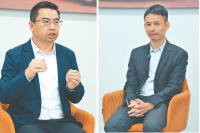
If we fail in the polls, we will let others lead Nepali Congress
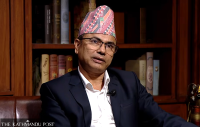
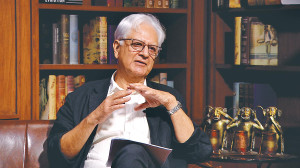
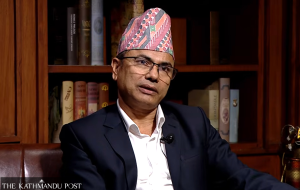
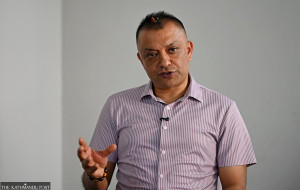
Through structural reforms, the Gen Z spirit will be fully integrated into the party’s permanent structure. Gururaj Ghimire, newly-elected general secretary of the NC Deepak KC/TKP
The Nepali Congress (NC), the country’s oldest democratic political party, recently navigated a tumultuous special general convention that saw a decisive shift in its internal power dynamics. Amidst a backdrop of national unrest, marked by the Gen Z protests that challenged the very foundations of the traditional political establishment, the party is now trying to reinvent itself ahead of the March 5 snap polls. The convention, which concluded after days of intense friction between the reformist faction led by Gagan Thapa and the establishment faction led by Sher Bahadur Deuba, has elected a new working committee and signalled a generational transfer of power. In an extensive conversation with thePost’s Purushottam Poudel and Biken K Dawadi, newly-elected General Secretary of the NC, Gururaj Ghimire breaks down the ideological and structural battles that transpired behind closed doors, the mandatory nature of the convention, and why the party must adopt an exit policy for its ageing leaders to remain relevant to a frustrated youth population. Excerpts.
What was the rationale behind calling for a special general convention?
To understand the friction in the Congress, we must first look at the background and the necessity of this special general convention. We felt a profound need to reform the party’s internal structure to operate in a manner that is relevant to the current era and to succeed in fulfilling public aspirations. Our fundamental argument was that the party cannot be run under the status quo; the traditionalist and factional working styles must change. Factionalism has significantly weakened the party organisation, which is evident in the disarray of our sister organisations and departments.
When a party fails to fulfil its responsibilities to the country, society and the citizens, it loses its ability to stop the rise of new political forces or provide proper answers to the questions they raise, eventually becoming irrelevant. Relevance is maintained through policies, programs and activities that keep a living relationship with the people. If you look at long-standing parties globally—whether in the United Kingdom, the United States, or even in India—they survive because they adapt, regardless of whether they win or lose. We were concerned about our party’s longevity, which is why we pushed for the 15th General Convention to select new leadership.
How did Gen Z protests and the subsequent political upheaval influence the decision to force the convention?
The Gen Z protests brought a massive upheaval—a cyclone, if you will—that pushed mainstream parties to the edges, resulting in the dissolution of parliament. In the aftermath of this cyclone, we realised that leadership change was no longer an option but a necessity. We initially called for the 15th General Convention to be held by mid-December, but the Central Working Committee failed to take the initiative or start preparations.
Seeing this delay, we used the provision in our party statute for a special general convention and launched a signature campaign on September 22. Within just 15 days, even during the festival season, we collected signatures from nearly 55 percent of convention delegates. This rapid pace of collection showed how much party members yearned for change. We officially registered the proposal in early October, but the party leadership initially ignored it. It was only after the Gen Z protests, which saw the biggest suppression of democracy in Nepali modern history on September 8, that the party finally sat for a meeting after nearly 40 days.
The establishment faction presented a schedule for a general convention. Why was it necessary to move forward with the special convention despite the proposed dates?
We had made it clear that if a regular convention were held, a special one wouldn’t be necessary. However, the schedule they brought forward for December was only a ‘paper schedule’; we suspected it was a ploy to dodge and delay the convention. We told them that if they could complete the regular convention, we would cooperate, but our doubts were confirmed when they failed to start the ward-level conventions by December 31 as promised.
When the process stalled, we officially announced the special general convention for January 10-11, though it eventually extended to four days to address all the practical requirements. We focused on four key areas: leadership change, policy revision to match the current changes, a review of the past 36 years of politics, and amending the party statute for structural changes. Under Article 17(2) of our statute, if 40 percent of members demand a special convention, the leadership must call it within three months. The convention is the supreme body, which is above the Mahasamiti and the Central Working Committee.
During the convention, a four-member talk committee was formed to negotiate a path forward. What were specific sticking points that prevented a consensus, and why did the two factions eventually move in different directions?
Initially, the establishment ignored the proposal and didn’t even put it on the agenda. But once we inaugurated the special convention, they became anxious and sent representatives for talks. We sat for negotiations all day, until 11 pm. We presented several points: They had to accept ownership of the special convention, implement the policies it passed, and ensure a balanced parliamentary board for fair ticket distribution based on merit rather than a rigid 40-60 factional split.
Further, we proposed choosing leadership through the convention—be it Purna Bahadur Khadka, Shekhar Koirala or anyone else. Crucially, we sought a theoretical agreement to declare a prime ministerial candidate for the upcoming election. While they agreed on some points, they refused to let the convention select leadership, refused to declare a PM candidate, and Deuba refused to address the gathering. This lack of agreement on vision and leadership is the reason we had to proceed separately.
The Election Commission (EC) has recently weighed in on the legitimacy of your convention. Does this decision effectively resolve the legal ambiguity around which is the real Nepali Congress?
The dispute is effectively resolved. The Election Commission’s decision has made it clear that our convention was legitimate. As members of the Congress, a party that has fought for the rule of law for decades, we must respect the decisions of constitutional bodies. Any democratic party’s quorum is met with 51 percent, and we had well over that. The EC has updated the records to reflect the new leadership chosen by the special general convention. The party statute makes holding such a convention mandatory when the required threshold is met; the leadership does not have the luxury of ignoring the supreme body of the party.
Looking ahead to the elections, there are concerns that this internal rift might hurt the party’s performance. Is the Congress capable of contesting elections alone?
I believe the party is fully capable of contesting alone. The energy and enthusiasm shown by the participants at the special general convention—who stayed through the cold nights of January and funded their own travel from across the country—demonstrate that the party still has great strength. The support was a direct reaction to the possibility of leadership change. The decline in the party’s prestige was tied to specific individuals in the leadership, not the party itself; as soon as a new leadership was signalled, supporters were revitalised. We are now forming a parliamentary board and will follow due process for nominations to ensure we are ready for March 5. We are urging everyone to see the party as our shared home and to move forward together.
One of the central demands of the Gen Z movement was a generational transfer of power. Beyond changing faces, how is the party internalising the spirit of this movement in its policies?
The main purpose of politics is to change the country for the benefit of its citizens. A generational transfer was a historical necessity because power had been blocked for too long. Leaders who have been in charge since the 1990s, some now in their eighties, remained at the helm without an exit policy. They were often focused on achieving power through unprincipled alliances without regard for ideology. To address this, we have introduced the ‘1-2-3-4’ policy: one term limit for President, two for Prime Minister, three for Minister, and four for Members of Parliament. This creates a legal and structural route for an exit policy.
The new generation expects a life comparable to those in developed countries, but they feel frustrated as the current leadership has failed to deliver quality education, employment and economic prosperity. We must move away from the culture of writing manifestos and ignoring them once in power. Our goal is to ensure that democracy is secured by genuine economic progress. As BP Koirala once said, democracy without economic independence is hollow.
There are high expectations for this new leadership, particularly with Gagan Thapa being viewed as a potential prime ministerial candidate. What happens if the party fails to achieve the expected results in the upcoming elections?
If we do not do good work, questions will be raised, and they should be. Our colleagues have every right to vote us out of the party’s office-bearing positions if we fail to deliver. We must be open to admitting our weaknesses and stepping aside if we cannot fulfil our responsibilities within a certain time frame. The trend of staying in power despite being unsuccessful is what has led the country and society to a downfall. We are committed to making the Congress a party of all its members—a ‘New Nepali Congress’—not just a limited circle. If we fail, we must follow our own advice and let others who can do the work take over.
Finally, how do you plan to accommodate those who have been distanced from the party, and will there be more representation for Gen Z in the new party structure?
We have officially called on everyone who distanced themselves from the party or left for various reasons, to return, promising them dignified and right roles. We want every member to feel that the NC is their common home. Regarding the representation of Gen Z, our current committee is an interim one meant to lead us to the 15th General Convention. After the elections, we will focus on membership work and structural reforms to ensure that the Gen Z spirit is fully integrated into the party’s permanent structure. We want to transform the party into a modern organisation, much like how the Labour Party in the UK was revitalised in the late 90s to move beyond a limited circle of people.




 23.43°C Kathmandu
.jpg&w=900&height=601)