Freedom feels temporary. So we must keep resisting
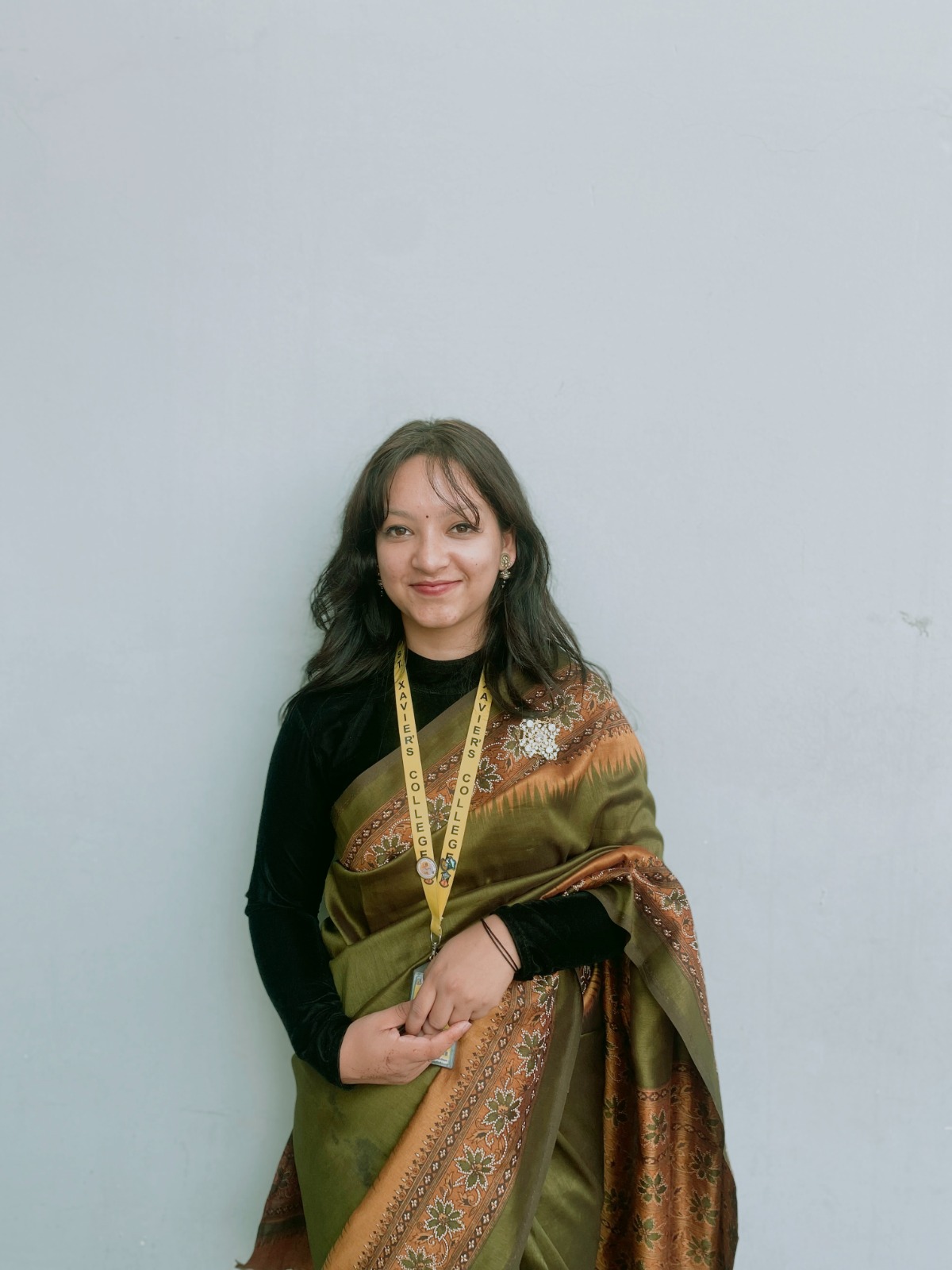
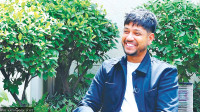
I wasn’t looking for anything specific, but Nepal has shown me spirituality in unexpected ways.Emel Mathlouyhi, Tunisian singer-songwriter Post Photo: Dipen Shrestha
More than a decade after her voice became a symbol of protest during the Arab Spring, Tunisian singer-songwriter Emel Mathlouthi continues to carry the spirit of resistance across borders and stages. The Post’s Aarya Chand sat with Mathlouthi to discuss how Tunisia’s revolution shaped her music and worldview, why resistance remains central to her art, and her experience in Nepal. She was recently in Kathmandu for the Kantipur Conclave 2026.
Your participation in the 2011 anti-government protests in Tunisia, which is believed to have heralded the broader Arab Spring, was instrumental in bringing ab0ut a new democratic era in your country. How do you personally interpret what has happened in Tunisia and its current situation?
I believe the revolution was necessary because people needed change. Tunisia’s problem did not start in 2011; they are rooted in colonisation and in the way the state was built afterward. After independence, power was centralised and citizens were controlled rather than prepared to participate in public life. When the uprising came, there were few experienced leaders ready to govern.
Former regime leaders and Islamist groups returning from exile struggled to manage the transition, and corruption continued. Without addressing corruption and building a shared civic culture, democracy cannot function well. There were gains, including freer speech, independent media, and active civil organisations.
However, the country is now moving back toward authoritarian rule. The current president governs through populist rhetoric and has jailed critics, including lawyers, journalists, and activists. Some charges appear politically motivated. Seeing this reversal is painful, and I feel deep concern about Tunisia’s present direction. The future remains uncertain for many citizens and families.
Your song “Kelmti Horra” became a revolutionary anthem. Do you ever feel the weight of carrying a song that history has claimed as its own?
When ‘‘Kelmti Horra’’ became linked to the revolution, I did feel a certain pressure. At times it was frustrating because it placed me in a narrow role. I have always seen myself first as a musician and a singer, yet much of the media attention focused only on politics. Interviews kept returning to the idea of me as ‘‘the voice of the revolution,’’ while I wanted to speak about composition, performance, and artistic growth. I felt reduced to a single narrative.
I also noticed that many Western artists were discussed in terms of musical innovation, while artists like me were viewed mainly through politics or cultural stereotypes. It felt limiting, as if I could not define myself outside a preset frame. For a long time, I resisted being labeled a political activist and just wanted to be recognised as an artist.
Eventually, I understood that having a platform to speak about social issues carries responsibility. It is not something to reject, but something to be thankful for.
You’ve said that being a musician is about being connected to social change. In 2026, what does resistance look like to you? Has it changed from when you first began?
Honestly, I think resistance is permanent, especially as a woman. Feminism isn’t just a ‘‘cause’’ anymore; it’s a fundamental part of life. Women have faced oppression throughout history, and while some groups experience oppression and eventual liberation, for us it feels ongoing. I feel that weight every day, especially when I recognise how some of it comes from the ways I’ve internalised societal pressures. Freedom, in many ways, feels temporary, so we must keep resisting.
I’ve fought many personal battles, and even my last album was political in its own way—I made it entirely with women. I wanted to create a pop album, to experiment with sound, explore mainstream music, but no matter what, I realised my songs inevitably carry meaning and reflect my experiences. Writing now, I feel I cannot create music that isn’t, in some way, political and that’s okay. When I perform, I feel like Joan of Arc holding a torch, and making music with a mission is the only way I feel I’m truly contributing. Resistance, for me, is inseparable from that mission.
What did the ‘female made album’ project mean to you?
‘MRA’ was much more than a musical project for me, it was personal, artistic, and political all at once. The decision to make this 100 percent female-led project came from a long-standing frustration with the male-dominated music industry. For most of my career, I had worked almost exclusively with men, and often the assumption was that men were somehow more competent or trustworthy. I wanted to break that pattern and create a space where women could lead, collaborate, and support each other.
Working with an all-female team was incredibly empowering. It allowed me to connect with other women who had similar struggles and ambitions. After 10 years of making albums, this project made me feel like I was actively contributing to a cause I care deeply about: challenging misogyny, creating space for women, and proving that talent is not defined by gender.
You were also the first female singer to perform solo in Iran after the imposition of restrictions on women’s solo performances. In moments like that, do you feel fear or responsibility?
I’m naturally very connected to Iran. I have a deep love for its culture, art, history, cinema, and music. Moving to Paris only strengthened that connection. Of course, their story is heavy, with so much oppression over the years. So, when I was invited to join this documentary, I said yes immediately as it was a chance to go to Iran and help amplify Iranian women’s voices. The process took two years, but I never felt afraid. Music feels like a secret weapon to me. On stage, I like to add texture and edge because it feels like being in a battle I can win, carrying people with me, feeling almost invincible.
What has your experience in Nepal been like?
Nepal feels both exotic and surprisingly like home. Due to the time limit, I could only go to Pokhara and Gandhruk. But people and the land have been so welcoming, and the energy here is unlike anything I expected. I came to rest, but instead I found a new kind of energy rising in me. I ended up writing a song inspired by this—about true connection: with yourself, with others, and with the people you love. This theme grew naturally from my experience here. I wasn’t looking for anything specific, but Nepal has shown me spirituality in unexpected ways. I’d love to return, perform, and collaborate with Nepali artists.
After years of intense touring and activism, it seems you’ve taken a bit of pause. How would you describe this chapter of your life? Are you working on new music, or exploring other creative pursuits?
I’d say I’m at a point where I’m open to anything. I want to reconnect with my roots, work with local producers from my region, and dive back into where I come from. At the same time, I’m interested in new ways to perform; I want my shows to feel like immersive experiences, more like performance art than traditional concerts.
I’m also focusing on directing and writing; I’ve started working on a memoir, which has awakened a writer persona in me. I’m interested in telling stories in ways beyond singing. In fact, I came here with some of my notebooks, and over the past few days, I’ve really started documenting everything I’m witnessing: the people, the colors, the experiences. It’s also helping me uncover the chapters of my own story I’ve long wanted to tell but didn’t know how. Nepal, in particular, has made it incredibly easy to connect with all of this.
Aarya Chand is a reporter at The Kathmandu Post covering social issues. Before moving to the social beat, Chand was an intern covering culture and lifestyle for the Post.




 26.19°C Kathmandu