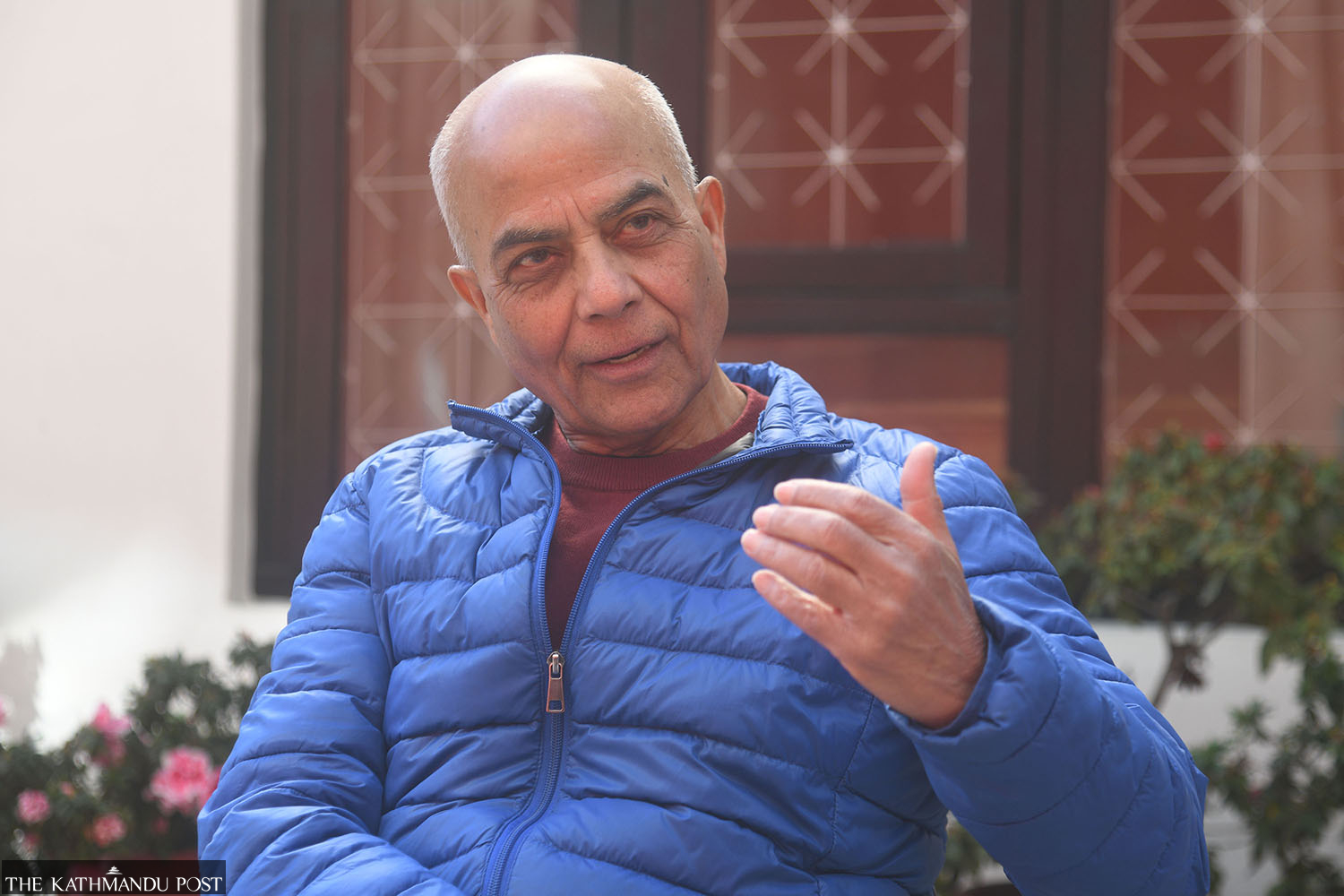
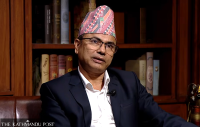
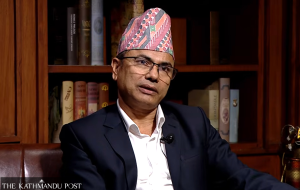
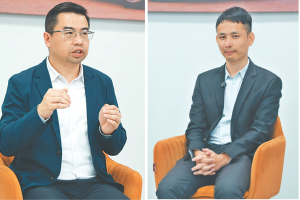
Leaders will only follow the election code of conduct when they are compelled to do so by legislation. Bhojraj Pokharel, former chief election commissioner Deepak KC/TKP
As Nepal hurtles toward March 5, the political landscape is being defined by an extraordinary election in an abnormal situation. At a glance, the snap polls seem unprecedented in Nepali political history. A deeper look, however, suggests the first constituent assembly elections, in 2008, were held in even more dire circumstances. The Nepal Police is in disarray now; in 2008, it was defeated. Public frustration over the inadequacies of the political system is brimming now; in 2008, it had overflowed for a decade of insurgency. And a significant alternative force is on the rise now; in 2008, the alternative was surfacing out of jungles.
The Post’s Biken K Dawadi sat down with former chief election commissioner Bhojraj Pokharel, who steered the high-stakes 2008 polls that transitioned the nation from armed conflict to a democratic process, to discuss meeting points between that era and today: the historical gravity of the upcoming polls; roles, limitations and necessary reforms of the Election Commission (EC); the complications invited by the rise of a significant alternative political force; and the logistics behind elections. Excerpts.
To start with, how do you compare an election under ‘normal circumstances’ to the upcoming one?
The March 5 election, I see it as an extraordinary election in an abnormal situation. In our country’s context, the 2008 elections were held under extraordinary circumstances as we had to bring a force that had carried guns for a decade into the electoral process. That was a challenge.
Back then, we had to design an entire electoral system and create laws from scratch. It was a completely different kind of challenge. Today, the challenge is primarily one of timing. With a bit more time, the preparation could have been better.
So there is a shortage of time to prepare?
Yes, they could have prepared better. Further, we are facing an issue of pustantaran (generational transfer). In 2008, the issue was how to lay down the guns; today, the issue is political discomfort. There are political problems and security problems. Back then, the police were essentially a force defeated by the Maoists, and the army was confined to barracks due to the peace process.
Today, I see a demoralised police force following the Gen Z movement. Their weapons were stolen, their logistics are damaged, and many are only just coming back in the field.
Does this election hold similar historical gravity as the one in 2008?
Context matters, and contexts are never perfectly comparable. However, I see a distinct meeting point. In both cases, there is a side that disagrees with the existing system. There is a search for a new force.
Even if the new forces in 2008 were violent, people were so tired of the old system that they hoped the ‘new’ would bring something different. There was some hope. Today, I see the same thing: The way the country is being governed is not what people are looking for. People want change. Then or now, the issues remain basically the same: good governance, corruption and accountability. The only difference is that then, we had to bring a conflict-ridden party into the political fold. Now, we have to integrate the opportunities created by the Gen Z movement and manage a generational transfer.
In 2008, the Maoists were a big alternative force. Now, the Rastriya Swatantra Party (RSP) is seen as a significant alternative. Does having such a rising alternative force make the logistics and crowd management more challenging?
Global history suggests post-conflict elections are always more challenging as the elections are a part of the peace process. The future of peace depends on the conduct of the election. If it fails, the process is derailed.
In 2008, we were ‘post-conflict’, but the country was still in the conflict. The peace agreement was fresh, and mindsets hadn’t totally changed. Madhesh was agitated with dozens of armed groups. They threatened to kill anyone involved in the election process—poll workers, candidates, even families. The Election Commission offices were bombed. It is nothing like that today.
While you don’t expect that level of violence, is the risk of some violence still there?
Yes, all contestants want to win elections. Where parties have strength, they will try to take advantage through any means—Saam, Daam, Danda, Bhed. I fear the high tempo and frustration of the current moment might lead to mob violence during the campaign period. It depends on the tolerance levels of the competitors.
Deepak KC/TKP
What is the role of the EC here? How can they be more proactive in controlling incidents like the recent clashes in Jhapa between Balen and Oli supporters?
Election is a game. The players are the candidates and parties; the commission is the referee. There are many laws and a Code of Conduct. The linesmen (the monitors) must point out mistakes correctly.
But let’s be clear: security is not the responsibility of the commission; the government must provide it. The commission’s role is to take on-the-spot action against violations so others can see and learn. We had this same fear in 2008, which is why we asked Parliament for the power to have monitors act like traffic police—issuing a ‘bill’ or penalty on the spot.
But when the monitors don’t act, isn’t the relevance of the law lost?
Exactly. Less people violate the code of conduct when the ‘terror’ of punishment is intact. Action must be visible and immediate. The commission must be vigilant, and other stakeholders—the voters and the observers—must cooperate. If voters don’t cooperate, violence cannot be stopped.
We recently saw leaders like KP Oli and Balen Shah bring massive crowds to file nominations, an open flouting of the Election Code of Conduct. The commission demanded clarification from them, but we have yet to see any strict action. If the referee issues a red card but the player keeps playing, does the problem lie with the referee or the rules?
You’ve raised a vital point. Rules do exist. A violation can lead to a Rs100,000 fine. The law allows the commission to cancel a candidacy or even vacate a seat after a win if the rules are broken.
In 2008, we asked the Parliament for these strict laws. Those laws were passed, but enforcing them is the challenge. Our national capacity is yet to reach a level where a referee shows a red card, and the player immediately walks off. I have experienced this, and see it happening even now. We deal with law as a package, but the formal process of asking for an explanation (clarification) takes long. The red card isn’t shown in time. That gap needs to be plugged.
So the laws exist, but the commission just isn't taking action? Again, why not?
As I said, there is due process of law. The process of asking for explanations delays everything, while people want immediate action. This creates a paradox: We need the action to be timely, but the due process invites delay in taking action against violators of the code of conduct. We must move from being process-oriented to action-oriented.
Second, and I say this honestly, our state capacity—of which the commission is a part—has not developed to the point where it can deliver on these expectations. When the public expects immediate action, and it doesn’t happen, that is where the frustration happens.
Do we need more legal updates to fix this, or is the problem a flawed system?
For long-term reform, we need to talk about capacity. In many Western democracies, they don’t have these specific laws or a central commission like ours, yet they hold peaceful elections managed by local governments. Here, we deploy staff and police everywhere—it’s like the Mahabharata.
Our campaign periods are so long because we centralise everything. We print ballots in Kathmandu and ship them to 165 constituencies. If we decentralised ballot printing to the districts, we could print them in a single night. We need to revisit these centralised processes.
How does this relate to the ‘economics of elections’? How big of a burden is this on the taxpayer?
The cost is not in billions; it’s in trillions. There is the government’s management and security cost, but also the candidates’ spending. Our current spending is unsustainable. I am worried that money is hijacking election results. To cut costs, first, we must decentralise management, i.e., stop shipping everything from Kathmandu.
Second, we must make the political parties accountable for security. Parties create the violence; they should be responsible for the security of their own events. We could use a voluntary force of retired army/police and local volunteers instead of 150,000 temporary police, as we are doing now.
More importantly, we must fix election dates. We need a fixed election date like in the US. This allows everyone—voters, parties and the state—to plan in advance, which cuts costs.
Finally, we must also reform candidate selection. The current selection process is top-down, leading to ‘tourist candidates’. Such candidates generally tend to spend more than other candidates. The candidate selection should be bottom-up so party workers feel ownership and don’t need to be ‘bought’.
There is a lot of buzz about ‘out-of-constituency’ and ‘out-of-country’ voting. Are those actually attainable, or just political rhetoric?
Let me tell you a story from 2008. Non-Resident Nepalis were raising this issue back then too. Politicians go abroad, enjoy the hospitality of these organisations, and promise them voting rights. But when they are back in Parliament, they say, “Time isn’t ripe for such legislation.” My blunt answer is: Until we have internet or online voting, promising everyone abroad a vote is a lie. You cannot expect millions scattered across the world to visit an embassy to cast a paper ballot.
We have been ‘studying’ this for 15 years. My suggestion to the current government was: Include it in the law, but for this election, do it as a pilot project in a few places. This would build confidence and show us the gaps. If we don’t start now, we will keep losing time. We also have to consider justice for those in the Gulf or in India—how do we guarantee them their rights?
Why haven’t we used the Electronic Voting Machines (EVMs) you piloted in 2008?
In 2008, we piloted EVMs in Kathmandu-1. It was a success—results were fast, and the lines moved quickly. We then expanded it to five diverse districts—Morang, Janakpur, Kaski, Rolpa and Kanchanpur—during the next by-elections. It worked perfectly everywhere. Our voters are intelligent enough to use this technology. The failure to move forward is not a lack of technology, but a lack of will.
Recently, the police spokesperson said they are short of 1,600 four-wheelers. Why are we always scrambling for resources at the last minute?
Two reasons: first, the country was preparing for 2027, not this March. Second, the Gen Z movement destroyed a lot of police infrastructure and vehicles. Again, this is why we need a fixed election date. In 2008, we had a massive crisis where 1,300 police posts were displaced. We had to ask India for hundreds of vehicles and communication systems. They provided everything from hardware to software that allowed us to monitor 20,000 locations from Kathmandu. This shows our national capacity gap is an ongoing issue.
Finally, regarding the 33 percent female representation guideline, parties are blatantly ignoring it in direct nominations. How do we fix this?
In many countries, there isn’t even a relevant law, but the leadership feels it is necessary. In Nepal, leaders only follow the law when they are compelled by legislation. In 2008, we had to threaten to stop the election to get the 33 percent representation into the law. Even now, parties only meet this through the Proportional Representation (PR) system. For example, the CPN-UML won 41 PR seats in 2022 but had to give 38 of those to women to meet the legal quota, leaving only three for men.
The hard reality is that until they are compelled by the constitution, the parties won’t do it. In the next constitutional review, we must establish these rights, so they cannot be ignored.




 14.82°C Kathmandu