With a two-thirds majority for a party, the argument for a direct executive is dead
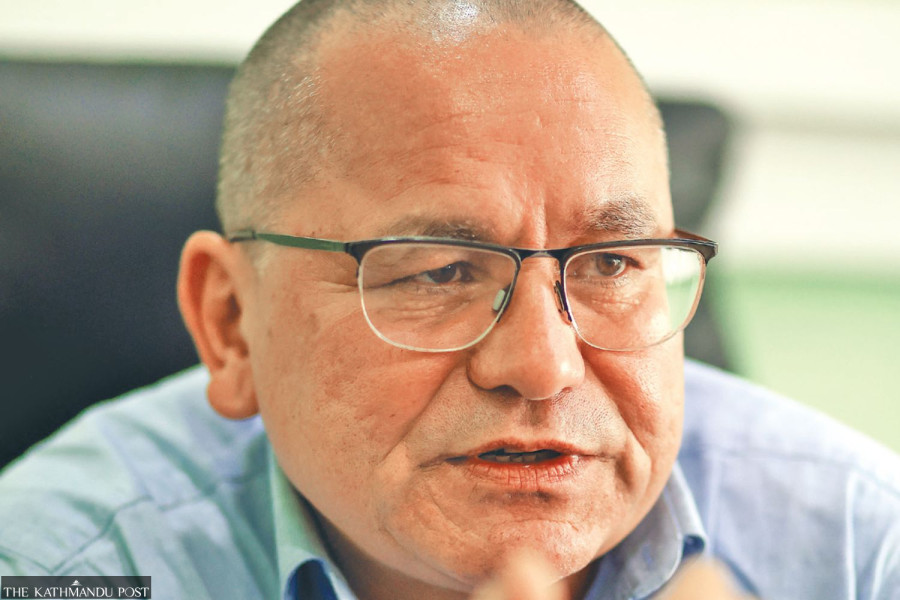
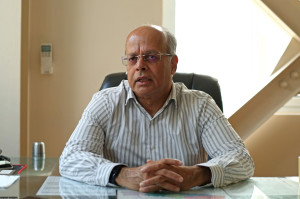
Such a supermajority means the government has no excuses. It will have the power to resolve everything within the parliament. Hari Bahadur Thapa, journalist and researcher. POST PHOTO: SURYAMS UPRETI
As Nepal emerges from the snap polls following the recent Gen Z uprisings, with a likely two-thirds majority for the Rastriya Swatantra Party, the nation’s democratic institutions are undergoing a period of intense re-evaluation. While the streets demand immediate systemic overhauls, the historical evolution of the parliament—from its inception in 1959 to the various distortions of the 1990s—remains a critical, yet often overlooked, context for the current political friction. Understanding why significant voter mandates have historically failed to produce stability requires a deep dive into the internal mechanics of legislative management and the recurring patterns of executive overreach
The Post’s Biken K Dawadi sat down for an interview with veteran journalist Hari Bahadur Thapa. With 32 years of experience as a parliamentary observer and a decade of parliamentary reporting, Thapa has documented the transition from the ‘Pajero and Prado’ culture of hung parliaments to the more recent capturing of the house by powerful executives. His literary work, including the influential book Rajgaj, has long critiqued the nexus between political power centres and the erosion of parliamentary oversight.
How did the parliamentary system first take root in Nepal?
The development of parliamentary history in Nepal is a nuanced journey that many, including the younger generation, might not fully grasp. For Gen Z, the primary focus should be on how this system emerged, when it was established, and the specific context that necessitated its birth. It is not only about adopting the parliamentary system from abroad; it is more about the rationale behind the progression of politics and the shifts in power over the years.To understand this, we must go back to the very beginning, on February 12, 1959, when the first democratic constitution was issued.
What were the specific circumstances surrounding that first constitution and the 1959 elections?
When the 1959 constitution was being drafted, American constitutional experts were brought in as consultants. They essentially prescribed a model that mirrored the British parliamentary system. However, the Palace was determined to maintain its grip on power, so many of the democratic suggestions provided by the experts were omitted from the final draft.
Despite this, the constitution established a bicameral legislature: the House of Representatives (HoR) and an upper house known as the Mahasabha. Elections followed shortly after. The first HoR elected in 1959 had 109 seats, of which the Nepali Congress (NC) won 74 seats—a massive mandate that reached the two-thirds threshold. This led to the formation of a government under BP Koirala, and the very first parliamentary meeting commenced at midnight on June 30, 1959.
Did that first democratic exercise function smoothly, or were there immediate interferences?
While we adopted the British model, the actual power dynamics were heavily skewed by the Palace’s presence. This first parliamentary era was tragically brief, lasting only two sessions. On December 15, 1960, King Mahendra moved to dissolve the parliament and dismiss the government, effectively ending that democratic chapter. This ushered in the partyless Panchayat system, which functioned as a one-party, authoritarian regime under the National Panchayat for nearly 27 years until the 1990 movement.
After the 1990 movement, how did the transition back to a multiparty system play out in the parliament?
Following the restoration of democracy in April 1990, a new constitution was promulgated, leading to elections the following year. The NC secured 111 seats out of 205, a comfortable majority. However, this period was plagued by intense internal friction in the party, famously known as the conflict between the ‘74’ and the ‘36’—referring to the 74 MPs loyal to Girija Prasad Koirala and the 36 who rebelled. This internal rebellion ultimately led to the government’s failure to pass its annual policy and program in 1994, as it lacked the necessary numbers. Consequently, the majority government collapsed, leading to mid-term elections in the same year.
The period following those mid-term elections is often described as one of political distortion. What did that look like from the inside?
The 1994 elections resulted in a hung parliament where the CPN-UML was the largest party with 86 seats, followed by the Congress with 83. This fragmentation gave birth to a dark era of political opportunism. We saw the rise of the ‘Pajero and Prado culture’, where MPs were bribed with luxury vehicles and ‘wine and women’ in hotels. There were instances of MPs being physically hidden in banks or hotels to prevent them from voting or to buy their loyalty. It was a deeply distorted state of governance where the dignity of the house was secondary to the trade of power.
How did the parties try to regain stability, and why did even the majority government of 1999 fail to last?
By 1999, there was a desperate push for stability. Girija Prasad Koirala, sensing that the people were fed up, declared Krishna Prasad Bhattarai as the future prime minister before the election. The voters responded by giving the NC another 111-seat majority. Yet, despite this clear mandate, internal party dynamics were so toxic that Bhattarai was forced to resign within nine months. Unlike other leaders who would have dissolved the House, Bhattarai chose to resign with dignity in the parliament on March 16, 2000. This led to further fragmentation, and on May 22, 2002, Sher Bahadur Deuba dissolved the parliament, eventually leading to a split in the party. It showed that while the people gave mandates to manage the House, the political actors were incapable of managing themselves.
Looking at the current era, why is the ‘capture’ of parliament by the executive a major concern?
Historically, the ruling party has always tried to capture the parliament, treating it as a subsidiary of the government rather than a sovereign power. When a government is powerful, it often stifles its own MPs through ‘underground’ or hidden whips, preventing them from engaging in meaningful debate. For example, during KP Oli’s five-year tenure, the mandatory monthly question-and-answer session between the prime minister and the House only happened once. Instead of using formal parliamentary tools like resolution motions or adjournment motions, we have become accustomed to the distorted scene of surrounding the rostrum and using physical force to stall proceedings. This abandonment of process is a betrayal of the parliamentary spirit.
You often say that the parliament has been reduced to no more than a ‘government production factory’. What statistics support this claim?
The data is quite alarming. From 1994 to 1999, the MPs asked more than 7,000 questions in the parliament. By contrast, from 2017 to 2022,only 536 questions were asked. This indicates that the parliament is no longer a platform for solving national problems but merely a stage for giving speeches. MPs have become lazy or greedy, fearing that if they criticise the government in parliamentary committees, they will lose their chance at a ministerial berth. This greed has rendered committees—the actual working place of parliament—dysfunctional.
Why do you think the recent Gen Z uprising specifically targeted the parliament building?
It is highly unusual for a parliament to be the primary target of an uprising. Usually, people target the seat of government, like Singha Durbar. Targeting the parliament means that the institution failed to speak for the people. When the House remains silent on the issues heating up the streets, the anger of the masses eventually pours onto the building itself. Yet, after the Gen Z protests, not a single MP engaged in self-criticism or admitted that they had failed to do their job.
With the upcoming government likely holding a two-thirds majority, what are the potential benefits and risks for the legislative process?
A two-thirds majority means the government has no excuses; they have the power to resolve everything within the parliament rather than in hotel seminars or private power centres like Baluwatar or Khumaltar. Everything should be debated on the legal floor of the House, so it becomes part of the state record. However, there are legal limits. Even with this majority, the HoR cannot amend the constitution or impeach the President without the consent of the National Assembly. Since newer forces like the RSP have no presence in the National Assembly, the upper house could become a roadblock for the upcoming government.
You’ve noted that parliamentary questions are the tools with which to ‘write the nation's history’. Can you elaborate on that?
Questions are not just about accountability; they are records of facts. If I want to know how many cars were in Nepal in 1960, I can find it in the verbatim records because an MP asked that question and the state provided a factual answer. The state cannot provide false information to parliament without risking contempt or a no-confidence motion. When there is a gap between what the people know and what the government does, questions in parliament fill that void. If the government answered questions about the state treasury or major projects daily, conspiracy theories would not take root.
How does the lack of a ‘research wing’ and the culture of patronage affect the quality of these questions?
Nepal’s parliament lacks a robust research wing, and its archives are weak. Furthermore, MPs often use their state-funded assistant positions to hire relatives rather than qualified researchers. I recall newer MPs like Sumana Shrestha and her team frequently reaching out to me for help understanding bills because they hadn’t been provided with the necessary research support. If an MP doesn’t do the homework or has a team to do it, they cannot ask the sharp, supplementary questions that make a minister accountable.
What is your take on the growing demand for a ‘directly elected executive’ as a solution to Nepal’s instability?
The advocacy for a directly elected executive isn’t new; it started in 1999 as a reaction to the hung parliament. It was also a Maoist agenda in 2007-08. Today, Gen Z-ers want it because they are fed up with the culture of alliances. However, I believe that with a two-thirds majority likely in place, the argument for a direct executive is dead. This government is the executive power. If they cannot govern effectively with this mandate, a change in system won’t help because the political character of the actors remains the same. In a diverse land like ours, a directly elected executive from a minority group could spark a rebellion from the majority, or vice versa.
How does RSP’s likely two-thirds majority differ from previous mandates for other parties?
The previous mandates were often bogged down by the need to cover up past mistakes or manage complex baggage. The current set of actors is more result-oriented and has less political baggage, giving them a cleaner field to run. But the recurring problem in Nepal is internal discord in parties. There have been four instances in the past when governments didn’t fall because of the opposition but because of internal splits and ego clashes. If they cannot manage their own parties, the information will leak, loopholes will be found, and the mandate will be wasted again.
Is there a risk of the parliament becoming irrelevant when a party commands a two-thirds majority and the opposition is weak?
A vibrant democracy requires a strong opposition to counter-balance the ruling party. If there is no opposition to question a policy, the government will never correct its course. The Speaker also has a crucial role. In the past, we have had Speakers who established that the House belongs to the opposition. But recently, Speakers have functioned like orderlies or branch offices of the Prime Minister’s Office. When the power balance is destroyed, the checks-and-balances system fails, and the government becomes unchecked and dangerous.
Why is it important for the youth to know these stories?
We haven’t taught the history of our political development clearly to our youth. Forty years ago, Nepal was essentially in the Middle Ages. People walked barefoot because there were no shoes to buy; only one factory made leather shoes, and they weren’t even enough for the army. I remember reading news 40 years ago about the very first Sekuwa shop opening in Kathmandu, and we all went to see it like it was a marvel. Today’s youth see the world and feel frustrated, but they don’t see the path we travelled to get here. If they don’t know the travails of the past, they might accidentally turn back toward it.
What is your final advice for those who believe a strongman leader is the only way forward?
A directly elected executive is 95 percent likely to become a dictator. In a parliamentary system, a leader is always scared of the 51 percent mark; if they become authoritative, the House can bring them down. Look at the recent mayors, like Balen Shah, who have executive power—they often act like they own the elevator they ride in, refusing to share space with others. If we want a climate where we can speak and write freely without fear of jail, the parliamentary system is the most comfortable. If you want to be a revolutionary and risk jail, go for the direct executive, but remember: Many of us have already been to those jails during the Panchayat for simply writing the word ‘multiparty’. We shouldn’t romanticise a system that trades our freedom for the illusion of efficiency. We cannot let the youth be blinded by historical ignorance.




 14.69°C Kathmandu