More mothers now deliver in hospitals, but deaths remain high
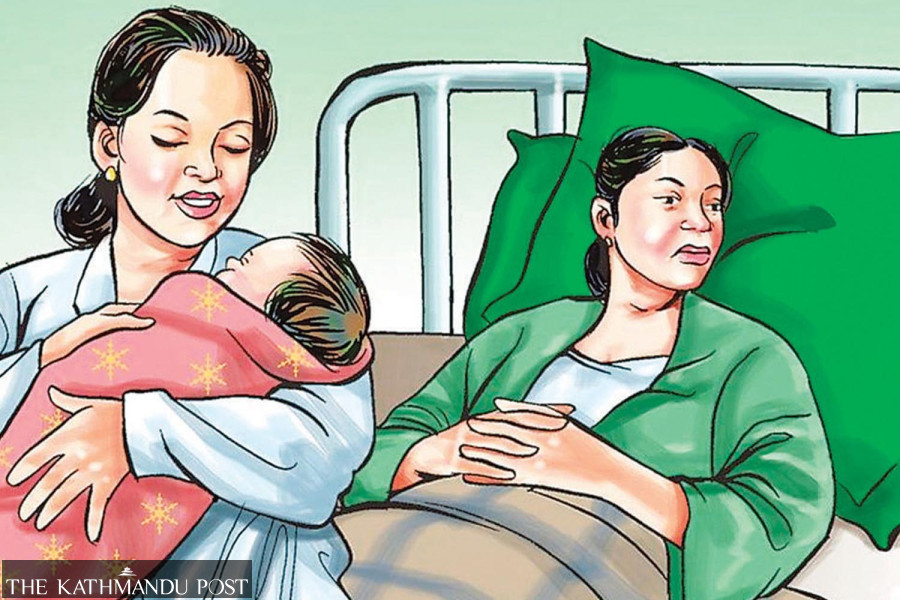
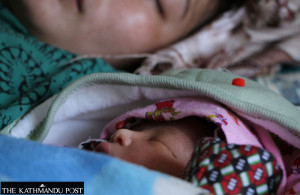
Latest survey shows institutional deliveries reached 90.5 percent in 2025, up from 80 percent in 2022, and antenatal visits have risen to 85 percent.Post file illustration
Institutional delivery rate in Nepal increased to 90.5 percent by 2025 from around 80 percent in 2022, according to the Nepal Multiple Indicator Survey 2024-025 report unveiled recently.
The study carried out by the National Statistics Office in partnership with UNICEF, shows that four antenatal care visits has increased to 85 percent from 81 percent in three years.
Institutional delivery and delivery by skilled birth attendants or skilled health professionals is the country’s priority programme, which is credited with curbing maternal and child mortality rates. However, despite the rise in institutional deliveries, maternal deaths or deaths during child delivery remain high.
“The reports show good progress in institutional delivery rates, four antenatal care visits, and reduction in neonatal mortality rate to 17 per 1,000 live births,” said Nisha Joshi, a senior public health officer at the Family Welfare Division under the Department of Health Services. “However, our own data show 224 women died of maternity-related complications in the fiscal year 2024-025. This is still alarming.”
The reports shows that Gandaki province has the highest institutional delivery rate at 97.3 percent, followed by Lumbini province 96.3, Bagmati 94.1, Karnali 91.3, Sudurpaschim 90.6, Koshi 89.9, and Madhesh 83.2 percent, which is the lowest in the country. Still 20.5 percent of women in rural areas and 15.5 percent of urban areas of Madhesh give birth at home.
Home deliveries are among the chief contributors to ongoing maternal deaths in Nepal, according to maternal health experts. Since the government announced free institutional delivery service in 2009 at all state-run health facilities, more than 2,800 birthing centres have opened across the country. The institutional delivery rate, which was around 18 percent then, has increased to around 80 percent by 2022.
Various programmes, including free institutional delivery and travel allowances for those opting for institutional delivery and antenatal visits, have been initiated to reduce maternal mortality. The health ministry imparted skilled birth attendant (SBA) training to staff nurses and hired them at birthing centres to prevent possible deaths during or after child delivery.
Misoprostol, a medication used to treat postpartum bleeding, has been distributed through female community health volunteers.
Despite these efforts, maternal and neonatal deaths are still high. Experts cite postpartum hemorrhage, pre-eclampsia and eclampsia (pregnancy-related high blood pressure disorders), referral delays and mismanagement as the main culprits.
Maternal health experts say failure to diagnose complications early, delay in providing timely medical help, and lack of access to expert care as major reasons for high maternal deaths from excessive bleeding and infections.
Health authorities have increased antenatal care visits from four to eight to diagnose risks early, but the report shows only 36.1 percent of pregnant women received eight or more visits, and over 2 percent received none.
Nepal reduced the maternal mortality rate from 539 per 100,000 births in 1996 to 239 per 100,000 births in 2016—for which the country even received a Millennium Development Goals award.
The country reduced maternal deaths by over 70 percent since 2000, according to the World Health Organisation. The UN health body, in its latest report, stated that currently 142 Nepali women die from maternity-related complications per 100,000 live births.
A previous study, carried out by the National Statistics Office in 2021, showed 151 maternal deaths per 100,000 live births.
Nepal’s original target under the UN’s Sustainable Development Goals is to reduce the maternal mortality to 75 per 100,000 births by 2030.
The Nepal Demographic and Health Survey-2022, carried out by the Ministry of Health and Population, showed that 21 neonates die per 1,000 live births. The country has to reduce the neonatal mortality rate to 12 to meet the Sustainable Development Goals.
The SDGs, a follow-up on the Millennium Development Goals (MDGs), aim to end poverty, hunger and all forms of inequality in the world by 2030. Nepal has committed to meeting them.
Arjun Poudel is a health reporter for The Kathmandu Post. Before joining the Post, he worked for Sagarmatha Television, Naya Patrika, Republica and The Himalayan Times.




 16.88°C Kathmandu