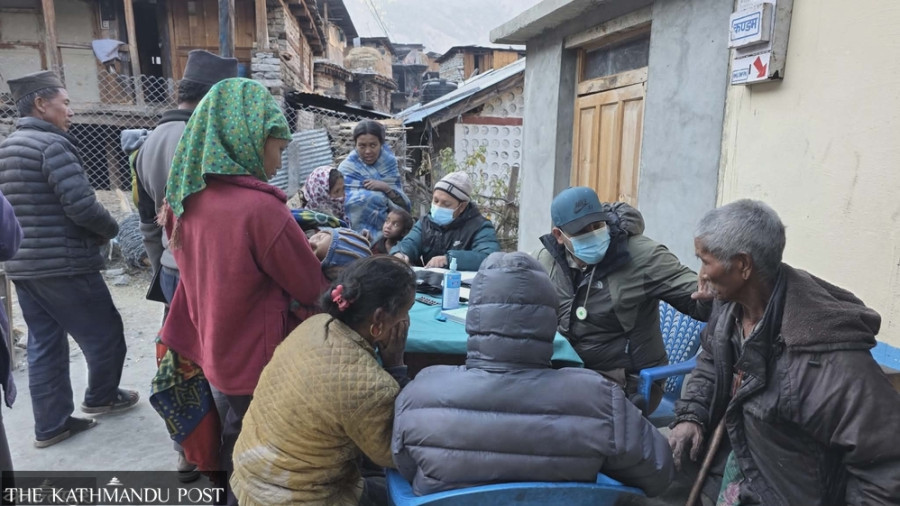
Seventy to 80 percent of families in Nakharji village in ward 9 of Khatyad Rural Municipality have been suffering from flu, cough and fever over the past week, in what health workers suspect is an influenza outbreak that began after the ‘Mahashivaratri mela’ (fair) in the village on February 15. Around 500 people have reportedly been infected.
“Small children and elderly people have been affected the most,” Dr Bikash Dhital, who serves at the Primary Health Centre, Ratapani in ward 11 of the rural municipality, told the Post over phone from Mugu. “No one has died from infection, but around 40 patients with serious health conditions are being treated with injectable medications.”
Health workers in the affected village said that they have asked for medicines from the district headquarters and have also contacted provincial health bodies for medicines and other help for the containment of the outbreak. They say most patients have similar symptoms and suspect an outbreak of the influenza virus.
“We have neither a sophisticated laboratory nor testing kits to identify the cause of the ailment,” said Dhital. “But signs and symptoms matched those of influenza virus infection.”
Hospitals across the country have reported a surge in flu, cough, fever and seasonal influenza cases amid the ongoing seasonal transition. What concerns health workers in Mugu is the upcoming Holi festival and the March 5 parliamentary elections, which could trigger further spread of infections. Moreover, most of the permanent health workers have been deployed for election duties, and only temporary and contract health workers are currently serving patients in the affected villages.
Earlier, the Ministry of Health and Population had asked the Election Commission not to deploy health workers on election duties, but the request was ignored.
“The ongoing outbreak was triggered by the celebration of Mahashivaratri,” said Birendra Bahadur Shahi, health coordinator of the rural municipality. “The risk of further spread is high, as large crowds gather for the Holi festival and elections.”
Doctors say the increased travel and movement of people for the elections could further fuel the spread of the infection. In the affected rural municipality, 20 to 25 new patients have been seeking care every day over the past week.
Every year, during seasonal transitions, thousands of people across the country are infected with influenza viruses, which surge twice annually—in February-March and October-November.
“Health facilities have already been witnessing a surge in the number of patients with fever, flu, cough and other respiratory complications,” said Dr Sher Bahadur Pun, chief of Clinical Research Unit at the Teku-based Sukraraj Tropical and Infectious Disease Hospital.
Doctors warn that elderly people, children, and those with underlying health conditions—heart disease, renal problems, cancer, and diabetes, among others—are vulnerable to getting severe.
Seasonal influenza caused by regular viruses—A(H1N1), A(H3), influenza B(Victoria) and some others, could be responsible for the current surge, according to doctors. Although a newly emerging variant of influenza A (H3N2), also referred to as subclade K(J.2.4.1) has drawn global attention, it has not yet been confirmed in Nepal. Experts warn that it poses a potential risk.
Doctors warn that if seasonal influenza is left untreated, it can cause pneumonia, which can be fatal.




 17.29°C Kathmandu