Dhorpatan Municipality in Baglung district has recorded a fresh outbreak of measles, with 18 children infected.
The outbreak, second in six weeks, raises questions about health authorities' claims of achieving a fully immunised status. Malangwa Municipality in Sarlahi witnessed a measles outbreak in January.
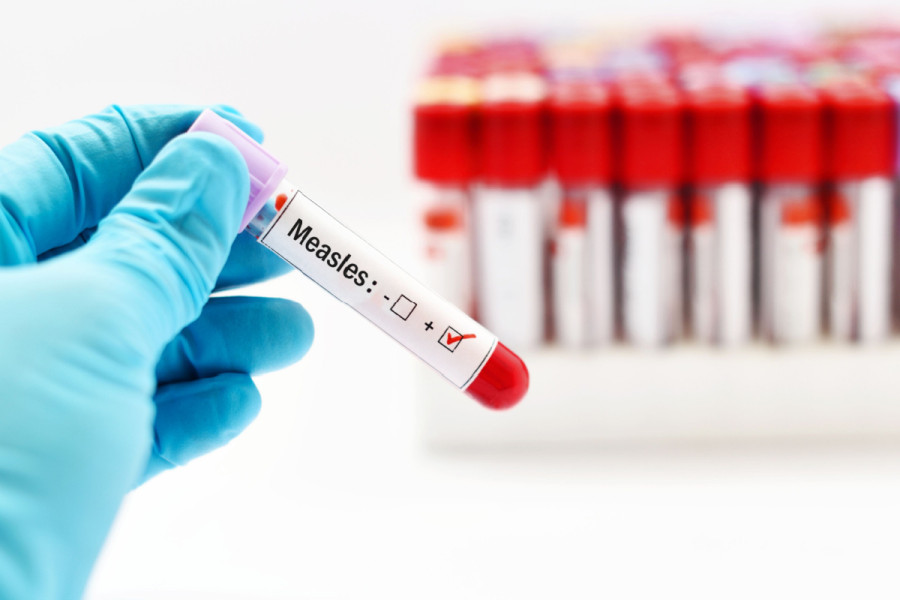
“As many as 18 cases of measles have been recorded in four wards of the municipality. Individuals up to 20 years of age have tested positive,” said Keshav Thapa, health coordinator in the municipality. “The National Public Health Laboratory has confirmed two positive cases through blood tests, and we are told that further testing is not required after the confirmation of the outbreak.”
Schools, both community and institutional, have been closed until Wednesday in Dhorpatan Municipality after more than 50 children fell ill over the past two weeks. According to public health experts, remote settlements such as Bobang—long lagging behind in education and health services—remain vulnerable to outbreaks due to gaps in immunisation coverage and limited access to healthcare.
Measles is a highly contagious disease transmitted through fluids from the nose, mouth or throat of an infected person. It can be potentially deadly for unvaccinated people. The disease can be prevented with a two-dose vaccine, administered to babies at 9 months and 15 months. The government provides measles vaccines free of charge from health facilities across the country.
Nepal had aimed to eliminate measles by 2026, as there had been no outbreak since June 2023. However, the outbreak of the contagious virus in Baglung, a hill district, and Sarlahi in the Tarai region within a short span of time hindered the country’s progress towards meeting the goal.
The country earlier missed the 2023 and 2019 deadlines. Major measles outbreaks occurred in 2022 and 2023.
Child health experts have said that the measles outbreak in Baglung and Sarlahi shows a gap in Nepal’s vaccination coverage.
To declare measles eliminated, the number of cases should be fewer than five per 1,000,000 people per year. The country must verify progress through foreign, independent verification. For independent verification, there should be no new outbreak for three consecutive years, officials say.
Doctors say people of all age groups are vulnerable to the deadly disease. Underage children, pregnant women, elderly people and those with weak immunity, such as HIV-infected people, are highly susceptible to measles.
Early symptoms, which usually appear 10–12 days after infection, include high fever, runny nose, bloodshot eyes and white, tiny spots inside the mouth. Several days later, rashes develop on the face, upper neck and other parts of the body.
Some people may experience severe complications, such as pneumonia and encephalitis, and these diseases may also cause death.
Child health experts say a low vaccination coverage, floating population, lack of public awareness of the importance of vaccines and apathy of government agencies for plugging the loopholes are some reasons behind the regular outbreaks of measles in various parts of the country.
Measles was endemic in Nepal, and an average of 90,000 cases were recorded every year from 1994 to 2004. Routine measles vaccination began in the country in 1979, starting with three districts. The campaign was made nationwide after 10 years.




 17.29°C Kathmandu