Kathmandu world’s 3rd most polluted city at Friday noon
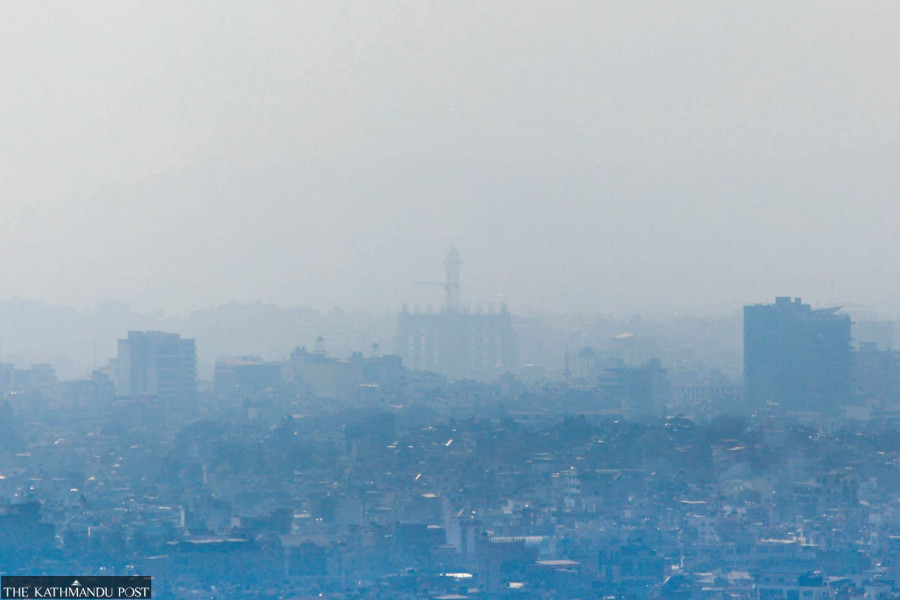
Experts hope new government will take measures to curb air pollution. Brief rain likely across Bagmati, Gandaki and Sudurpaschim provinces until Sunday.The city of Kathmandu under severe air pollution in this recent picture. Post file Photo: Suryams Upreti
Kathmandu ranked the world's third most polluted city in the globe at 12 pm on Friday. This is not the first time that the Capital witnessed severe air pollution this year, as air quality of the Valley has reached very unhealthy or hazardous levels almost every morning for the last several weeks.
Authorities have taken some measures to prevent further deterioration, but none have been effective in improving air quality.
“At present we have a civilian government tasked with holding parliamentary elections,” said Bhusan Tuladhar, an environmentalist. “All focus of the incumbent government may have been on conducting elections. Now that elections are over, we hope the new majority government will take these problems seriously and make a roadmap to address them.”
Since the air quality of Kathmandu Valley started deteriorating in the second week of January, major hospitals have reported a spike in cases of pneumonia, influenza, asthma, and chronic obstructive pulmonary disease.
Doctors say that for months, the number of seriously ill patients seeking care for respiratory problems has remained consistently high and they attribute this to worsening air quality.
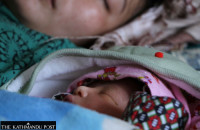
Even very young children are suffering from bronchitis, asthma, pneumonia and other respiratory problems, and some patients require intensive care, according to them.
“Change and improvement cannot be achieved without strong political will and determination,” said Bhupendra Das, an air quality expert. “The new government should formulate a new air quality roadmap by incorporating expert suggestions and adopting a bottom-up approach.”
Experts say that when planning is carried out at the local level, or when micro-level plans are developed, the chances of successful implementation are higher. Incorporating suggestions of experts and intellectuals—who have extensive knowledge in their respective fields and have spent years conducting research—can help in developing practical and achievable roadmaps.
Doctors say poor air quality can have short- and long-term effects on public health.
In the short term, it can lead to pneumonia, bronchitis, conjunctivitis, skin allergy, stroke, and heart problems. In the long run, it can contribute to severe conditions like ulcers, cancer of the lungs and intestines, kidney disease, and heart complications.
Air pollution has emerged as the number one risk factor for death and disability in Nepal, surpassing malnutrition and tobacco use, according to last year’s World Bank report.
The report titled, ‘Towards Clean Air in Nepal: Benefits, Pollution Sources, and Solutions,’ unveiled on Tuesday, stated that polluted air cuts life expectancy by 3.4 years for the average Nepali and causes approximately 26,000 premature deaths annually.
Air pollution heavily contributes to various diseases: 75 percent of chronic obstructive pulmonary disease cases, 46 percent of strokes, 44 percent of ischemic heart disease, 41 percent of lower respiratory infections, 38 percent of lung cancer, 30 percent of neonatal issues like low birth weight and preterm birth, and 20 percent of diabetes, the report stated.
The economic consequences are severe. “It affects labour productivity due to increased health-related absences and impaired cognition. The negative impact on the tourism industry and the aviation sector is also significant. The economic cost of poor air quality is estimated to exceed six percent of Nepal’s GDP each year,” reads the report.
The report also states that single sector solutions are not sufficient to meet any clean air targets. Therefore, public policy and investment need to optimise air quality actions across sectors, prioritising the most cost-effective solutions, it says.
Meanwhile, most hilly regions including the Kathmandu Valley, remained mostly cloudy on Friday. The Meteorological Forecasting Division under the Department of Hydrology and Meteorology said that there is also a chance of brief rain in the hilly areas of Bagmati, Gandaki and Sudurpaschim provinces.
“Brief rain with thunder could occur every day until Sunday in some hilly areas of Bagmati, Gandaki and Sudurpaschim provinces ,” said Barun Paudel, a meteorologist at the division. “Local weather systems cause cloudy conditions. No new weather system has developed to cause heavy rainfall to clean the air."




 25.92°C Kathmandu