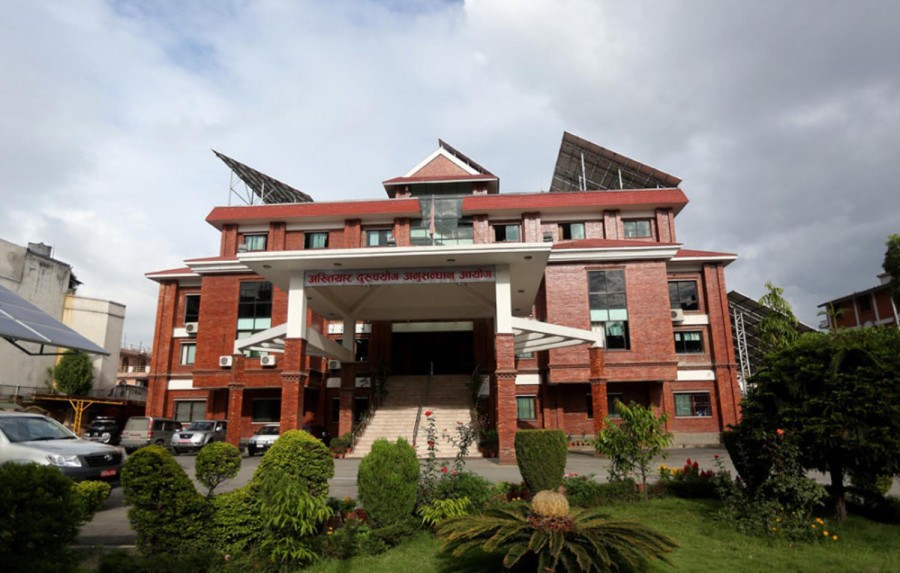
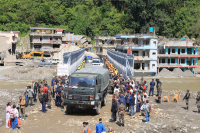
Ever since Balendra Shah assumed the prime minister’s office on March 27, there has been one incident after another of executive overreach. To kick things off, opposition political leaders were arrested without due process. Riverside squatters were then forcibly removed, without any plan for their resettlement. Seldom does the prime minister attend parliament, and when Shah does, he openly violates its norms and sanctity. Now another troubling example of overreach by his office is emerging. Last week, the prime minister’s advisors summoned the office-bearers of the CIAA, the constitutional anti-graft body, and gave them a dressing down over a delay in the investigation of anomalies in the procurement process for passport booklets from abroad. On the same day the CIAA officials were summoned, Prime Minister Shah’s advisors berated German ambassador to Nepal, Udo Volz—after making him wait for three hours—for coming to see the prime minister without an appointment. Many Nepalis seem pleased at how the prime minister has been able to wield the whip to speed up service delivery, to crack down on corruption and to keep foreign envoys ‘in their place’. He and his government are only following the public’s wishes.
Yet this populist path Prime Minister Shah has charted is mighty dangerous. Instead of empowering vital state organs like the CIAA and the Nepal Police and giving them the autonomy to function freely, the executive is putting them under pressure to do its bidding. The Shah government seems to think that with its near two-thirds mandate, it has the licence to break established democratic norms if they come in the way of swift action. The CIAA, for instance, is answerable only to parliament, which can impeach the CIAA office-bearers if they fail in their duties. The Prime Minister’s Office has no right to ask them for clarification on an ongoing investigation. Such a practice will destroy the delicate system of checks and balances—the lifeblood of democracy. Meanwhile, top officials of an autonomous state institution like the CIAA appear to have been cowed by the Shah government’s projection of power. In order to preserve the sanctity of their office, they should have declined the invitation to the PMO. Officials of autonomous state organs cannot blindly follow ‘orders from above’.
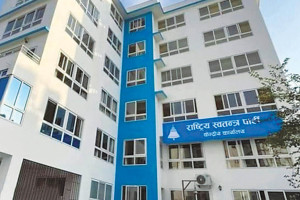
The prime minister and his advisers must realise that the culture of accountability starts with them. The intimidation of state institutions in the name of speedy governance and service delivery threatens to bring back precisely the kind of self-serving and leader-centric political culture the Rastriya Swatantra Party used to criticise so vehemently while in the opposition. With a long tenure ahead of him, the prime minister needs to correct his errant course. Yet it is also the responsibility of members of state institutions, civil society and media to constantly flag these excesses of the executive in order to prevent democratic backsliding. After all, as Steven Levitsky and Daniel Ziblatt argue in How Democracies Die, democracies often begin to erode when those in power treat democratic rules as obstacles rather than guardrails.




 14.82°C Kathmandu