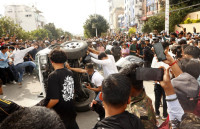
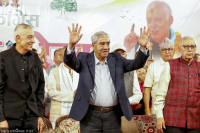
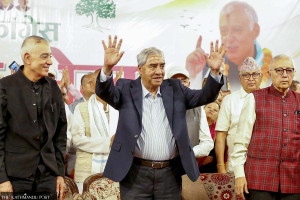
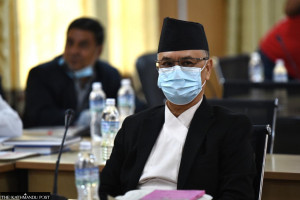
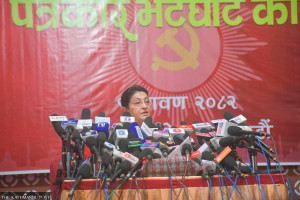
One evident goal of the ongoing China visit of Foreign Minister Shisir Khanal, which is taking place hot on the heels of his India trip, is to maintain a balance between Nepal’s two immediate neighbours. Before Khanal went to India, it was Rastriya Swatantra Party Chairperson Rabi Lamichhane who was in New Delhi, where he got a rapturous welcome from both the Bharatiya Janata Party (BJP) and the government it leads. Nepal can never stop this delicate geopolitical dance between India and China. Yet even a casual chat with a visiting Chinese scholar or official in Nepal will quickly make it clear that it is not so much India that China is worried about. It is more the prospect of the US doing mischief in Kathmandu, perhaps in concert with India. This is why, during his current China trip, Khanal will try to allay Chinese concerns about growing American engagement in Nepal. From Beijing’s perspective, the Americans had at least some role in last year’s Gen Z uprising as well as in the subsequent political developments. China suspects that the recent heavy involvement of the Americans is one reason the BRI projects in Nepal have not taken off.
Nepal has its work cut out. No sooner does Khanal return from Beijing, he may have to jet off to the US, the country’s ‘sky neighbour’. In many ways, the three powers have competing interests. The Americans would like to minimise the Chinese presence in Nepal and undercut projects under the ‘debt trap’ BRI framework. Yet the BRI is the centerpiece of Chinese President Xi Jinping’s foreign policy and there is no way Nepal can opt out of it. But if Nepal wholeheartedly welcomes the BRI, both the Indians and the Americans will get uneasy. At the same time, in India’s case, Nepal fears that even more dependence on the southern neighbour could invite another blockade-like scenario. One good thing about the approach of Foreign Minister Khanal is his emphasis on putting Nepali interests first. Even while in India, Khanal clearly staked Nepal’s claims on Lipulekh, Limpiadhura and Kalapani, a stance that didn’t go down well with many in India. Unburned by “ideological burdens of the past”, the RSP-led government is seemingly ready to engage with other powers strictly based on national interest.
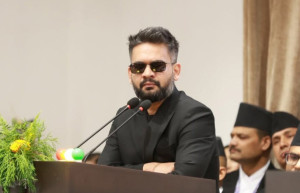
Yet it would be a mistake to assume that our foreign friends are assured. In a parliamentary system, it is the prime minister who calls all the shots. Prime Minister Balendra Shah’s refusal to meet top visiting Indian officials has not gone down well with New Delhi. His call from parliament for ‘English mediation’ in Nepal-India border conflict even less so. In fact, the rousing welcome for Lamichhane in India is also being seen in the Indian capital as a ‘lesson’ for Shah. Denied access to the Nepali head of government, the Chinese too are suspicious of his intent, particularly regarding the Americans. Curiously, even they appear unsure of the foreign policy footing of the Shah government. It will take more than a foreign minister-level visit from Nepal to establish lasting trust with its neighbours. The onus is now on PM Shah to craft a credible Nepali foreign-policy narrative.




 24.79°C Kathmandu