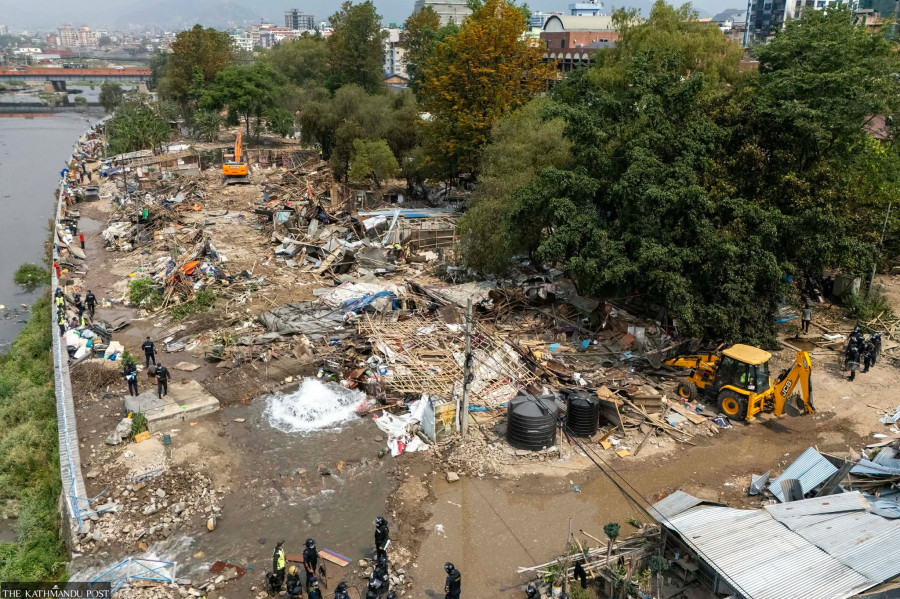
The new nationwide drive to remove riverside settlements cannot be viewed solely as a law-and-order or environmental problem. In fact, at its heart, it is a humanitarian issue. Among those whose homes were razed on Saturday, fewer families than expected registered as landless. The Balendra Shah government’s assumption that most of those housed in these settlements are not homeless folks thus seems to have been vindicated. Even as the mayor of Kathmandu, it was Shah’s belief that the settlements should be removed as they are packed with political activists and fake internal refugees. The argument that such settlements are prone to seasonal flooding was also advanced. These arguments have merit. Yet what is also true is that potentially thousands of people have been rendered homeless, almost overnight, and they have nowhere else to go. The government claims to have set up alternative settlements for them. But some of those who have been relocated already complain about not having enough to eat. Also, the number of those registering for official landless status is steadily ticking up.
In a democratic society, the process of implementing vital decisions is as important as the decisions themselves. While trying to tackle the problem of illegal occupation of public land, the law stipulates that the first step is to determine the true number of landless people settled there. This should be followed by the drafting of a master plan for their resettlement and rehabilitation. Yet the federal government started bringing down riverside structures without completing any of these preliminary processes, so much so that the people concerned did not even get enough time to remove their belongings from their homes. It is dangerous for a democratically elected government to only rely on the public opinion before taking vital decisions. Other vital considerations were also given a short shift in the process. The destruction of riverside structures, if at all needed, should have been carried out under the jurisdiction of the local government, with perhaps backup support from the federal government. Yet the opposite seems to be happening.
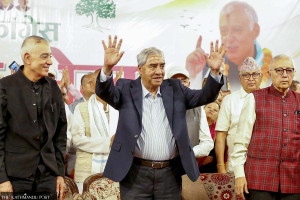
There is also a contradiction between the promises and execution of top Rastriya Swatantra Party officials. Its chair, Rabi Lamichhane, used to say that he would be the first to protest against the razing of the riverside settlements in Kathmandu. Yet he was mum as his party’s government did exactly that. Even Shah, on the campaign trail for the March 5 elections, had promised to improve the lot of the landless people. As the bulldozers roll into these settlements, the new prime minister continues to stick to that stand, saying that the landless will get justice once they are separated from illegal land encroachers. Yet the way he has gone about it is not right. With so many families suddenly rendered homeless, the government has an enormous challenge of looking after their upkeep and livelihood. Many people might find the sight of bulldozers swiftly bringing down riverside structures satisfying, signs of government efficiency and responsibility. But the way it has bypassed due process is a worrying sign.




 20.02°C Kathmandu