On Shah government’s accommodative commitment framework
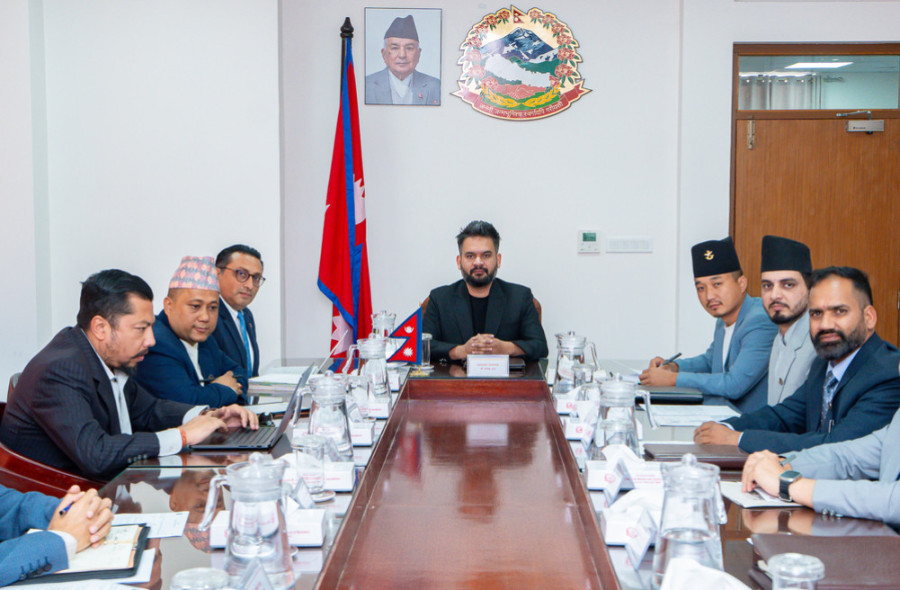
The government should try to listen to the broadest possible section of the population. The Office of the Prime Minister and Council of Ministers has circulated the draft to political parties and sought feedback within ten days. Courtesy of PM’s secretariat
By unveiling the draft national commitment framework, the new Balendra Shah government has tried to solidify the public perception of a positive departure from the old ways of doing statecraft. The framework not only sets the administration’s goals but also accommodates the electoral commitments of major opposition parties. Not just that. It pledges to carry forward the previous government’s initiatives. The draft document, published for public comment and feedback, lays out an expansive policy agenda, touching on nearly every major sector of governance. It pledges economic stability and reform, seeks to restore dignity and self-reliance in agriculture, and outlines priorities for tourism and civil aviation, energy development, mining, and infrastructure. It establishes employment as the foundation of prosperity while also outlining commitments to vital reforms in health and education.
In the framework, the Shah administration emphasises good governance and corruption control—long-standing demands of the general public. In addition to administrative reforms aimed at improving service delivery, it sets e-governance and technology, social justice, and inclusion as priorities. It also underscores the importance of international diplomacy, proposes leveraging the knowledge, skills, and capital of the Nepali diaspora, and includes provisions on sports, disaster management, and the regulation of cooperatives and microfinance institutions. The document is already comprehensive, even as it includes some controversial statements like Nepal’s characterisation as a “buffer zone.” But even in this case, by inviting public feedback, the government has left room for correction and the draft can be expected to be refined. By accommodating the agendas of opposition parties, the new government has tried to show that it has a big heart. Opposition parties have also welcomed the move and want their agendas to find space even in the final document.
Over the years, it has been common practice among ruling parties to ditch all the major plans and programmes of the previous governments and to start its tenure from ground zero. On the other hand, there is an equally troubling trend of the parties in the opposition bench in parliament to criticise every decision of the ruling parties. In this situation, the RSP’s embrace of the goals and visions of other parties out of power sets a healthy precedent. It also increases the possibility of greater cooperation between the ruling and opposition parties on important national agendas. The old politics of negation had badly hampered governance and drained state coffers.
With a near two-thirds majority, the Shah administration has no hindrances in implementing the vision it has set through the framework. Every goal listed is achievable in the next five years. Yet it would do well to take as many stakeholders as it possibly can into confidence. As it goes about implementing its ambitious goals, the feedback of civil society, private sector, media, and diaspora can provide vital inputs. There are already fears being expressed that the government could use its overwhelming majority to stifle dissent. Youtubers have been jailed. Advertisement for private media cut. Due process had been given a short shift during the arrests of some high-profile politicians. We can only hope that the government is serious about increasing the acceptability of its agendas and quickly learns from some of its initial missteps. Above all, it must prove its critics wrong by continually accommodating a wide spectrum of viewpoints.




 14.81°C Kathmandu