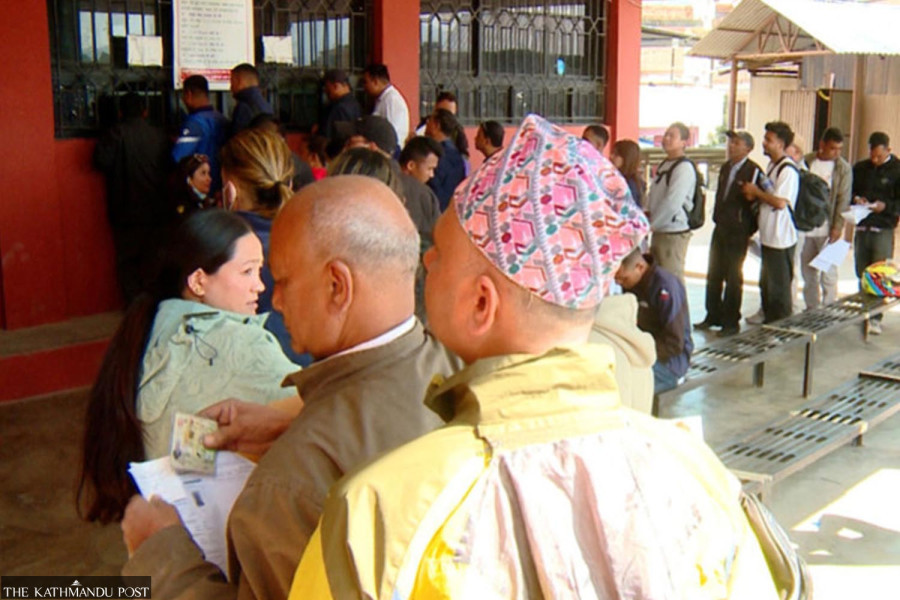
Delayed printing of driving licence cards has inconvenienced countless Nepalis. Even those who paid the required fees as far back as May 2022 for a printed licence still hold a faded payment receipt wherever they go. New applicants and those seeking renewals are facing the same fate. According to the Department of Transport Management (DoTM), nearly 2.9 million licences have yet to be printed. In a bid to clear the backlog, the incumbent government, on March 27, introduced a 100-point governance reform package that includes a pledge to print driving licences and deliver them to people’s doorsteps via the ‘government courier service’. It aims to conclude the process within 100 days. There is also a provision of issuing licences for new applicants and those seeking emergency services within 24 hours. To its credit, the government has tried to bring services to citizens rather than forcing them to navigate complicated service delivery. Yet the backlog is far too big, leaving many to wonder how long they would still have to wait.
Obtaining printing licences remains a herculean task for the government. On one side, with around 4,000 licences added daily under ‘emergency’, ‘new applications’ and ‘renewal’ categories, the backlog figure has gone up to approximately 2.9 million from 2.7 million; and on the other, the server damaged during September’s Gen Z protests has left the DoTM operating on a temporary system. While the department sends data for the licences, it relies on the Security Printing Centre in Panauti, Kavre, to process them. Within this capacity, the government must print more than 2.5 million licences within 85 days to meet the 100-day deadline. The centre can print around 40,000 licences daily—or 2.4 million licences in two months.
The government’s plan to clear the licence backlog is appealing to the public, who have long been sold false dreams of fast and effective governance. But it may not succeed in the long run if the old centralised approach gets continuity. Nepal transitioned to federalism a decade ago, but it is yet to overcome its centralised service delivery. Even as the 42 transport management offices across the country handle applications, collect revenue and data and conduct trials, licences are printed only at the centre. This calls for a shift in approach by decentralising printing services. Meeting the target and preventing licence pile-up in the future also calls for equipping each of the 42 transport management offices across the country with printing machines; if this cannot be met, at least one machine must be provided to each of the seven provincial offices for printing. Another reason it would be unwise to rely on a centralised printing mechanism is the history of delays caused by printing machine issues and frequent server outages.
The incumbent government took shape amid people’s hopes for renewal and effective governance. The 100-day period will also be a measure of the government’s credibility. If it can clear the backlog—or get anywhere close to doing so—it will be a potent show of its commitment to effective service delivery. But if this government too makes one after another big promise yet fails to follow through on them, people will soon start doubting its service-delivery chops as well.




 19.27°C Kathmandu