A government plan to clear the backlog of driving licences and deliver them to households within 100 days is facing pressure, with nearly 2.9 million licences still pending printing.
The Cabinet, on March 27, approved a governance reform package that includes printing driving licences and sending them via postal service by modernising postal operations. But for many service seekers, the key concern remains when they will receive their licences.
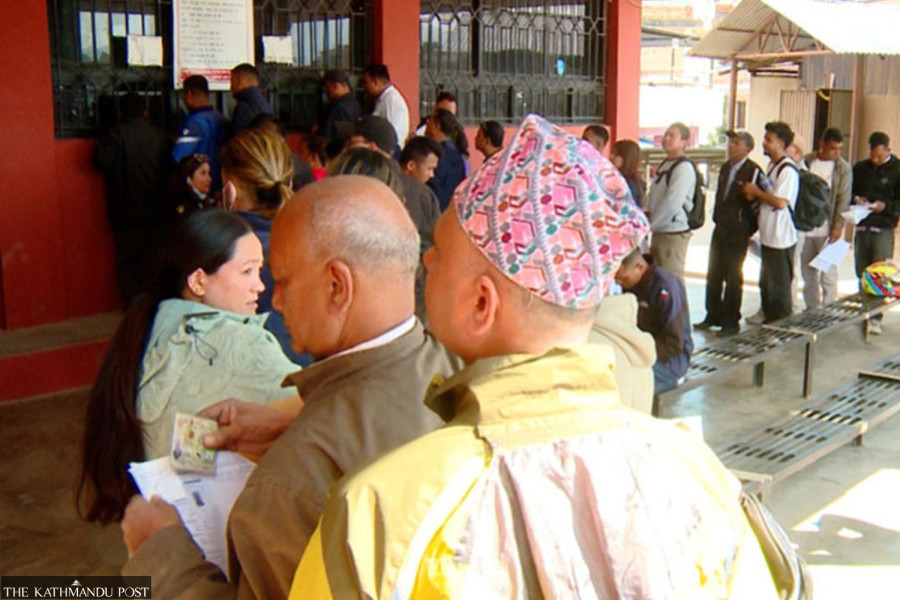
Since 2022, both new applicants and those seeking renewals have paid the required fees but have not received licences. Many continue to carry payment receipts instead of the official document.
The backlog has continued to grow. According to the Department of Transport Management, around 4,000 licences are added daily under categories such as emergency issuance, new applications and renewals. Earlier data showed 2.7 million licences pending printing, but this figure has now risen to around 2.9 million.
Director Keshav Khatiwada said disruptions to data systems following a fire during protests at the department’s office in Minbhawan caused significant setbacks. “The server was damaged, and we are still operating on a temporary system,” he said.
Despite the challenges, printing work is ongoing. On Tuesday, data for 397,000 licences was sent to the Security Printing Centre for processing. Once printed, licences are sent to the respective transport offices and delivered to applicants through the postal system.
The scale of the task remains significant. To meet the 100-day target, about 2.6 million licences must be printed within 88 days. Officials say the printing capacity currently stands at around 40,000 licences per day.
Devraj Dhungana, executive director of the Security Printing Centre, said the facility operates in multiple shifts and can sustain high output. “We are currently printing around 40,000 licences daily. This translates to about 1.2 million per month. At this pace, we can complete around 2.4 million in two months,” he said.
The printing facility is located in Panauti, Kavre. Dhungana said the work will continue even on holidays to meet the deadline. He added that the earlier agreement to print 1.2 million licences by April 24 is on track, and preparations are underway to sign a new agreement for the remaining volume within the week.
He also expressed confidence that the backlog can be cleared by the end of the fiscal year. “By the end of the fiscal year, all licences will be printed,” he said, adding that applicants would no longer have to rely on payment slips from the next fiscal year
However, the system still faces structural issues. The Department of Transport Management lost its printing capacity after its machine was destroyed in arson during the Gen Z protests. Previously, the department handled printing directly, but now relies on the Security Printing Centre.
Officials say a long-term solution requires decentralising printing by equipping transport offices or provincial ministries with printing machines. Until then, the centralised system will continue to handle the backlog.
For now, despite policy promises and stated capacity, the gap between application and delivery remains unresolved, leaving thousands of applicants waiting indefinitely.




 19.15°C Kathmandu