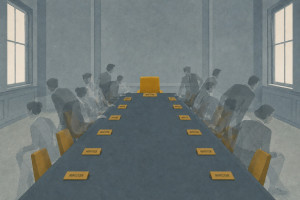
The new government, in a sweeping move to remove officials appointed by previous governments, has removed 10 chairpersons and members of two transitional justice commissions. Along with over 1,500 office bearers from over a hundred state institutions, the Balendra Shah administration also relieved the leaderships of the Truth and Reconciliation Commission and the Commission of Investigation on Enforced Disappeared Persons, appointed under the KP Sharma Oli government in May last year. While the use of an ordinance to dismiss them has raised legal and procedural questions, the decision also opens the door for fresh and fair appointments in the commissions, which have long been criticised for politicisation.
The office bearers of the two commissions have been appointed three times, as successive teams failed to effectively carry out their mandate of delivering justice to thousands of victims of the insurgency-era abuses. The two commissions first received their office bearers in February 2015. Their appointments drew criticism as they were made through political bargaining rather than on merit. Having done little beyond collecting complaints, their tenure was not extended after 2019. In 2020, new teams were appointed to the two commissions, but they too were criticised as politically motivated. Their performance was no better than that of their predecessors.
Those relieved of their responsibilities by the incumbent government also did little beyond collecting additional complaints. A section of victims from the 1996–2006 Maoist insurgency, along with human rights activists, had objected to their appointment process, citing a lack of consultation and transparency and for being politically motivated. Now, as office bearers are set to be appointed for the fourth time in a decade, the country cannot afford to repeat past mistakes. The present government has the opportunity to adopt a fully transparent and consultative selection process and to ensure that appointments are free from political influence.
In the past, parties directly linked to the insurgency either led the government or were part of it when these appointments were made. The Maoists (now Nepali Communist Party) waged an armed rebellion against the state, while the Nepali Congress led governments that were accused of committing atrocities in the name of suppressing the insurgents. Their efforts to influence the selection process and their reluctance to empower the commissions were evident. The CPN-UML made little effort to conclude the process, instead using it as a tool to serve political interests.
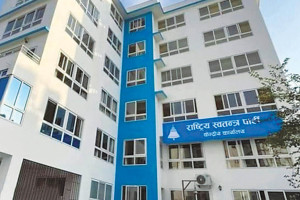
The present Rastriya Swatantra Party-led government, formed in 2022, carries no baggage from the insurgency. With close to a two-thirds majority in Parliament, it is well-positioned to pursue its agenda without undue influence from parties with stakes in the insurgency. This potentially offers it a rare opportunity to advance the transitional justice process with greater neutrality and credibility. The process has already been prolonged; therefore, the government should not waste any more time to conclude it. As defined in the Enforced Disappearances Enquiry, Truth and Reconciliation Commission Act, the panel to recommend names, led by a former Chief Justice, should be constituted without delay.
The panel, after thorough consultations with victims and concerned stakeholders, must select the chairpersons and members of the commissions by ensuring full transparency and prioritising competence in the appointments. Once the office bearers are in place, the Shah administration should make every resource available to conclude the process. The RSP-led government is expected to remain in office for a full five-year term, and if used well, this is enough time to conclude investigations into the complaints, bring perpetrators to justice, and ensure reparations for victims.




 14.69°C Kathmandu