Russian climber with no legs scales Mt Everest on his arms alone
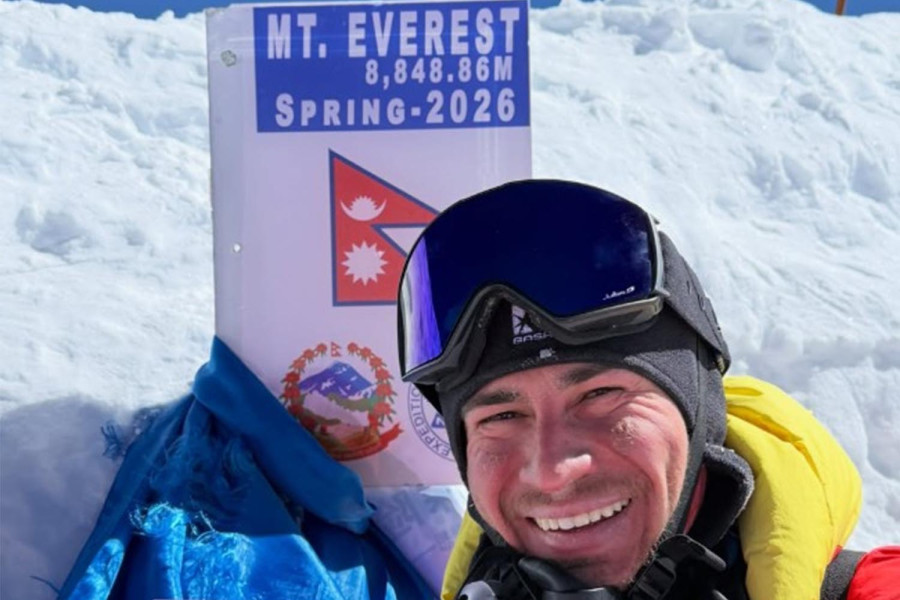
Amputated below the waist, Rustam reached the summit of Mt Everest on Wednesday morning. Amputated below the waist, he reached the summit of Mt Everest on Wednesday morning Photo: Courtesy of Anna Afanasyeva
Rustam Nabiev, a Russian ex-soldier who lost both legs when a military barracks collapsed in Russia in 2015, has stunned the world by scaling Mt Everest, the world’s highest peak, using only the strength of his arms, setting what has been described as a “new record in mountaineering history”.
Rustam launched the expedition this time on his 34th birthday.
While a typical climber takes three to four days for the final summit push, Rustam took about a week of intense and exhausting effort. A video of him pulling himself up across metal ladders installed over the Khumbu Icefall using his arms has gone viral.
Amputated below the waist, he reached the summit of Mt Everest on Wednesday morning. His achievement has been widely covered in international media. Lhakpa Sherpa, the Nepali mountaineer who holds the record for the most Everest ascents by a woman, described it as an extraordinary example of human willpower overcoming physical limits.
In May 2023, Hari Budha Magar, a former Gurkha soldier from Rolpa who lost both legs below the knee during the war in Afghanistan in 2010, set a record in the double-amputee-above-the-knee category by climbing Everest with prosthetic legs. Rustam has now gone beyond that milestone.
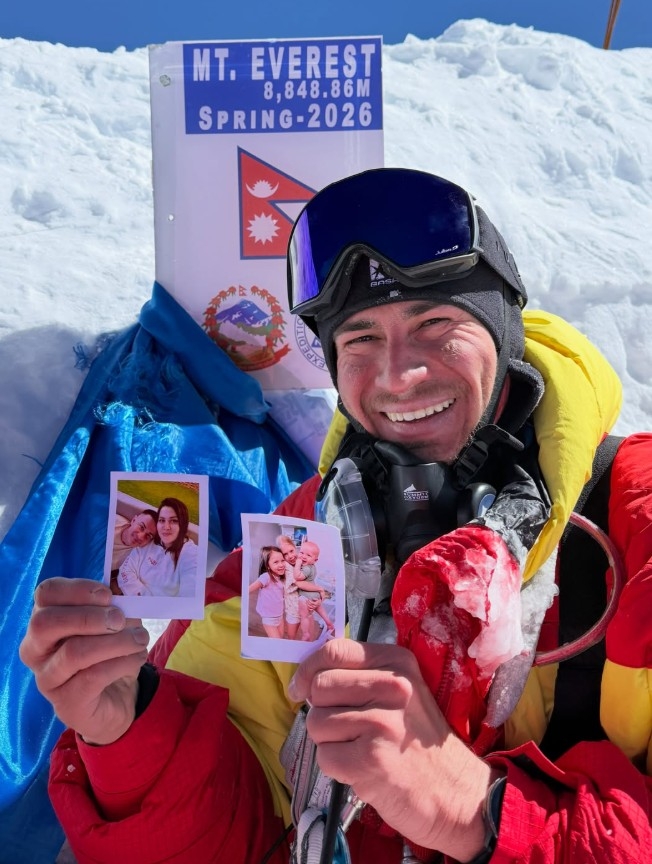
Rustam Nabiev reached the summit at 8:16 am (Nepali time) on May 20. Photo: Courtesy of Anna Afanasyeva
After returning to Kathmandu following his ascent, Rustam flew back home on Tuesday morning on Turkish Airlines via Istanbul. Speaking to Kantipur before his departure, he said that even for able-bodied climbers, Everest is the ultimate test of body and mind. For him, moving forward on his arms alone made every metre feel like a major struggle.
When asked about the most difficult moment of the journey, Rustam said without hesitation, “The most challenging route was definitely the Khumbu Icefall, which took me 15 hours to cross. You can imagine how difficult it is even for an able-bodied climber. The second hardest phase was the journey from Camp 3 to Camp 4, which took me more than 14 hours.”
Rustam reached the summit at 8:16 am (Nepali time) on May 20. But reaching the top is not the only challenge; descending safely is often more dangerous.
“The descent is always the hardest part because most climbers lose their lives while coming down,” he said. “I focused more on the descent than the ascent. Without legs, going down was extremely painful, both physically and mentally. I had to constantly hold my body back with my hands to stay balanced on ice walls and rocks to avoid slipping. It put continuous strain on my body.”
Every movement required extreme caution. Beyond physical pain, he also faced constant concern about survival. “Walking on your hands is not natural for the human body. At that altitude, anything could have happened, so I kept those risks in mind,” he said.
When asked what comes next after Everest, he replied, “The Seven Summits of the seven continents.”
In Nepal, he has already climbed Mera Peak and Mt Manaslu. Everest marks his third major success in the Himalayas.
However, his ambition extends beyond the Himalayas. His goal is to complete the Seven Summits, the highest peaks on all seven continents. He now has three peaks left, including those in North America and Australia/Oceania. During his military service, he worked as a parajumper. He lost both legs in 2015 in the barracks collapse incident.
When asked why he chose the seven continents’ peaks, he said, “Because in mountaineering, this is a realistic and achievable goal for me. The plan to climb all 14 eight-thousanders is too difficult for me because each climb takes a heavy toll on my health and requires long recovery.”
Behind the records, he says, lies a broader message. Rustam says his journey is meant for anyone facing difficult situations in life. “My message is not only for people with disabilities; it is for everyone. We all face difficult situations at some point,” he said.
“Even if you fall, you can rise again. A person can reach the highest peak in their life, and that peak does not necessarily have to be a mountain. The key is to find a goal that brings you back to life and makes it meaningful again,” he said.
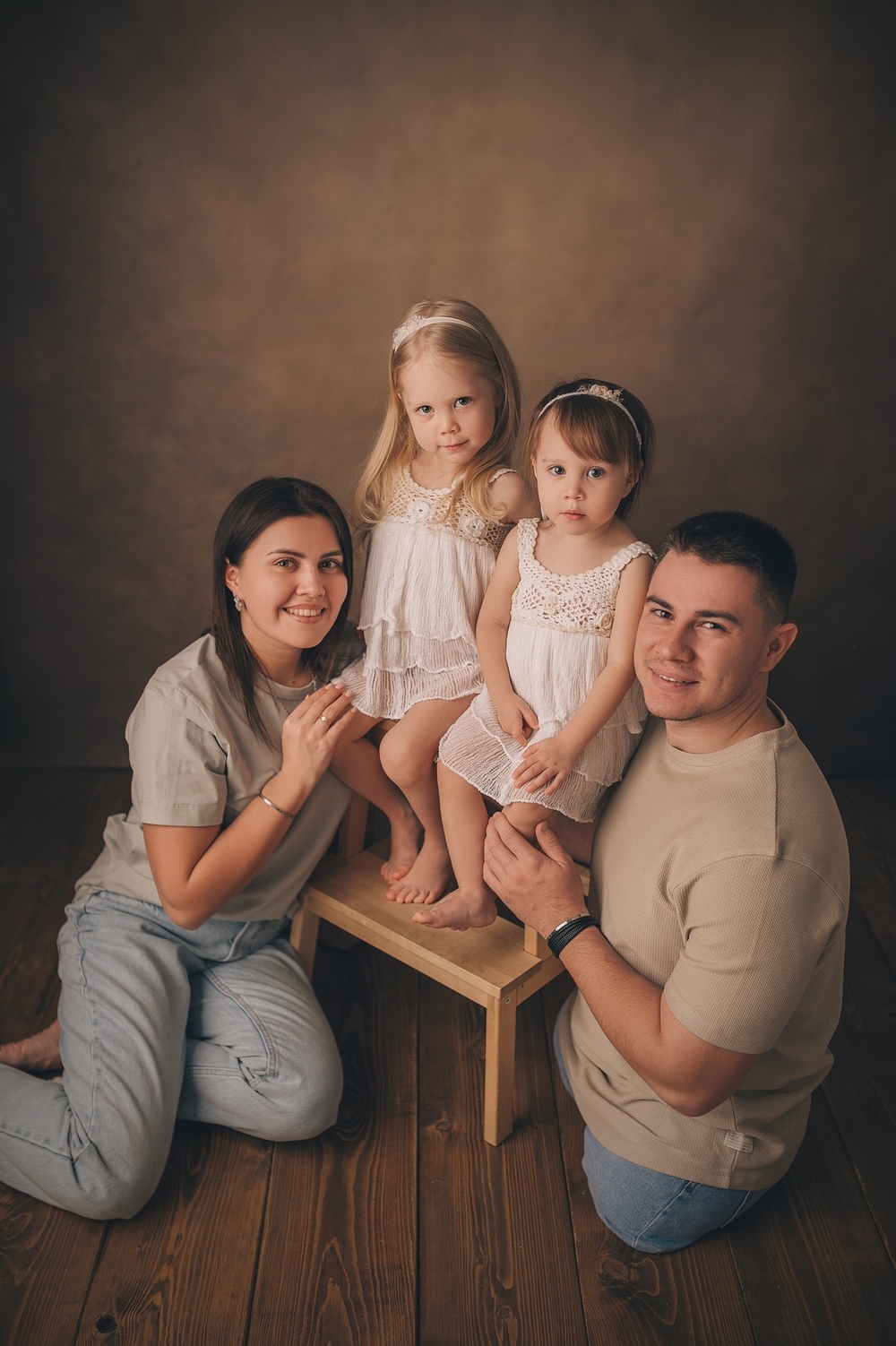
Rustam Nabiev with his family in Russia. Photo: Courtesy of Anna Afanasyeva
Speaking about challenges faced by people with disabilities globally, including in Nepal and Russia, Rustam called for a shift in social attitudes. “First of all, we are human beings too. No matter what injuries we have, we want to live, build our identity and achieve things. There is often a lack of trust in society,” he said. “Sometimes, people with disabilities achieve things that are more surprising than those achieved by fully able-bodied people. We want equality and respect. We are not a separate class.”
Rustam said his Everest climb would have been impossible without his support team. Five experienced Sherpas supported him. Two were always with him, while one monitored his oxygen levels throughout.
The expedition was managed by the Seven Summit Club. “The Sherpas are truly strong and remarkable people. Without them, no climb is possible, whether the climber is able-bodied or not,” he said. “I had entrusted my life to their experience and skills. I am deeply grateful for my safe return.”
He also shared a personal memory from Nepal. Recalling an incident in Lukla, he said, “I was walking on the street. A little girl came up, looked at me, and kissed me on the cheek. For me, that kiss was like a blessing.”
At the end of the conversation, he spoke about his family waiting for him in Russia. His wife is also interested in mountaineering, and the couple has previously climbed Mt Elbrus and Mt Kazbek together. He has two daughters, aged eight years and 11 months.
His elder daughter understood the risks of his Everest attempt. Before coming to Nepal, he watched a documentary on Everest with her. Seeing footage of a deceased climber near the summit, she asked, “Papa, who is this?”
To calm her, he joked, “He felt very hot, so he took off his clothes and is sleeping there.” But she remained worried and kept calling him during the expedition. He stayed in touch with his family throughout the climb.
A drawing and a letter from his elder daughter, Sofia, became his main source of motivation during the climb. The letter read: “My papa will conquer the Everest using the strength of his two arms.”
As per Sofia’s prayers, his arms carried her father to the top of the world. Rustam has shown that human determination can push past physical limits.
Suraj Kunwar is a senior correspondent with over two decades experience covering Aviation, Tourism and Mountaineering. He received the IFJ Tolerance Award in 2005.




 27.53°C Kathmandu