Visits reopen talks to rescue bankrupt Gorakhkali Rubber Industry
Latest inspection offers no firm restart date as the state-owned factory continues to deteriorate more than a decade after shutting down. Hariram Upreti/TKP
Repeated government inspections of the Gorakhkali Rubber Industry have yet to produce a concrete plan to restart the long-shuttered factory.
Another inspection was carried out on Sunday as the government again studies possible models to bring the state-owned plant back into operation.
The factory has been shut since March 2015, and years of neglect have left its machinery, buildings and other infrastructure in deteriorating condition.
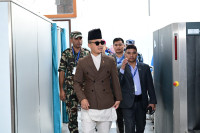
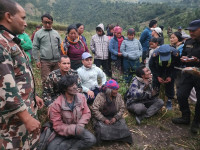
Kabindra Burlakoti, the newly elected member of the House of Representatives from Gorkha-2, visited the factory for the third time since the March parliamentary election. A subcommittee under the government’s Public Assets Management Committee led the latest inspection at the factory in Gorkha Municipality-13.
Burlakoti, fellow federal lawmaker Sushil Khadka and officials from the Ministry of Finance and the Ministry of Industry, Commerce and Supplies inspected the closed factory. Residents urged the team to settle on a clear operating model before moving ahead.
“Everyone would be happy to see the factory reopen, but the government needs to say how it plans to run it,” said Pratap Bhandari of Gorkha Municipality-13. “Will the government operate it, privatise it or hand it over to another institution? That needs to be clear.”
Residents complained that government teams have repeatedly inspected the factory without deciding on how to restart it. Resident Ishwor Pariyar said the plant should resume production using its existing technology and gradually shift to newer technology.
“It would be better to start with the technology already in place and upgrade it over time,” Pariyar said. “If the factory reopens, the younger generation will have jobs and local farmers will have an easier market for even small amounts of vegetables and milk. The local economy will become more active. We just need a decision on how to move forward.”
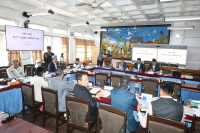
Khadka, also coordinator of the subcommittee, said the government is studying 38 public enterprises across the country. Gorakhkali Tyre, which was shut down while still operational, has been given priority as the government assesses options for its revival.
“We came for a field inspection because the government needs a report from the ground before deciding on an operating model,” Khadka said. “There is no reason why this factory cannot be brought back into operation. The due diligence assessment also concluded that it can be operated.”
The government is now looking at a more efficient operating model, he said.
“Gorakhkali Tyre is a project of national pride. We grew up hearing about Gorakhkali Tyre, and everyone wants to hear that name again,” Khadka said.
Burlakoti said the factory’s buildings and infrastructure have deteriorated after being left idle for years.
“People ask when it will reopen, but we cannot give a definite date yet,” he said. “Within a few months, however, we expect to settle on a model for its operation.”
He said immediate attention would be given to cleaning and repairing the site. The factory’s machinery and vehicles have been left to deteriorate, while weeds and plants have grown around the buildings.
“The factory was shut while it was still operating, so the vehicles and machinery have been sitting idle and deteriorating. After 10 to 12 years of closure, plants have grown inside the buildings, moss has spread, and windows have broken,” Burlakoti said. “We should start repairs immediately so that the factory is not left in the same condition when the next inspection team arrives.”
Gorakhkali Rubber Industry frequently becomes a political talking point during elections, but repeated government studies and task forces have failed to produce a concrete plan for its revival.
A government task force had previously proposed privatising the factory, citing its low production capacity and outdated technology. The proposal also sparked interest from the private sector. Chinese investors have repeatedly visited the factory to explore the possibility of investing in its revival, but no firm operating plan has emerged.
The factory fell silent after the government introduced a voluntary retirement scheme for its workers and employees in January 2019. It has not returned to operation since.
Years of neglect have taken a toll on the plant. Its machinery has begun to rust and deteriorate, while its buildings and other facilities have fallen into disrepair. The factory has 42 residential blocks that once housed 42 employee families, but the staff quarters are now largely deserted.
The factory occupies 682 ropanis of land (one ropani equals 0.05087 hectares) at Deurali, near the entrance to Gorkha district headquarters. Gorakhkali Rubber Industry began producing tyres on December 14, 1992, becoming the first tyre manufacturer in Nepal.




 24.51°C Kathmandu
.jpg)