The recently unveiled Multiple Indicator Survey (MICS) 2024-025 presents a devastating picture of Nepal’s water supply systems. Around 60 percent of households across the country still consume water contaminated with harmful microbes. The presence of coliform bacteria in drinking water is not a new phenomenon, but the scale of the contamination is an alarming sign of a systemic failure in public health and infrastructure oversight.
The prevalent narrative has been built on the distinction between ‘basic’ and ‘safe’ access. Recent data suggests that 98.2 percent of the population uses an ‘improved’ source of drinking water. However, as health officials have noted, these sources are often unsafe. The term ‘safe’ serves more as a statistical convenience than a guarantee of health. The supply and monitoring failure is a life-threatening oversight that leads to annual outbreaks of dysentery, typhoid, hepatitis and cholera. The high rate of neonatal and under-five mortality is also linked to the lack of access to clean water and sanitation.
The main driver of this crisis is the acute mismanagement of water supply infrastructure. In many urban areas, supply lines are dangerously positioned adjacent to sewage lines, creating a high risk of cross-contamination. Further, the physical integrity of these systems is abysmal. Only about 25 percent of water supply schemes in the country are reported to be fully functional, with nearly 40 percent requiring major repairs. The vulnerability of these systems is exacerbated by geography and climate, with high risk from floods and landslides.
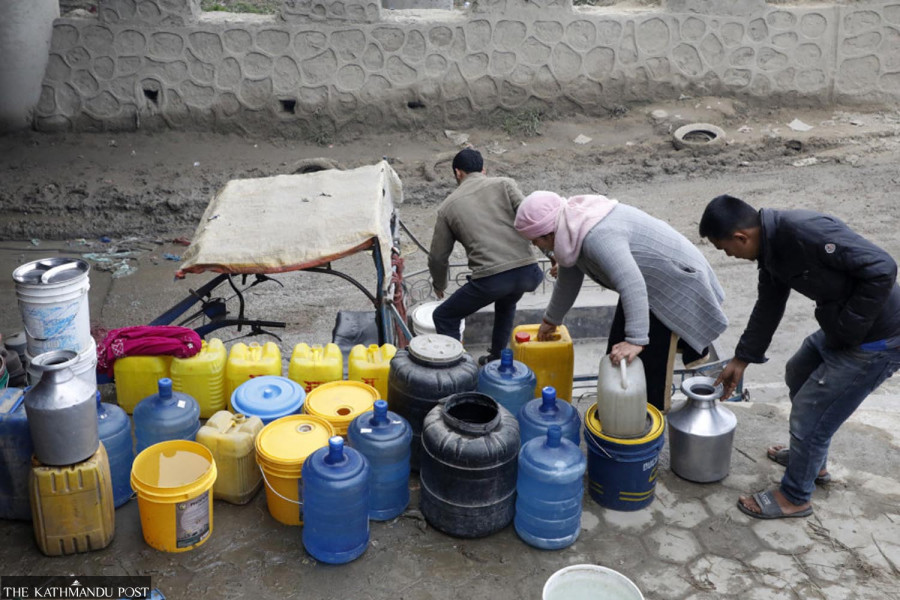
In the Valley, the crisis is compounded by extreme scarcity. As of 2021, the daily demand for water reached 470 million litres, while the supply during the dry season plummeted to a mere 80 million litres. This scarcity forces many to rely on unprotected or unregulated sources, further increasing the risk of disease. While the capital’s struggles are well-documented and often garner attention from policymakers, significant disparities persist in rural areas where communities depend on traditional sources that are frequently contaminated.
The problem is that authorities do not inspect water sources regularly. If the people wish to test the supply vigorously, the financial burden of testing falls on the people—a cost that is prohibitive for most. While the state has set ambitious targets under the Sustainable Development Goal of 90 percent piped water coverage by 2030, the current pace of development is insufficient. There is an urgent need to implement a robust plan that includes strict regulatory monitoring. The government should expedite the formulation of a new Water, Sanitation and Hygiene Act and revise policies to ensure that infrastructure is not only built but also maintained and protected.
Meanwhile, we, the people, must be pragmatic. The development of sophisticated infrastructure, the rehabilitation of thousands of broken water supply pipes, and the implementation of nationwide monitoring policies are tasks that will take years, if not decades, to reach full fruition. The bureaucracy is slow, and the scale of the required engineering is massive. Therefore, the immediate onus of safety lies with the people. Given that even bottled water is repeatedly found to be contaminated, consumers cannot take the ‘improved’ status of any water source for granted. Until the government can guarantee the safety of the water at the tap, citizens must take the initiative to protect themselves. This means treating all drinking water at the household level. We must be vigilant and sceptical of the water we drink. The government is expected to step up its game, but until the pipes are fixed and the oversight is rigorous, your health is in your own hands.




 14.04°C Kathmandu