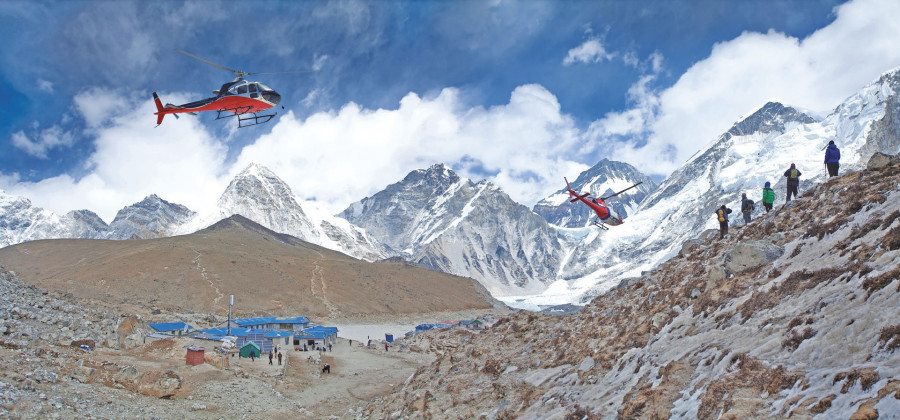
Nepal’s Himalayas have long been an attraction for adventure-seekers, serving as a cornerstone of the national economy. But a persistent rot has been eating away at our reputation as a destination for adventure tourism. For years, a nexus of unscrupulous trekking guides, agencies, helicopter operators and hospitals has been orchestrating a multimillion-dollar insurance fraud by staging fake rescues in the mountains. The predatory practices have tarnished Nepal’s image as a tourist destination.
A recent investigation by the Central Investigation Bureau (CIB) estimates that just a handful of companies defrauded international insurers of more than $19.65 million over a 30-month period. The methods are as creative as they are criminal: Reclassifying charter flights as emergency evacuations, billing multiple insurers for the same flight, and, most disturbingly, serving tourists adulterated food to induce illness and justify a commission-heavy helicopter ride.
As these scams gained prominence, international insurance companies and tourism organisations have begun portraying Nepal as a ‘no-go destination’, with headlines like A scam on the roof of the world circulating in the global press. Major insurers have repeatedly issued ultimatums, threatening to stop issuing travel policies for Nepal if the fraud is not eradicated. Without insurance coverage, the flow of high-value mountaineers and trekkers—the drivers of the mountain economy—will dry up, leaving thousands of workers jobless.
The most infuriating aspect of this saga is that the government has known the details of the scam for nearly eight years. On July 30, 2018, a fact-finding committee submitted a comprehensive 700-page report to the then-tourism minister, Rabindra Adhikari. The report explicitly named eight agencies, four hospitals and three helicopter companies that required investigation for quoting exorbitant rates and making fraudulent claims. Following Minister Adhikari’s death in a helicopter crash in February 2019, the fake rescue scam file was effectively closed. The bureaucratic and legal machinery stalled, allowing the scammers to retreat into the shadows and, eventually, re-emerge with their old tricks. As CIB chief Manoj Kumar KC rightly noted, crime flourishes when there is no punitive action. These rackets have continued to thrive as the state lacked the political will to follow through on its own findings.
The absence of government action allowed opportunistic external actors to exploit the situation. A month-long investigation by The Post previously revealed how international entities tried to use the probe to market themselves as sole operators for all rescues, using threats and misinformation to put pressure on the government. This highlights the urgent need for a transparent, state-led system that does not leave the industry vulnerable to either internal scammers or external opportunists.
The CIB’s recent arrest of six top executives from rescue and trekking companies is an overdue start. Arrests are not enough. The state machinery must realise that it was inaction against the fake rescuers that led to the proliferation of the racket in the past seven years. The government must now fully implement the guidelines of the 2018 report and ensure that every rescue flight, medical bill and insurance claim is reviewed thoroughly by the Tourist Search and Rescue Committee. The intermediaries–guides, hoteliers, helicopter operators–must all be monitored closely and administered suitable punishments if found complicit in the racket.
Nepal cannot afford to let a key sector of its national economy be discredited. It is time to emerge from the cycle of investigative reports and inaction, and to ensure that the only thing tourists take home from our mountains are memories of grandeur—not the bitter taste of a scam. The fake rescue racket must be busted, permanently.




 21.83°C Kathmandu