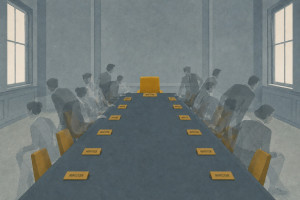
KP Sharma Oli has some gall! The three-time prime minister who stands accused of overseeing the killing of 19 unarmed youngsters on the first day of the Gen Z protests has just called for a pre-election public debate between the top leaders of political parties. We can only imagine the kind of brutal questions that will be directed at Oli, the main face of the old guard the protestors wanted to overthrow. Perhaps Oli reckons he can use his unmatched oratory to his political advantage as he cleverly pokes holes into the arguments and accusations of his debaters. Yet his call for an open debate between top leaders, say at least between the prime minister candidates of the major forces, is well-placed. With parties like the Nepali Congress, the CPN-UML and the Rastriya Swatantra Party (RSP) already declaring their prime minister candidates, people deserve to know how their chosen ones will run the country should they get the chance. This is especially so for a new party like the RSP and its prime minister candidate Balendra Shah.
Nepalis have never heard Shah, the de facto leader of the Gen Z protests who now has a realistic chance of leading the country, engage in an issue-wise debate. For instance, for someone supposedly leading a public crusade against corruption and poor service delivery, he has been short on specifics about how he intends to fight corruption and ensure seamless service delivery. And what are his views on the country’s federal system? Or on the role of religion in politics? What five or 10 other plans will he prioritise as the prime minister? Shah might have been able to retreat behind a veil of silence and secrecy as Kathmandu’s mayor, a largely bureaucratic role. He will not be able to do so as the prime minister, who is always answerable to the parliament and the people at large. So he must come clean on these vital questions. Yet the onus to stand up to public scrutiny is not just with Shah. The newly elected Congress President Gagan Thapa also needs to answer some hard questions: Why did he take so long to revolt against the old establishment? How will the country he governs as prime minister be any different to the one under Sher Bahadur Deuba—the five-time prime minister and outgoing Congress president—when Thapa is surrounded by pretty much the same people Deuba worked with?
The harshest questions in such a debate will undoubtedly be reserved for Oli. And yet it is Oli who is calling for the debate. Whatever his motivations, political leaders in a democracy cannot shy away from vital debates. Among other things, these debates can help people make informed decisions on whom to vote for. Shah was the first one to publicly turn down Oli’s offer of a debate. In fact, Shah should be relishing a chance to publicly expose Oli for his role in suppressing the Gen Z protests and the open promotion of corruption and cronyism during his repeated terms as government head. As we see, there are many compelling reasons to start a culture of pre-election debate between the main prime minister candidates. Make it happen.




 14.82°C Kathmandu