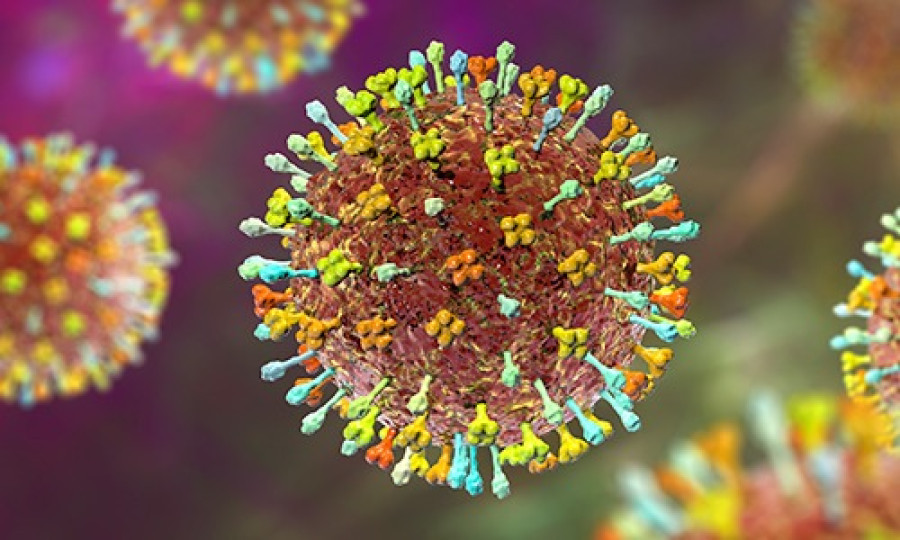
The outbreak of the deadly virus in West Bengal has raised an alarm in Nepal. The Nipah virus. Photo: European Centre for Disease Prevention and Control’s website
The zoonotic Nipah virus, transmitted from animals such as bats or pigs to humans, has been reported in the neighbouring Indian state of West Bengal. According to Indian media reports, five individuals tested positive for the virus in a single week, and around 100 people are currently in quarantine. As the disease has a fatality rate of 40-75 percent according to the World Health Organisation, healthcare workers label it a ‘deadly disease’. In its first outbreak in 1998 across Malaysia and Singapore, nearly 300 people were infected, of whom over 100 died. Similarly, when 19 people were infected in 2018 in Kerala, India, 17 died. It is also significantly more lethal than the coronavirus, requiring close vigilance.
The outbreak of the deadly virus has raised an alarm in Nepal, given the open border with the southern neighbour. As has been the case during the Covid-19 pandemic, the impact was immediately felt on this side of the border after coronavirus cases spiked in India. The Nipah virus transmits when individuals are exposed to infected animals or consume their meat.
Human-to-human transmission through close contact with an infected person (less common but already reported in many places) also warrants urgent attention. Fruit bats, Nipah’s primary hosts, could also pose risks to humans.
What’s concerning is that there is only symptomatic treatment of the virus, despite outbreaks in countries including Bangladesh, India, Malaysia and Singapore. There is also a high risk of misdiagnosis, as its symptoms—fever, headache, cough, sore throat and difficulty breathing—are similar to infections from other viruses, including the coronavirus. But because the condition in Nipah virus-infected patients can rapidly deteriorate, there is again a need for high vigilance, especially among healthcare workers.
In light of infections in India, Nepal’s Epidemiology and Disease Control Division has asked hospitals across the country to remain cautious. Health desks at Koshi Province and Tribhuvan International Airport have also been asked to stay alert. But these efforts will not be enough to stamp out the effects of such a lethal virus. Healthcare facilities must be well-equipped to handle any possible outbreak. As advised by the WHO, it is necessary to mitigate the risk of virus transmission from bats to humans and from human to human by avoiding close proximity to infected patients as well as by controlling infection in health facilities. Implementing preventive measures such as early detection and clinical management, as recommended by the WHO, is as vital. We can learn from India itself, especially Kerala, by following the established NiV protocol, which includes rigorous contact tracing, route maps for the movement of infected individuals, symptoms monitoring and awareness.
Studies show that with ecological disruption and human encroachment of wildlife habitats, the risks of zoonotic viruses have heightened in recent decades. However, dealing with them will become increasingly challenging without enough investment in health budgets and infrastructure. It is thus time to prioritise investment in health to mitigate the human cost of zoonotic viruses like Nipah. In Kerala, the full commitment of the state government seen in the implementation of a robust surveillance system has helped them contain the virus. If and when Nipah cases are seen in Nepal, it might be too late to act.




 17.29°C Kathmandu