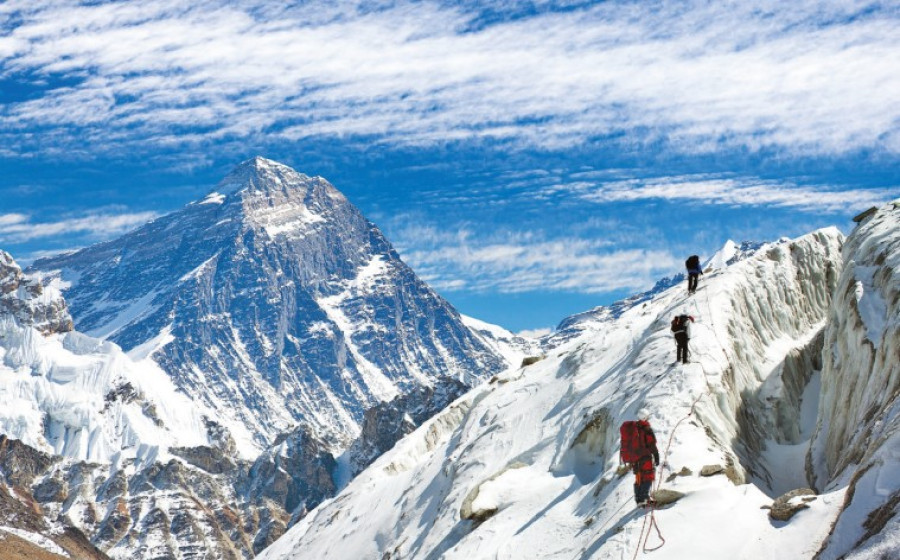
While the 8848.86-metre Mt Everest is renowned as the Earth’s highest peak above sea level, the mountain is these days also notorious for the waste it carries. Since Tenzing Norgay Sherpa and Edmund Hillary first ascended Everest in 1953, almost 9,000 mountaineers have followed in their footsteps. The hordes of climbers scaling Everest are rising each year, and so is the litter they leave behind. As a result, discarded oxygen cylinders, plastic, abandoned tents and ropes, food cans, kitchen waste, water bottles and even human waste pollute the area, with the higher camps faring the worst. In spring 2024 alone, the Sagarmatha Pollution Control Committee (SPCC) collected 88 tonnes of waste from the Everest Base Camp (77 tonnes) and higher camps (8 tonnes). This has jeopardised the sanctity of the Everest region, caused environmental damage and affected thousands of people living downstream.
Even as Nepal launches periodic clean-up programmes, these efforts have failed to make a significant impact. The Nepali Army-led campaigns have removed large quantities of waste, but the work has reportedly been controversial due to concerns about financial transparency and accountability. The paucity of a long-term waste management plan deepened the crisis and rendered the mountain ‘the world’s highest garbage dump’. But the new government’s recent move—the first five-year, comprehensive, policy-backed Everest Cleaning Action Plan (2025–2029), which follows a Supreme Court order issued last year—offers hope. The action plan introduced by the Ministry of Culture, Tourism and Civil Aviation was overdue.
The plan mandates the disclosure of the use of ladders and nylon ropes, which harm the mountains when abandoned on slopes. Similarly, even banners and prayer flags used in the mountains must be biodegradable and standardised. Likewise, a temporary garbage collection point would be designated at Camp II, where garbage from above that altitude would be collected and deposited. It also requires expedition agencies to commit to waste management. Since the previous plan, which required climbers to deposit $4,000 and claim a refund only after carrying at least 18 pounds of trash down Everest didn’t work as expected, the ministry is also planning to make the deposit non-refundable and use it as a cleanup fund to build garbage collection and processing facilities and deploy “mountain rangers” to monitor waste management.
The plan is ambitious, but if implemented well, it could restore the jeopardised ecosystem of the Sagarmatha National Park—home to Everest. This effort is commendable, as it is a first-of-its-kind initiative that offers a clear plan to resolve Everest’s garbage crisis. But the government and policymakers should also reflect on why their previous plans, which were just as ambitious, failed. One reason is the influx of mountaineers who wish to summit Everest. It is not that Nepal hasn’t taken steps to regulate the flow. Last year, drafting a law, the government increased climbing fees, mandated health checkups and even barred novice climbers from scaling Everest. Still, the problem of garbage is only getting worse—and the consequences of further harm to Everest will be incalculable.
Restoring Everest’s sanctity requires a balance between profit-making and the need to preserve its fragile ecosystem. Over the years, this mountain has done the country a great favour. It’s time to pay it back.




 14.81°C Kathmandu