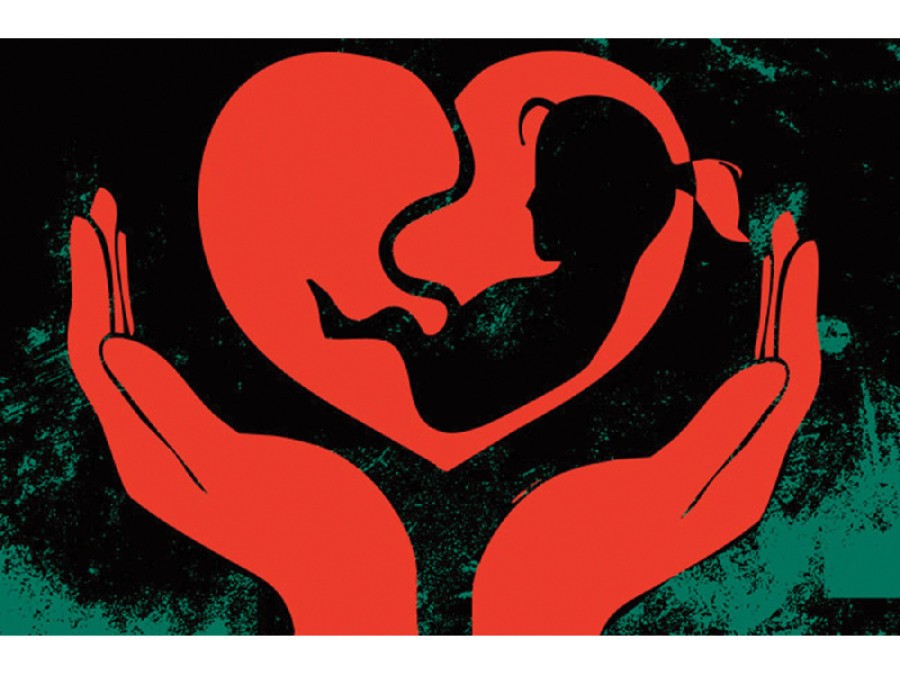
When the country legalised abortion in 2002, it marked a landmark achievement for Nepali women’s reproductive rights and bodily autonomy. It also eliminated the prosecution and imprisonment of women just for terminating unwanted pregnancies. In the past, women would have to resort to abortions performed by unskilled individuals in unsafe environments, which often led to their death. Following the legalisation, unsafe abortion sharply declined as the government designated health facilities for abortion. For instance, in the fiscal year 2024-25 alone, 105,099 women chose abortion through government-authorised health facilities. With this, Nepal appeared ‘progressive’ in legal reforms that protect women, but when it came to childbirth, many families still preferred boys over girls. Unsafe abortions related to female foeticide thus became rampant because of entrenched patriarchal norms.
Sex-selective abortion is a punishable crime. But according to the country’s Ministry of Health and Population’s data, of the 383,205 babies born in fiscal year 2024-25, 206,374 were boys and 176,831 were girls, meaning that the number of boys surpassed that of girls by a staggering 16.71 percent. Data at the provincial level are more troubling. For instance, Sudurpaschim fares the worst of all as boys in the province outnumber girls by around 25 percent. The gap is more than 24 percent in Madhesh, 17.23 percent in Karnali, 13.75 percent in Bagmati, over 13 percent in Lumbini, above 12 percent in Koshi and 10.64 percent in Gandaki. These numbers could be higher, as many abortion cases don’t make it to official records. Experts warn that if this trend continues grave consequences of gender imbalance—both social and demographic—could soon be visible.
Sex-selective abortions make use of readily available ultrasound services and over-the-counter abortion pills. Families even go to India for prenatal sex testing of the foetus. Rising living costs, delayed marriage and motherhood, educational awareness and health factors have also led many couples to prefer a single child; if they are to have just one child, many wish to have a son. Awareness and educational programmes have not proven effective in discouraging female foeticide, as even those who are educated and living in urban centres seemingly harbour troubling patriarchal values and prefer boys to girls.
Both sex-selective abortion and the identification of sex are prohibited in Nepal. The Safe Maternity and Reproductive Health Act, 2018, ensures freedom from coercion into identifying the sex of the foetus. Similarly, the National Criminal Code, 2017, provides for imprisonment of one to five years, along with fines of Rs10,000 to Rs50,000, for anyone involved in the crime. But these laws have largely remained symbolic, as, reportedly, no one has been punished under them so far.
The widening gap in the boys-to-girls birth ratio should be a wake-up call for Nepal. If only existing laws are strictly implemented and medical procedures more closely monitored, many people would be discouraged from performing sex-selective abortions. The consequences of not doing so could be dire—from a drastically falling national workforce to more social crimes. Nor would a country that prefers one gender over others be a healthy one to live in.




 14.67°C Kathmandu