The Gen Z revolt in early September was an expression of the Nepali society’s pent up frustration with a handful of political leaders who had, for decades, held the country captive. No matter which political parties came to power, the same leaders took turns to lead the country. The revolt was a resounding message that the Nepali people will no more tolerate this kind of ‘soft coup’ of the state. It thus called for a generational shift in the power dynamics of major political parties. Seventy-seven people died during the two days of the September protests. The reigning prime minister at the time, KP Sharma Oli, was literally chased away from office. Yet in the eyes of these old leaders, it is business as usual. Oli won the contest for the chair of the CPN-UML, for a third time in a row. Now Sher Bahadur Deuba, the Nepali Congress president, is looking to cling on to his position through all kinds of shenanigans.
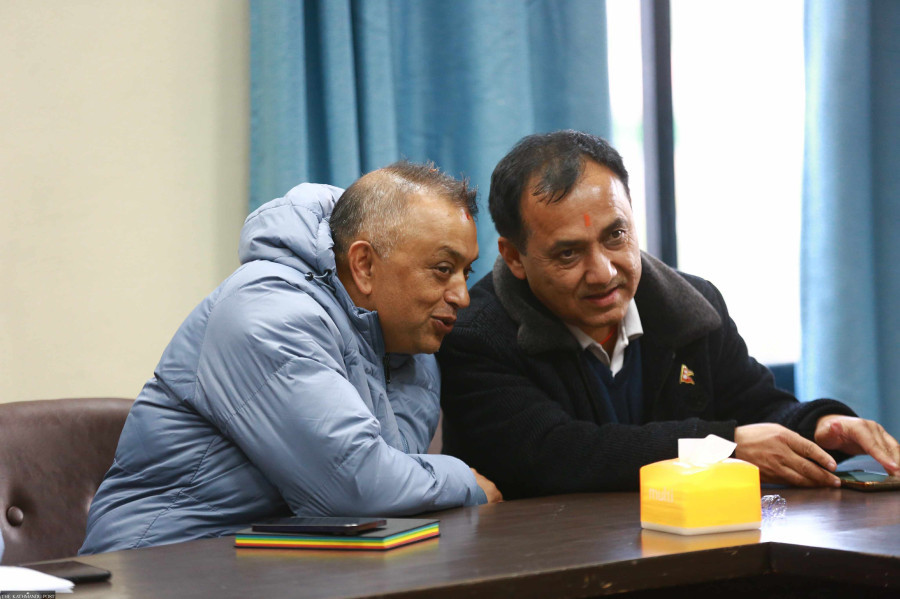
After the Congress leadership repeatedly put off the general convention, two general secretaries Gagan Thapa and Bishwa Prakash Sharma took the initiative to call for a special convention. The party statute clearly states that should 40 percent of elected convention representatives call for a special convention, the party is bound to honour the request within three months. On October 14, around 54 percent of elected representatives of the Congress made such a request. Yet the party leadership conveniently ignored this binding request, supposedly because a convention now would spell an abrupt end to their terms as office-bearers. Unlike these seemingly hidebound leaders gathered around Deuba, who refuse to take off their blinders and internalise the post-Gen Z reality of Nepal, the likes of Thapa and Sharma are afraid that without radical reforms the Congress stands to lose public trust. They are right. It is not in the party’s interest to go into the March 5 general elections under the old leadership that has come to be widely loathed.
Albeit late, the two general secretaries have shown the courage to revolt against the party leadership and call for a special convention on January 11 and 12. They are on sound legal ground. But again, it would be wrong to see their demand for a special convention and a change of party leadership solely through a legal lens. Above all, they want the Nepali Congress to continue to be a relevant force in Nepali politics. Yet most of the party’s office-bearers, in their 60s and 70s, are hopelessly out of step with the spirit of the young country. The Congress is a political party that has been in the vanguard of most movements for democratic rights—and has served as a vital counterweight in national politics to the leftist and communist forces. It has also traditionally had a moderating influence on Nepali politics, preventing it from veering too far either to the left or the right. This is why this initiative of the two general secretaries to save the party from itself deserves widespread support. The party leadership’s effort to turn back the clock must fail.




 20.58°C Kathmandu