Nepal’s healthcare sector has suffered gross neglect of successive governments. They have failed to invest in the sector, or to bring reforms and recruit competent personnel. The meagre budget set aside for health each fiscal year, with only Rs95.81 billion allocated this year—an increment of just a 0.3 percent increment from last year—is far from enough to ensure a healthy Nepal, let alone meet Sustainable Development Goals by 2030. Widespread corruption is another problem plaguing the sector. No matter who leads the health ministry, they are happy with business-as-usual rather than intent on introducing vital reforms. This in turn has led to brain drain among health personnel, and many are jetting abroad in search of better opportunities. Poor Nepalis find no relief from health institutions meant to serve them.
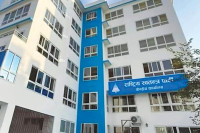
But as the saying goes, every cloud has a silver lining. Doctor Bhagwan Koirala, a cardiac surgeon who performed the first open-heart surgery in Nepal, offers hope to ordinary Nepalis. Koirala in the past played a big role in establishing the Gangalal National Heart Centre and the Manmohan Cardiothoracic Vascular and Transplant Centre. He has also gone to great lengths to improve services across the country’s public hospitals. His latest nobel medical endeavour, the Kathmandu Institute of Child Health (KIOCH), is a case in point. Koirala’s dream project, which took root with the goal of establishing comprehensive paediatric hospitals in all provinces, has recently started providing outpatient services, and inpatient services are set to begin in two weeks. The hospital offers accessible, comprehensive care across child health—and at no cost for those who cannot afford to pay.
What’s notable about this hospital is the way it functions. Healthcare services and personnel are centralised in the federal capital, Kathmandu. According to a study, 90 percent of all paediatricians are based in Bagmati Province, which is home to the national capital. In light of this, KIOCH seeks to serve as a hub and resource centre with doctors, specialists and medical know-how, which will then be passed on to peripheral hospitals. For instance, doctors would be deployed to hospitals in other provinces on a rotational basis, thereby decentralising the services and also bringing them within people’s reach. Such a provision will encourage doctors to travel to the periphery, which they otherwise hesitate to do citing a paucity of benefits and infrastructure. By bringing comprehensive, specialised child care under one umbrella, the hospital also aims to reduce risks that emerge during inter-hospital transfers and offer timely attention to complex operations, thereby saving many children’s lives.
Nepal’s health sector needs more people with a vision like Dr Koirala’s to bridge the gap in care between the rich and the poor. Yes, Nepal’s health sector is suffering from a lack of vision and political meddling. But what Dr Koirala has initiated at the individual level is just a start and signals that there’s much to do in Nepal. Building the Kathmandu Institute of Child Health was no small feat, and he has already embarked on expanding the project to other provinces.
When other provincial hospitals are established and equipped with adequate facilities, infrastructure and competitive salaries, they will likely attract a few among those who have already left the country for better opportunities abroad or are planning to do so. Ophthalmologist Sanduk Ruit and orthopaedic surgeon Govinda KC are other notable doctors who have long served the poor rather than focusing on making money. Young doctors and health professionals have much to learn from the legacy of these people, from the ways they have often single-handedly taken Nepal’s vital health institutions to new levels of care. Kudos to Dr Koirala!




 14.76°C Kathmandu