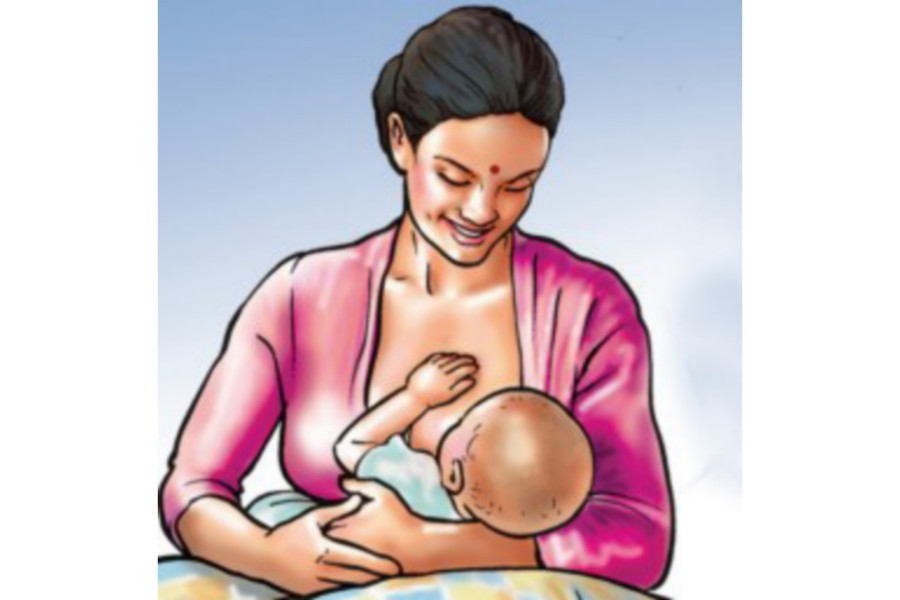
For working mothers, maternity leave alone is not enough after childbirth. As recommended by the World Health Organisation, exclusive breastmilk for the first six months is non-negotiable for the newborn’s health and well-being. After six months, the process, along with other complementary feeds, can last up to two years or longer, depending on the need. Yet most of Nepal’s workplaces are far from friendly for breastfeeding women. This not only discourages women from joining the workforce but also forces those already employed to leave. As women continue to face structural disadvantages in a patriarchal society like ours, breastfeeding and lactation rooms would boost their comfort and overall work experience, thereby addressing gender inequality at large.
While many countries around the world have designed breastfeeding-friendly workspaces, Nepal is only taking baby steps, with select public and private offices providing such facilities. There is also a notion that establishing such facilities without demand is a burden on workplaces. But from a gender-rights perspective, it is a necessity. Even Nepal’s labour law specifies the need for maternal support. Similarly, the International Labour Organisation, through the Maternity Protection Convention, 2000 (No. 183), supports breastfeeding breaks. The Right to Safe Motherhood and Reproductive Health Act, 2018, also mandates that workplaces should ensure arrangements for lactating mothers to breastfeed during office hours for up to two years from childbirth. Despite this, companies either cut corners or hesitate even to discuss the matter, let alone designate breastfeeding spaces. As a result, breastfeeding spaces are still largely based on individual capacity rather than institutional initiatives, undermining a fundamental labour right of working women.
Breastfeeding-friendly workspaces have several benefits. Newborns continue to receive essential nutrition and immunity; mothers recover more quickly and are mentally more prepared to return to work. Breastfeeding also lowers the risks of breast and ovarian cancer and postpartum depression in women. Moreover, breastfeeding rooms lower the absenteeism of new mothers. These rooms—and maternal support at large—are even more important at a time when many young women are afraid to have children due to the paucity of women-friendly work environments.
Women’s involvement in Nepal’s workforce has increased over the years, and so has the need for breastfeeding spaces. The spaces therefore should not be optional; instead, they should be treated as an indispensable part of workplace infrastructure. In Nepal, this warrants their inclusion in institutional policy. For instance, Nepal’s central bank, Nepal Rastra Bank, has provisions for a breastfeeding room in its Employee Health and Workplace Safety Policy 2024. It has a one-hour break for breastfeeding mothers as well as transfers to branches in close proximity to their homes. Still, progressive policies are not enough unless they are implemented. So far, only the bank’s Pokhara head office has implemented the policy. Only wider application will make these policies meaningful.
World Breastfeeding Week, marked every first week of August, was celebrated this year under the theme “Prioritize breastfeeding: Create sustainable support systems.” However, in Nepal, these celebrations are limited to awareness programmes on breastfeeding. While its need cannot be overstated, ensuring workplaces are breastfeeding-friendly and investing in necessary infrastructure are just as important. Governments must intervene and mandate both public and private offices to uphold the right to safe motherhood and reproductive health of lactating mothers. After all, every rupee invested in breastfeeding spaces will bring a multiple-times return, in terms of a healthier future for the child and career security for the working mother. The country’s overall productivity will also get a boost.




 19.72°C Kathmandu