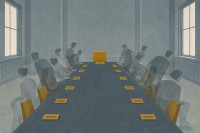
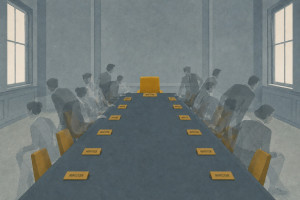
Political developments of the past few days have increased the prospect of March 5 elections. Not long ago, things looked much bleaker. But on Tuesday, chiefs of the Nepali Congress, the CPN-UML and the Nepali Communist Party—the first, second and third largest forces in the dissolved House of Representatives—sat down with Prime Minister Sushila Karki. The ice-breaking meeting was convened by President Ramchandra Paudel. For the first time since September 12 when Karki became prime minister, top leaders of the three major parties sat down with her. Otherwise, until recently, Oli, who was ousted by the Gen Z uprising and replaced by Karki, had ruled out participation in polls conducted under her leadership. For her part Karki had reportedly said she didn’t even wish to meet Sher Bahadur Deuba, KP Sharma Oli and Pushpa Kamal Dahal.
Before Tuesday, leaders of major parties, particularly UML chair Oli, had been highly critical of the government. As the Gauri Bahadur Karki-led inquiry commission prepared to summon former prime minister Oli and Ramesh Lekhak, home minister in his Cabinet, over the use of excessive force during the Gen Z protests in September, leaders from both the Congress and the UML grew increasingly confrontational against the Karki government. The issue was also raised with the prime minister during an all-party meeting at the Prime Minister’s Office on Monday. Lawmakers from the Congress and UML have even petitioned the Supreme Court for the restoration of the dissolved House.
To further complicate things, the Gen Z groups that had played a key role in bringing Karki to power were also divided on whether to participate in the parliamentary polls. Some took to the streets on Monday, vowing to disrupt the March 5 elections and even demanded the prime minister’s resignation. Against this backdrop, Tuesday’s high-level meeting marked a notable shift.
On the same day, a three-member government team—comprising Law Minister Anil Kumar Sinha, Communication Minister Jagadish Kharel and Prime Minister’s Chief Advisor Ajaya Bhadra Khanal—visited the headquarters of the Congress and UML and held talks with their senior leaders. They continued similar outreach to other parties on Wednesday. Notably, Kharel hinted at possible relaxation of restrictions on Oli and Lekhak who are barred from leaving the Kathmandu Valley—a move that had drawn strong objection from their respective parties.
These efforts to improve relations between the government and the political parties, all aimed at holding timely elections, are welcome. Separately, Monday’s meeting between Rastriya Swatantra Party chair Rabi Lamichhane and Kathmandu Mayor Balendra Shah was also encouraging. There is now a possibility of other newer forces joining this budding alliance of alternative forces. Yet still a lot can go wrong. Perhaps the big parties took part in the meeting with the prime minister only for public consumption, and their top leaders are really intent on postponing the polls. There is also a chance that the Balen-Lamichhane talks could break down as big egos clash. But greater engagement between the government and the political parties, in particular, is certainly the best way to create the right climate for the fast-approaching March polls. This is why there is a need to give continuity to the momentum created by Tuesday's meeting.




 14.81°C Kathmandu