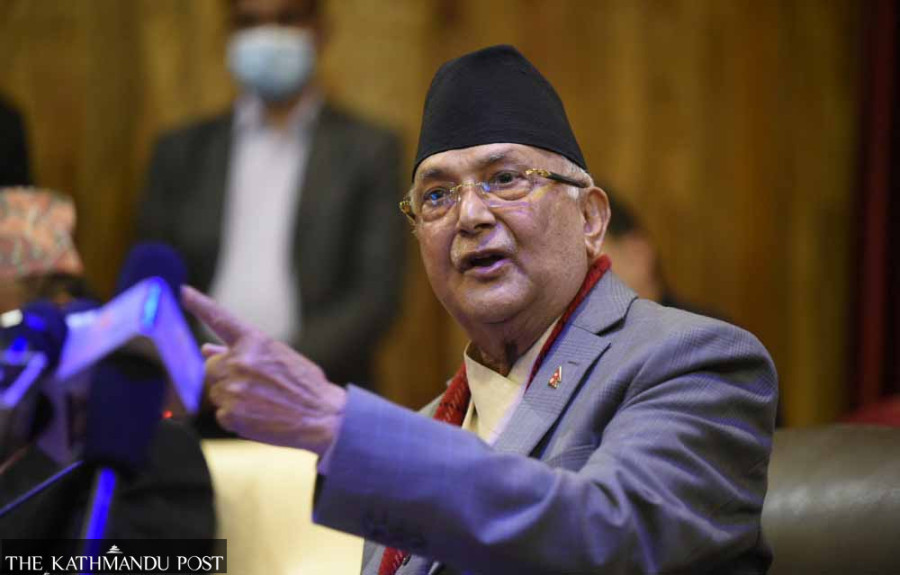
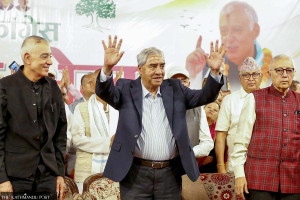
Changing the rules in the middle of a game is against the spirit of fair play. But CPN-UML Chair KP Sharma Oli is, once again, doing just that. The race among the UML leaders to get elected for the party’s top leadership and other positions is in full swing. Though the three-day general convention will be formally inaugurated on December 13, the process has already kicked off at the grassroots. Generally, the process of general convention is considered to have begun when party members start electing its representatives across the country. As the factional competition to win the party’s central positions has heated up in the UML, Oli has come up with a new proposal to increase the number of its office bearers. The objective is clear. He wants to keep his faction intact by giving the aspirants a chance to contest for the party’s important positions. He fears that failure to accommodate leaders loyal to him could lead to their defection to the rival camp led by senior vice-chair Ishwar Pokharel.
Oli’s proposal to increase the number of office bearers’ positions is strange. First, it was only in September that the party’s statute convention decreased the number of office bearers from 19 to 15. While removing certain positions, Oli also scrapped the post of senior vice-chair. At the time, it was seen as Oli’s revenge against Pokhrel for the latter’s lobbying to get former President Bhandari back into the party. Interestingly, it was in November 2021 when the UML created the position of senior vice-chair and increased the office bearers’ positions from 15 to 19, at Oli’s request, citing the need for consensus among top party leaders. At the time, Pokhrel was with Oli. Second, Oli has been frequently changing the UML’s policies to serve his interests. For instance, he removed the two-term and 70-year age limits from the party statute in September as he completed his second term and crossed the age bar. He has thus time and again made a mockery of party rules if they come in the way of his personal ambition.
It is worth recalling that the UML grew astonishingly in Nepal during the 1990s when the communist regimes were being removed the world over. Its success story drew international attention. Despite following communist principles, the party was accepted as a democratic force as it followed democratic practices and principles, just like any other liberal democratic force. In fact, even the rival parties commended the UML’s rigorous democratic practices, particularly in the election of its office-bearers from grassroots to the top. Unfortunately, intra-party democracy, which was one of the strongest suits of the UML, has increasingly weakened with the rise of Oli, who was once hailed for his contribution to the party’s democratisation.
If Oli finds it difficult to manage the aspirants in his panel, he must follow the fundamental democratic rule–allow them to contest for the positions they aspire to win and let the party delegates decide. Whoever wins the party representatives’ trust will get elected. Frequently tweaking party rules makes a mockery of the party statute and its claims to be a democratic outfit. Such a practice will discourage the UML rank and file, and make it harder for next-generation politicians to join the party. Despite being the UML’s intra-party affair, it is also a matter of national concern. Those who repeatedly undermine a party’s democratic principles cannot be expected to uphold the larger democratic norms when they gain state power.




 20.85°C Kathmandu