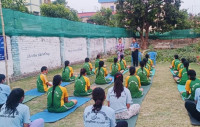
Mental health problems have long tormented Nepalis—and these problems have only gotten worse in recent times. In response, the Ministry of Health and Population has launched a three-month ‘awareness drive’ starting Wednesday. While awareness campaigns are vital for identifying the root causes of mental illness and seeking timely care, they only scratch the surface of the problem in a country with only 0.27 nurses, 0.13 psychiatrists and 0.02 psychologists per 100,000 people. Say, people realise their problem and want to seek care, but what will they do if there are not enough services, psychologists and psychiatrists—espeically outside the major urban hubs? Therefore, investing in mental health-related infrastructure and human resources is just as vital.
The high prevalence of mental health issues in Nepal is troubling. According to the 2020 National Mental Health Survey, 5.2 percent of adolescents have experienced mental disorders. Similarly, the prevalence of suicidal thoughts among adolescents was around 4 percent, while 0.7 percent attempted suicide. The same report highlights that 18.3 percent of children aged 6–18 suffered from emotional or behavioural difficulties and that 7.2 percent of the country’s population had suicidality. Nepal Police’s data paints an even more alarming picture: In fiscal year 2024-25, 7,055 people took their own lives, which equals 19 cases every day. Worse, suicide cases have shot up by 63 percent in the past 10 years. Other studies suggest that one in eight Nepalis experiences mental health issues in their lifetime.
It wouldn’t be an exaggeration to say that Nepal is undergoing a mental health crisis. Yet the intervention is far below the desired level. Health authorities plan to upgrade mental health services at only two state-run hospitals in this fiscal year. Moreover, most services are heavily concentrated in urban centres such as the Kathmandu Valley, limiting access for those in remote areas. According to the Health Facility Survey 2021, only one of four health facilities in Nepal provides mental health services. It also highlighted that mental health services guidelines were available at only 27 percent of health facilities, and only 16 percent had at least one staff member skilled in mental health in the two years before the survey.
All this boils down to insufficient funding for the overall health sector—and mental health in particular. Of the total national budget for 2025-26, only 4.77 percent is set aside for the health ministry; mental health receives less than 1 percent of that budget. This is nearly not enough. If there are no timely investments in increasing the number of mental healthcare centres and trained personnel in the field, the mental health crisis in Nepal will only worsen.
Soon after becoming the Minister for Health and Population, Sudha Sharma not only designated Gen Z units at 15 different hospitals but also opened those units for psychological counselling to everyone suffering from mental health problems. The ministry spokesperson also claimed that more than 400 counsellors would give service from various provincial and district hospitals, and that at least 753 authorised counsellors at every local level would offer counselling and treat patients. This is an excellent intervention that the incumbent government should work to realise—and successive governments rigorously follow through. This is one area where every rupee spent will give multiple-times return in terms of a healthier, happier and more productive citizenry.




 22.44°C Kathmandu