‘Bir Ganeshman’: A theatrical tribute to a freedom fighter
At a moment when history is on the cusp of major transformation, creating a play based on the life and work of a dedicated politician and freedom fighter feels like deeply meaningful ‘karma’. Poster of the play Bir Ganesh Man. Photo: Courtesy of Sarwanam Theatre
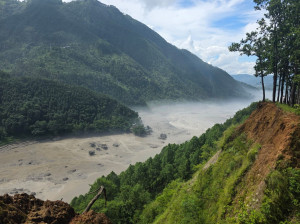
I was struck by an invitation from Ashesh Malla, the director, creator and pioneer of the Sarwanam theatre group, to see the play—Bir Ganeshman— on August 30, 2026, at Sarwanam Theatre in Kathmandu.The play, which he wrote and directed, is about the widely respected politician and freedom fighter Ganesh Man Singh (1925-97). I woke from the shock and confusion of the Bhotekoshi deluge of August 26, 2026, as it were. Sarwanam, Malla declared, also held donation programmes for the flood victims.
I was drawn to the play for several other reasons as well. First, I have been associated with this theatre since its inception 45 years ago and have written reviews and the history of this group a number of times. The continuum of this theatre group has become a phenomenon. Several theatre groups were formed at different times, including the famous Arohan Theatre, but they could not maintain their continuity. Several other theatres, run mainly by artists and dedicated people of the younger generation, are active today; this is inspiring and encouraging.
Staging the lives of Bir ‘brave’ or noted persons has been a familiar subject in theatrical tradition. This theme inspired dramatists from Shakespeare of Britain to Balakrishna Sama of Nepal. As someone who teaches this topic in the Department of English at Tribhuvan University, I can allude to the plays of English dramatists. Shakespeare comes first in dramatising the lives of powerful rulers and leaders.
A dramatist’s choice of persona for theatre often involves politicians and people in power playing roles that address matters affecting politics. The German playwright and politically oriented thinker Bertolt Brecht wrote plays that critics call politically oriented. His play The Resistible Rise of Arturo Ui(1941), which evokes prophetic matters like the story of the rise of Hitler, has become a subject of critical interpretation among those who find this theme meaningful and relevant at all times. Playwrights have written on the lives of politicians and their struggle to achieve political goals. The focus in all cases is on the goal materialised by the politician for the amelioration of the people. In such plays, the theatrical performances of the protagonist are projected on different planes.
The protagonist’s private life, his/her agony and moments of satisfaction constitute the main components of such plays. For the dramatist, the struggle of the character, who is a politician or a leader of a certain movement, to perennially adjust his or her public and private life forms the basis of the play.
We have examples of several foundational leaders of Asia, known as revolutionary architects of the movements being projected, as protagonists. In some cases, the official propaganda machinery valorises leaders in power as heroes and liberators. Their memories and narratives of struggle form the principal theme, which would also be the moral basis of the play. They could be famous politicians or leaders who have made an impact on history. The advantage of casting them as protagonists is that they can be staged, or their stories can become the principal motif of the performance for the audience.
Such plays bring one other question to the fore: is a playwright taking the side of the politician, or is he writing with ambivalence? Theatre scholars, critics, and members of the public always ask this question. Brecht, in The Resistible Rise of Arturo Ui, is not on the side of the protagonist Hitler. Similarly, the famous American playwright Arthur Miller wrote TheCrucible(1953), which dramatises theSalem witch trials of 1692 to debunk Senator Joe McCarthy’s political prosecution plans known famously as McCarthyism. Miller’s resonance can be felt in a number of other political plays. One example isOne for the Road (1984) by British playwright Harold Pinter.
Playwright Ashesh Malla’s play on Singh is based on his memoirs and historical records. Malla’s play Bir Ganeshman represents the call of history that many people responded to by waking up and acting. This includes not only people associated with Singh’s party, the Nepali Congress, but also other political groups, including communist parties. Singh wanted to keep the ideal of democracy and people’s rights as the principal dharma that demanded honesty and sacrifice from the people. Singh’s expressions about the famous notion of people, their pursuits, and even their perceptions of him are revealing.
Summing up Ganesh Man Singh, I have previously written in this paper: “Some episodic and liminal moments of Singh's life are commonly mentioned. They are: Singh broke Bhadragol jail before 1950 and escaped to India where he joined BP Koirala, spent eight years in the Sundarijal detention camp from 1960, led the mass movement of 1990, and declined the offer made by king Birendra to become prime minister after the fall of the Panchayat system in 1990. These events highlight Singh's revolutionary character and his democratic ideals.”
Malla explores conflict, tension, quest and irresolution in this play, which took him a long time to write and Sabitri Malla to edit. The dominant mood of the oeuvre is that of respect. The persona of Ganesh Man Singh is presented as a hero undaunted and above any worldly gains. The characters, including the protagonist, the chorus and others, have brilliantly played their roles.
Malla and Sarwanam Theatre Group want to use this play, Bir Ganeshman, to awaken the young generation to important moments in history and familiarise them with historical actors and their roles. Essentially, it is to show how the courage of a leader like Singh can bring democratic transformation. We should appreciate this messianic zeal of the senior playwright Ashesh Malla, who has maintained this spirit for nearly half a century. At a moment when history is on the cusp of important transformation, creating a natak (play) based on the life and work of a dedicated politician and freedom fighter is a deeply meaningful karma.




 16.03°C Kathmandu