



 14.81°C Kathmandu

Sat, Oct 24, 2026
Columns
Writing for readers in a world run by algorithms
The opinionator with a ‘kalam’ in hand and column in the newspaper no longer commands the loyalty of the audience. But this doesn’t mean that column-writing has lost its civic value.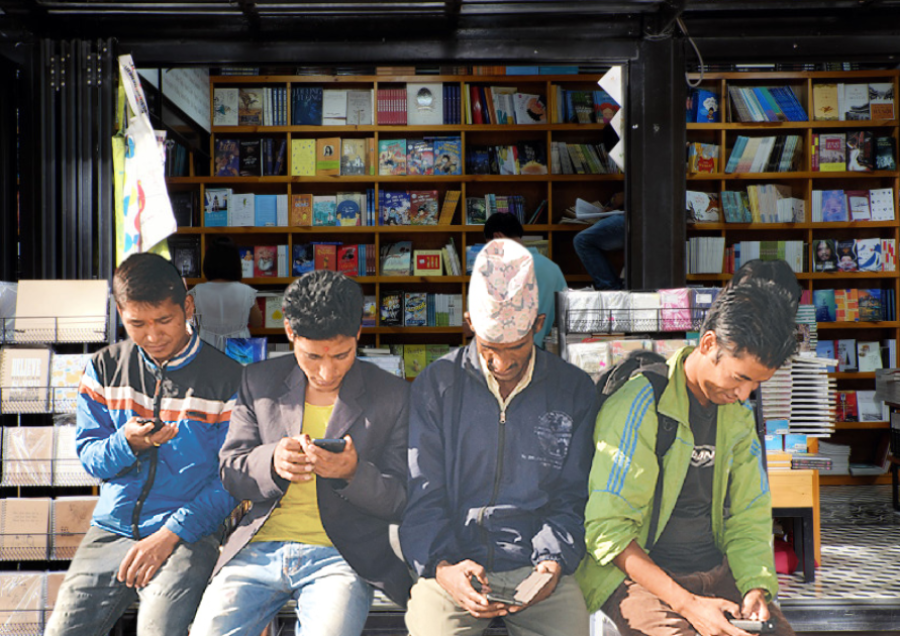
bookmark
CK Lal
Published at : June 2, 2026
Updated at : June 2, 2026 18:46
The idea of this column germinated when Kishor Dahal, op-ed editor at the Kantipur Daily observed during an informal conversation: “Once readers used to look for writers. Such are the times that scribes now must search for readers.” The force of his statement is somewhat lost in translation, but the unsettling point remains valid.
The idealistic youths of the 1970s and 1980s were naively ambitious. We debated whether the pen was mightier than the sword and often argued that a better world was possible. Some of us believed that leadership was more important than organisation and activism without ideology was a prescription for disaster. The so-called Millennials and the Zoomers that came of age after the 1990s are more pragmatic. They have realised that the world is unfair and human beings are fallible, hence what works is more important than what is desirable.
With an audience addicted to regular doses of dopamine administered through asocial media, the relevance of commentary does appear to be on the wane. In an age where enthusiasm has triumphed over experience and idealism has lost the battle to pragmatism, perhaps old fogies such as yours truly must work harder to learn new tricks of the trade. The lesson: Don’t defiantly face the mob, cheerfully follow the crowd wherever it takes you.
The first address of Prime Minister Balendra Shah to fellow parliamentarians on the floor of the House is a case in point. His observations about ‘encroachment’—whether by India or Nepal—are contentious at best. Contrary to the noise in the media, it’s extremely unlikely that it was a ‘covfefe’ moment of flippancy. From angry “I will set Singh Durbar ablaze” to cheerful “say cheese”, his every statement has been intended to spark a fiery fight on his home ground—the algorithmic battlefield. It wasn’t a clumsy slip of the tongue, but a conscious pivot.
Premier Shah seems to have learned early on that cold facts invariably lose to fiery emotions in most, if not all, political contests. Even though factually incorrect, his false equivalence about Indian and Nepali encroachment of each other’s territory has turned the debate away from jingoism to pragmatism in a seemingly innocent manner. It’s not a self-goal as some observers have described; the canny player has moved the goalpost.
The second objective that Shah has achieved is to direct the political conversation away from political economy and towards a patriotic fervour where the proponent of ‘Greater Nepal’, and blessed by the mighty Bhadrakali, doesn’t need any further certificate of nationalism.
Perhaps the geostrategic significance of the statement may have a troubling impact. Irrespective of its wording, the ‘Treaty of Segowlie’ with the East India Company was a document of surrender. It was endorsed by ‘Great Britain’ through Article 2 of the treaty signed between the British Envoy and the Rana Prime Minister in 1923 and ratified in 1925.
The treaty of 1950 that the last Rana Prime Minister signed with the Indian envoy “…cancels all previous Treaties, agreements, and engagements entered into on behalf of India between the British Government and the Government of Nepal.” By bringing in ‘Belayet’ into the scene, Shah has reinforced the position of what some of us prefer to call the Ethnonationalist Pahadi Group (EPG). He is being celebrated and criticised for all the wrong reasons.
The Indians have refused to recognise that Nepal’s north-western frontier is even an issue. The Chinese consider it a bilateral rather than a trilateral dispute. Shah wants a third party to extricate Nepal from a swamp into which ethnonational chieftain Khadga Prasad Sharma Oli pushed it through the treacherous trek to Lipulekh for political benefit. That’s a risk no conventional politico, whether Madheshi or Pahadi, would have dared to take in a country where xenophobia, jingoism and chauvinism rule the roost. As is its wont, the Nepali media and intelligentsia appear to have lost the forest for the trees. What should a columnist looking for readers do? The answer isn’t blowing in the wind.
Fettered freedom
The golden afternoon of print capitalism—when readers unfolded a broadsheet over morning tea and lingered over its opinion pages—has largely set. Text once invited contemplation. Today, public attention is ruthlessly consumed through glowing, hand-held devices, where reflective prose must compete with the dizzying velocity of short-form videos. In the frantic ecosystem of screen capitalism, the question of readership becomes almost tragic. Increasingly, algorithms mediate not only what audiences read, but the emotional register in which they prefer to receive it.
The columnist has always occupied a slippery position in the hierarchy of letters. He—forgive the gendered pronoun—was neither a gatherer of raw facts nor a systematic philosopher. Authoritative analysis belonged to experts, while the literary elite produced creative text. The columnist was always a hybrid creature: Part storyteller, part advocate, part street-corner performer. The role of the columnist,” says Llewellyn King, “is to bear witness and provoke thought.”
For the reporter, accuracy—the old, unyielding catechism of who, what, when, where, why, and how—remains supreme. Fairness and balance follow closely behind, and personality is treated as a professional hazard. The best reporters purposefully disappear behind the restraint of their prose.
The columnist survives by doing the exact opposite. He must step boldly into the spotlight. Editors encourage it, media houses cultivate it, television monetises it, and social-media algorithms distort and amplify it. The audience demands it.
The opinionator is expected not merely to hold opinions, but to embody a recognisable voice. Without a carefully cultivated distinctiveness, columns quickly dissolve into interchangeable products in an overcrowded market of outrage and tribal affirmation.
The op-ed page, once idealised as a republic of ideas, increasingly resembles a theatre of competing personalities. This decline did not happen overnight; it emerged gradually through the relentless commercialisation of public discourse. Once newspapers entered the fierce, late-capitalist contest for eyeballs, visibility began to dictate editorial priorities. The commentator became a brand. Now, they must come and face the camera—even The Economist, that historic bastion of anonymous institutional voice, has had to conform to this exhibitionist norm. Market forces have fettered the freedom of columnists.
Across the globe, public life now bears the garish features of a permanent spectacle. Politicians stage-manage authenticity, television anchors manufacture synthetic outrage, and influencers commodify intimacy for clicks. Under the pressure of this ravenous attention economy, the columnist, too, is dragged onto the stage. The public no longer seeks calm analysis or measured judgment; it demands performance seasoned with wit, anger, sarcasm or exhibitionist confession. Most of our tribe, despite low pay and no perks, have shifted from stifling idealism to the freedom of fetters in the marketplace.
Lost authority
Unlike reporters, columnists are also expected to possess emotional texture. Readers seek intellectual companionship during moments of political instability and social anxiety. In periods of profound confusion, citizens often trust familiar voices far more than crumbling institutional authority. The columnist, therefore, becomes a mediator between public disorder and private understanding. In fragile, struggling democracies, this role can acquire a near-sacred significance. It also demands a certain level of maturity.
Perhaps that explains why readers once forgave excesses in favourite columnists that they would never tolerate in reporters. A factual error by a reporter could destroy credibility instantly. By contrast, rhetorical exaggeration from a columnist deepened audience loyalty. Readers interpreted the columnist not as a recorder of facts, but as an interpreter of collective anxiety—articulating the frustrations that ordinary people felt but struggled to express. That has irrevocably changed in an environment where algorithms judge the relevance and significance of a commentator. The opinionator with a kalam in hand and column in the newspaper no longer commands the loyalty of the audience.
None of this means that column-writing has lost its civic value. In the post-truth era, democracies desperately require spaces where chaotic events can be interpreted and morally situated. Citizens do not live by facts alone; they search for meaning. They need a language capable of connecting scattered incidents of injustice or state excess into a coherent pattern. The serious columnist attempts this difficult and often thankless task.
One final question lingers: Will Artificial General Intelligence (AGI) eventually eliminate the column altogether? Probably, when it begins to produce meaning tailored to suit a political agenda, much like the conflicting interpretations of Shah’s statement? Yet as long as human beings seek not merely information, but understanding, some form of slow, short and reflective storytelling will likely endure. The storytelling instinct has survived droughts, floods, pandemics and wars; it is difficult to imagine human civilisation without it.
CK Lal
Lal is a writer and political analyst.





Most Read from Columns





Editor's Picks





E-PAPER | October 24, 2026

×