



 14.81°C Kathmandu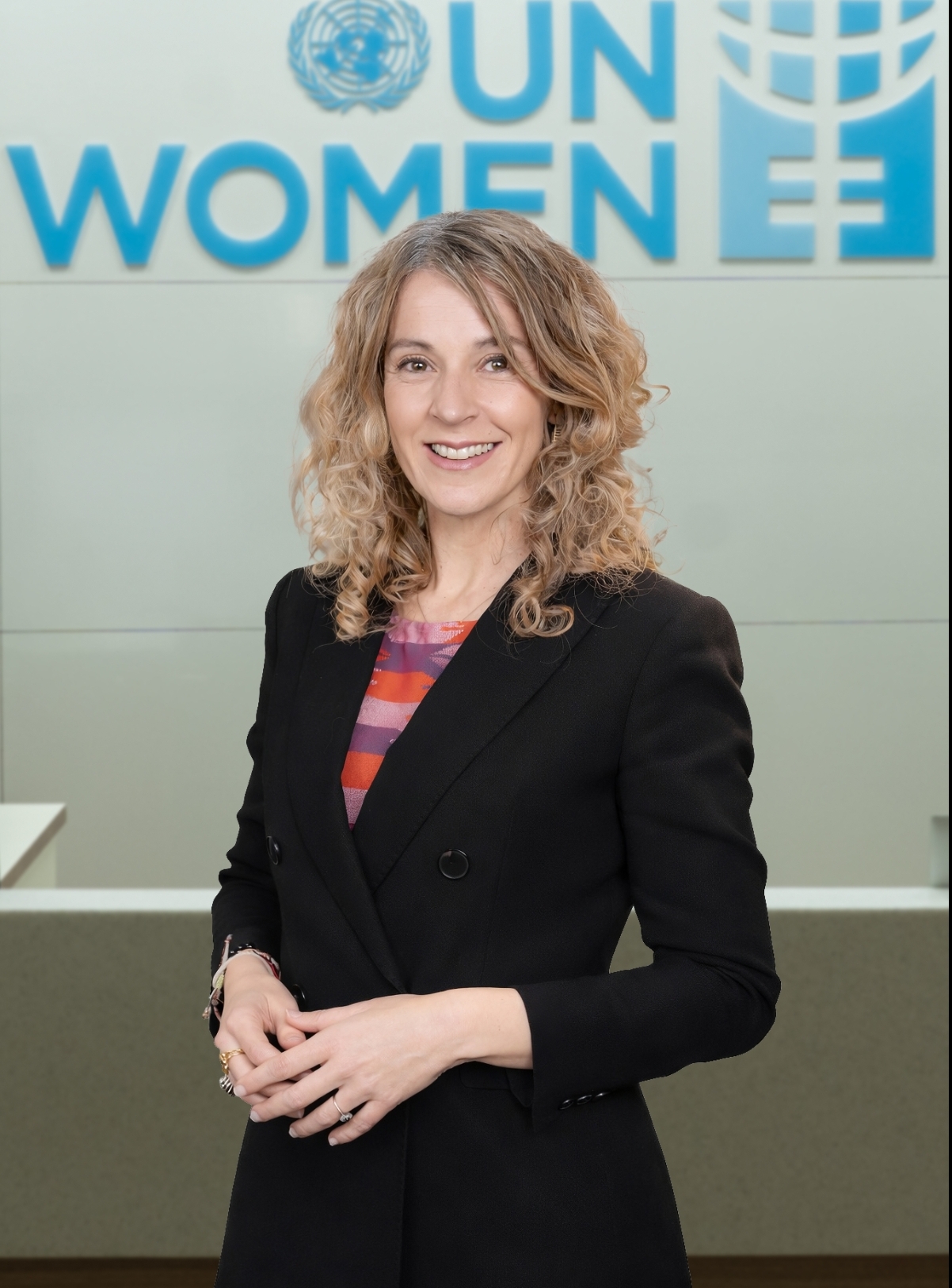

Sat, Oct 24, 2026
Columns
Nepali women are rewriting our story. Are we ready to listen?
When women tell their own stories, they do more than describe the world; they reshape it.
bookmark
Patricia Fernandez-Pacheco
Published at : April 12, 2026
Updated at : April 12, 2026 13:04
When asked to reflect on the power of storytelling, I inevitably found myself returning to the past three years I have spent in Nepal. My understanding of this country—its textures, its contradictions, its resilience—has not come from UN reports or briefings alone. It has come, most profoundly, from uncountable conversations. From those who have shared their stories with me, in cafes, while travelling, during evenings at their places, or while walking around the city.
At first, these stories seemed small. Almost ordinary. But they spoke of something deeper: Daily acts of quiet defiance, struggles carried over years, courage that is not always visible or celebrated, opinions that are often dismissed. When held together, they resemble something larger— like a river rising. Slow, steady, undeniable. And in that, there is hope. Change is already underway.
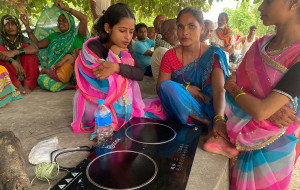
This is the spirit behind the exhibition Like a Rising River: Stories of Women and Change; a space for reflection, for recognition, for transformation. A space where stories of resistance, leadership and everyday courage converge.
But why do stories matter so much to us?
As human beings, we are, in many ways, fragile. We are not the strongest, the fastest, or the most resilient to the elements. Yet we possess something extraordinary: The ability to make meaning through stories. We use them to understand the world, to connect across differences, to heal. Our strength is creativity.
Stories do not automatically make us better people. But they expand us. They allow us to see—through the eye of the mind—the vastness of human experience, the diversity of lives and possibilities. They stretch the boundaries of what we consider normal, acceptable, or possible.
And in a time defined by an economy of attention—by speed, immediacy, distraction—listening to stories becomes something more than passive consumption. It becomes an act of resistance. A deliberate pause in a world saturated with noise. A choice to engage deeply rather than react quickly.
This matters profoundly in times of change. In moments of democratic renewal, when governments are called to respond more closely to the needs of their citizens, empathy becomes essential. Democracy is not sustained by force. It is sustained by a delicate web of agreements, by ongoing conversation, by the ability to see from another’s perspective. The stronger that capacity, the more resilient the democracy we build.
And this is where storytelling intersects directly with gender equality.
Gender inequality is not only a matter of policy gaps or resource distribution. It is deeply rooted in social norms, the invisible rules that shape expectations about what women and men can or should be. These norms influence whether women are seen as leaders, whether their work is valued, and whether their voices are heard.
Stories both reinforce and challenge these norms.
They shape how we perceive women’s leadership and potential. They influence whose voices are amplified and whose are dismissed. They determine whose contributions are visible and whose remain unseen.
This is why storytelling is not peripheral to gender equality work. It is central to it.
Making women’s lived experiences visible is a form of recognition, and recognition is a form of power. Challenging stereotypes through narrative opens space for new possibilities. When women are represented as leaders, decision-makers, and agents of change, it does more than reflect reality; it helps create it.
Global evidence continues to affirm that transforming social norms is foundational to achieving gender equality. Harmful practices—whether child marriage, caste-based discrimination, restrictions on mobility, or limitations on women’s leadership—are sustained not only by laws or institutions, but by deeply embedded beliefs.
Policy change is necessary. But it is not sufficient.
Sustainable progress requires shifts in attitudes, in expectations, in what societies consider acceptable. It requires changing the story.
And the stories emerging from communities across Nepal remind us of something critical: Norms are not fixed. They are lived, negotiated and transformed every day. Women are already challenging them through their choices, their leadership and their collective action. Change is a present reality, still unfolding.
This is the foundation of initiatives such as the Hamro Sahakarya programme. Through this work, supported by the Government of Finland, storytelling becomes both method and movement. Across districts, communities are engaging in conversations that question long-held assumptions, creating spaces where new narratives can emerge.
Research increasingly shows that storytelling is not only a tool for expression, but for transformation. It surfaces deeply held beliefs, opens dialogue, and allows communities to renegotiate what is considered “normal.” Over time, exposure to new narratives contributes to measurable shifts in attitudes and behaviours.
Equally important, storytelling shifts power. Women are not only participants in these processes, but they are authors of their own narratives. Their experiences become the bridge between lived realities and broader social and policy change.
There is a quiet but profound shift in that.
Because when women tell their own stories, they do more than describe the world; they reshape it.
This space, and the stories within it, would not exist without collective effort. Artists and writers have brought these narratives to life with care and depth. Creative partners who have facilitated a participatory process rooted in community voices. Collaborators and programme partners are working tirelessly at the local level to challenge discriminatory norms. And sustained commitment from partners who recognise that gender equality requires long-term investment.
But most importantly, this space belongs to the women whose stories anchor it.
Their voices are evidence of resilience, of leadership, of change already in motion.
Like a river rising.
Patricia Fernandez-Pacheco
Fernandez-Pacheco is the Country Representative for UN Women Nepal.


Most Read from Columns


Editor's Picks





E-PAPER | October 24, 2026

×