



 14.81°C Kathmandu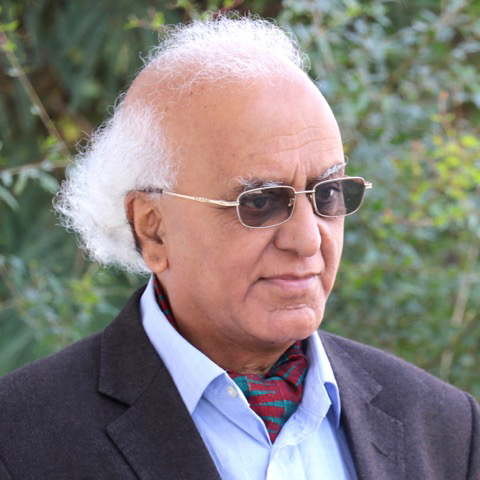
Sat, Oct 24, 2026
Columns
Leaders, mind your hamartia
Leaders should recognise the hamartia that got the best of them, and work with a sense of trust and respect.
bookmark
Abhi Subedi
Published at : February 28, 2026
Updated at : March 1, 2026 08:44
The pervasive mood of celebration a few days before the nationwide interim election has a theatrical quality. It seems the gloomy mood caused by the uncanny events of September 8-9, 2025, has changed into that of some brighter performances. Looking for some analogies, I found a subject of my heart, 'theatre', to spell out the mood and essence of the current activism of the election. I do not pretend to write a political analysis of this moment of elections. I would rather turn to theatre director and actor Sunil Pokharel's performances to show what I mean by my theatrical inclination. I recall several of my plays that Sunil staged at Gurukul in the first decade of this century. But here I want to allude to a semi-political one-man play, Marx in Soho, written by Howard Zinn, in Nepali translation. The current election has triggered responses from various people. Here I want to dwell briefly on theatre.
Theatre is an appropriate lexicon to characterise the current politics of Nepal, whose climactic performance is happening in a matter of days. The drama is a mix of historical and current features. The dominant rasas, as in a play, are fear and hope. We can say more by evoking the nature of the classical Greek drama. Some of the terms of the Greek drama discussed in Aristotle's Poetics can be used in the present discussion. Among the prominent features of the Greek drama, one term, hamartia, always strikes me. It denotes the flaw in the character of the hero or heroine that causes their downfall. It is a flaw in character that persists through the actions of the dominant character. This term is used to describe the tragic fall of the protagonist, but in this essay, I am using it for its simple semantic value. According to this, a politician also suffers a downfall due to an incorrigible flaw in their character. The climactic performance occurs when the character has to face the bad turn of events as a result of his or her action. Politics is a drama that is performed on the stage of social life. As in tragedy, you witness the downfall of the characters who blindly pursue their ambition.
I am not going to single out characters and examine who has succeeded or failed. But what I can say with confidence is that major characters, who are leading different parties and contesting elections, are known for their performances on the theatre of politics or broadly, on the stage of Nepali history. New political parties have emerged and have been projecting their leaders as the protagonists in the drama. Now the politics moves around the characters of the individuals who lead the parties. Some prominent characters who became prime ministers or thula manche in different political parties are singled out to study their hamartia. Leading the opposition faction is not a weakness in politics. Opposition is the mantra in democratic politics. But your modus operandi tells whether you are building your political karma on fear or arrogance.
Certain major trends appear in the election-savvy politics of a democracy. The major question is: Are you creating slogans that strike fear in the minds of the people, or are you advocating some plans and policies that would create hope? At the moment, it seems this process is pursued without scruples. Parties that strike fear in the minds of the voters say they have the mantra to protect the people from dangers. They describe the individual leaders of the past governments and the opposition party leaders as those fostering fear. Those who are advocating maximum fear are seen using that as the principal mode of sloganeering during the election campaign through various means. But in Nepali politics, as the political scientist Krishna Khanal explains in his essay Gagan ki Balendra or ‘Gagan or Balendra?’, “Our politics was dominated for a long time by a struggle against autocracy. Our political values and the identities of the parties and leaders were shaped by the same factor. Even today, we judge the leader's identity and his or her character on the same basis.”
We, as citizens, constantly pursue the spectres of history. The images of the autocrats and the dominant rulers continue to affect our actions. One way of judging this is by studying our own actions. The present political situation has come as a result of our response to the call of history. In Nepal, history speaks with multiple mouths, from the monarchical clamour to a communist or democratic multiparty rule. The present election is a great example of that.
The March election should be seen from a positive perspective. It came as a solution to the condition of crisis and confusion following the September 8-9 Gen Z uprising. I have called that a 'mix of ire and dreams'. The choice of Sushila Karki, the erstwhile Chief Justice of the Supreme Court, to accomplish that task by leading a government for that purpose was a good judgment of the stakeholders. It created a moment in Nepali history that needed some judgment, some intervention, good vision and trust. That condition earned the interim government harsh criticism from some major political parties and certain sections of the power dreamers. Karki expressed her dismay at one gathering of literary writers, not politicians. The challenge is met by the election that is taking place on March 5.
The challenge has another dimension. Those who lead political parties have the responsibility to overcome what Krishna Khanal mentions as the spectre of ‘autocracy’, and work with a fresh and free democratic vision. They should work by avoiding the influence of the obscurantist vision of yesteryears. Pragmatism may be the mantra for that. Political parties and their dominant leaders should seriously think about the practical side of the post-election political situation. Both old and new political leaders should recognise the hamartia that got the best of their minds, and work with a sense of trust and respect, not hatred and ire. One important way of meeting the post-election challenge is cultivating that culture and creating a condition of cooperation among parties. The pPost-election politics may need that as never before. This calls for some moral exercises.
I wait for the day of the election with a mixed sense of euphoria and, naturally, with some sense of fear. That is perhaps the mood of many I have spoken to. But this election is different from many in the past. When the voter enters the booth this time, he or she feels deep down a sense of responsibility. That means, every one of us knows this election is our greatest opportunity, exercise, and a chance of striking a note of caution to those doing serious politics—act responsibly!
Abhi Subedi
Abhi Subedi is a poet, playwright and a columnist.




Most Read from Columns


Editor's Picks





E-PAPER | October 24, 2026

×