



 14.81°C Kathmandu

Sat, Oct 24, 2026
Columns
Challenges of Nepal's new leadership
A major test for Nepal’s new PM is pursuing development goals without getting caught in geopolitics.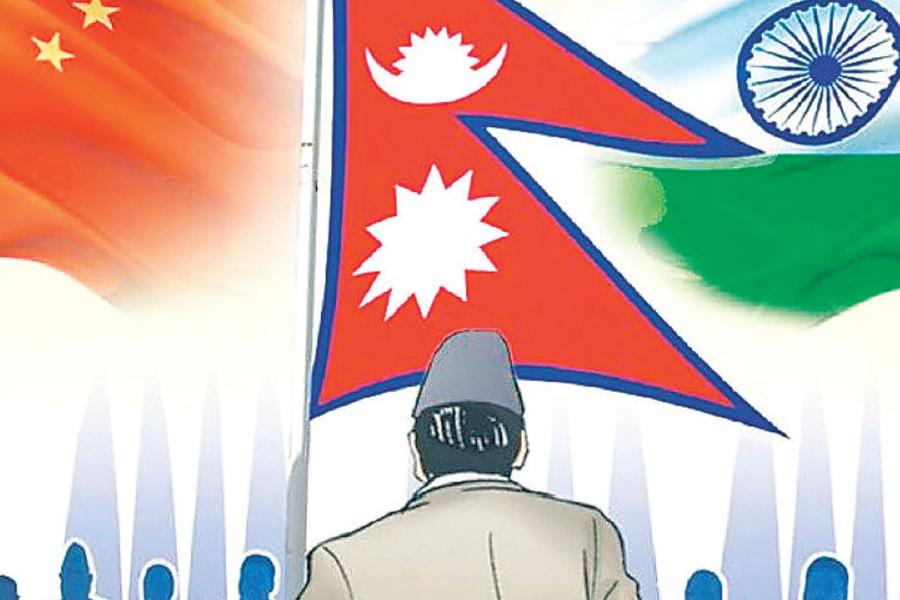
bookmark
Smruti S Pattanaik
Published at : March 12, 2026
Updated at : March 12, 2026 15:58
The uprisings in South Asia have produced interesting results. In Sri Lanka, once considered radical left, the JVP-led National People’s Power (NPP) capitalised on the Aragalaya Protest Movement, which opposed traditional political elites and their corrupt ways. Following the protests, the NPP was elected to power for the first time. The student-led protests in early 2022 played a key role in ousting the incumbent President Gotabaya, who fled the country to escape public ire.
Similarly, in Bangladesh, the youth revolution uprooted the politically entrenched Awami League, which had been in power for 17 years, forcing Sheikh Hasina to flee the country. The youths were at the forefront of this uprising and formed a separate political party, the National Citizens Party. However, their electoral performance was poor, and they won only 6 of the 30 seats they contested as the electoral partner of a major Islamic party—the Jamaat Islami.
Meanwhile, Nepal’s Gen Z uprising, similar to Sri Lanka’s, paved the way not only by ousting the old politicians from power but also by electorally decimating them. Save for the Maoist leader Pushpa Kamal Dahal Prachanda, all other prominent leaders lost the election, and some of them lost their deposits. This revealed how people lost faith in their promise of ‘naya Nepal’ that neither delivered on political stability nor on a polity free of corruption.
Rising expectations
Youths have emerged as a driving force in most South Asian countries. Aspirations of gainful employment and corruption-free government embody their hope for a new beginning in all three countries where youth fought for transformative politics. Nepal’s election shows that for the first time, the parliament of Nepal will have 37 percent of parliamentarians who are less than 40 years old.
The Rastriya Swatantra Party (RSP) has become the largest party in the House with 125 seats and has an impressive showing in the proportional representation seats. For the first time in almost two decades, Nepal will have much-needed political stability, which will spare the RSP the time-consuming task of permutations and combinations to sustain itself in power. The last two decades have shown how Nepali politics has been characterised by bargains, with some politicians doing everything to remain in power. Hopefully, it will give Balendra Shah the designation of prime minister and space to focus on governance issues, given that he is expected to bear the burden of the aspirations of youths who have reposed faith in him.
The major challenge would be to create employment opportunities for young Nepalis at home. Nepal’s unemployment figure is the highest in South Asia, standing at 20.6 percent. While state jobs are dwindling, private sector jobs cannot absorb the youth bulge. Many in Nepal are employed in the tourism sector and related service industries, which are externally driven. This had become a major cause for the Gen Z protests last year.
As the war in Iran continues, it is likely to cause economic fallout and an energy crisis, affecting the global supply chain and the flow of remittances. Some countries in the region are already trying to rationalise fuel use. This will have a serious impact on Nepal’s development aspirations.
Foreign policy challenges
Political stability in Nepal will foster economic development, usher in social stability and maintain law and order, which will directly impact the open border with India. India has long been Nepal’s development partner. Recognising this, Indian Prime Minister Narendra Modi has welcomed the victories of RSP leaders Shah and Lamichhane. Modi spoke with them over the phone and underlined India’s willingness to work with the new government.
Some of Shah’s previous social media posts, however, have not been to India’s liking. He has positioned himself as a nationalist, putting ‘Nepal first’, moving away from the tag of ‘pro-India’ and ‘pro-China’ foreign policy. At the same time, it is hoped that he will prioritise Nepal’s relationship with India, as it remains a major source of Nepal’s imports and facilitates Nepal’s export to other countries through its ports, airports and waterways. Unlike the 2015 blockade that raised the price of energy in Nepal, India has already built a petroleum pipeline that will provide an uninterrupted supply to its neighbour. Amid uncertainty in the oil market, India would remain the main supplier with an agreement to supply 1,000 metric tons of LNG in the next five years.
Nepal-India ties will not be limited to the roti-beti relationship but will be multidimensional, encompassing trade, transit, energy and investment, which will generate jobs for Nepalis. One-third of Nepal’s investment comes from India, and a stable policy would enhance the confidence of the investors. Issues like the unresolved border issue would be a major challenge, as the pressure to resolve the dispute would be high.
Relations with China
China, another neighbour of Nepal, would closely watch developments in Nepal. China, which has invested in BRI projects in Nepal, would want to take these projects forward. However, given the economic difficulties that war in Iran is likely to bring, whether Nepal will implement some of the BRI projects will affect Chinese expectations.
Unlike Oli, who was keen to implement BRI projects, Shah has dropped the multi-billion-rupee Damak Industrial Park in Jhapa that was closer to India’s Siliguri corridor, raising concerns in India about this proposed Chinese project, from the party’s manifesto. China has also exhibited its interest in investing in Nepal’s hydropower sector, even though it has withdrawn from the West Seti Hydro power project due to cost escalations. China will also be wary of Tibetan activities in Nepal. The US presence in Nepal is aided by a $697 million investment in the Millennium Challenge Compact Project that would fund connectivity and energy projects. US funding is seen as a challenge to China’s BRI.
New approach
It will be a major challenge for the incoming prime minister of Nepal to balance the interests of its neighbours and ensure that Nepal’s own development aspirations are not caught in the geopolitics. India needs to acknowledge the political transformation in Nepal, which promises reforms through youth participation in politics. Both India and China need a fresh approach to deal with a government that represents a new political class and a leadership that represents the youth.
Smruti S Pattanaik
Pattanaik is a research fellow at the Manohar Parrikar Institute for Defence Studies and Analyses, New Delhi, India.



Most Read from Columns


Editor's Picks





E-PAPER | October 24, 2026

×